Positioning portfolios for a closing of the gap in the US’ K-shaped economy
Looking ahead, stimulative policies are likely to benefit consumers

GOING into 2026, the global economic backdrop should be supportive for growth. We are past peak trade uncertainty, while monetary and fiscal policy are broadly supportive.
So far, we have seen a story of divergence, especially in the so-called K-shaped economy in the US. There, we have seen divergence between income groups, sectors and stock market performance.
In 2026, we expect this divergence to narrow. The benign outlook should allow the benefits of US economic expansion to broaden across income groups and sectors, allowing the K-shaped economy to close from the bottom.
Looking ahead, stimulative policies are likely to benefit consumers. In the US, the Trump administration is expected to push policies to “Make America Affordable Again” ahead of midterm elections in 2026.
Across the Atlantic, Europe is on the move, with Germany embracing debt and defence. In Asia, Japan has fiscal plans of its own and China is seeking to stabilise its economy after a real estate downturn.
While artificial intelligence (AI) has been a key growth driver, there is a risk it turns from a gift to a curse. The resilience of the US economy masks vulnerabilities: the “circularity” of tech giants investing in each other, and the debt burdens that some companies are amassing to fund their participation in the AI race.
If the AI-driven momentum were to falter, the wealth effect that has buoyed consumer spending and capital expenditure could unwind, and US economic resilience with it. The K-shaped economy would close from the top. This could lead to a recession.
Investment implications
The 2026 portfolio is positioned to benefit from a closing of the gap. Our core positioning is crucial for portfolio resilience and to position investors to seize the opportunities that we expect our base-case scenario to present.
In this context, we are positive on equities, with a preference for Europe, Switzerland and emerging markets. We are negative on fixed income and the US dollar versus Group of 10 currencies, especially against the Swiss franc, euro and emerging market currencies. We are positive on precious metals.
For the coming year and beyond, we identified several key investment themes:
European revival
A European revival is under way. Germany, the region’s biggest economy, is embracing fiscal expansion after years of budget restraint. This will more than offset consolidation in France, Italy and Spain.
A potential peace deal for Ukraine could also kick-start reconstruction, further boosting the European economy.
In Germany, lawmakers have backed a 2026 Budget that includes 98 billion euros (S$147.3 billion) in new debt. The German fiscal expansion is focused on infrastructure and defence spending, raising the prospect of innovation and spillover to the wider economy. Monetary policy is also supportive of a European revival.
Moreover, the European Union has set 2028 as a target date for completing the single market, a goal backed by all 27 member countries.
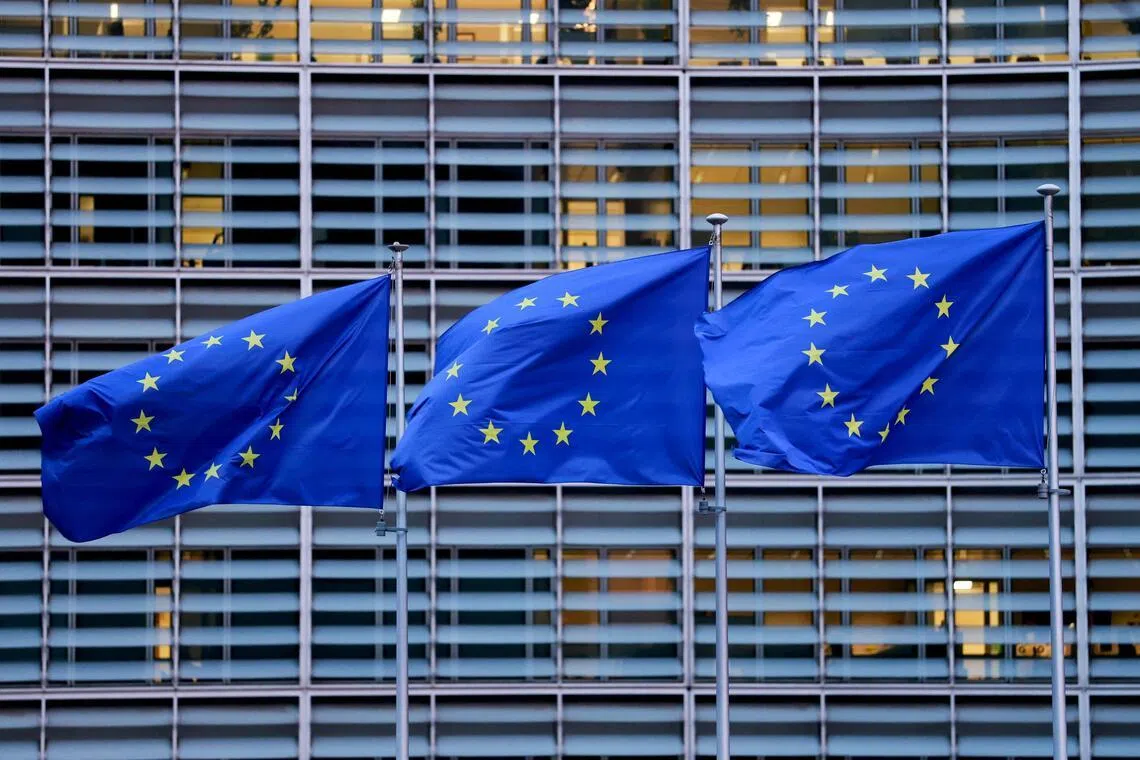
This goal is supported by a Single Market Roadmap, which aims to remove persistent barriers in areas such as energy, finance and telecommunications to increase competitiveness. The initiative also introduces a new “fifth freedom” for the movement of knowledge and innovation.
Our preference for capitalising on this theme is via European equities.
Global M&A activity
A deregulatory drive in the US, favourable economic conditions and tariff flexibility are combining to unleash pent-up global mergers and acquisitions (M&A) activity.
Transactions of US$10 billion or more hit an all-time high in 2025. The overall volume of mergers is projected to remain buoyant, as high stock valuations extend the possibility of financing transactions using equity.
In recent years, regulators have taken a strict stance on antitrust issues, creating uncertainty around deal completion. A reduction in regulatory uncertainty is now taking effect, with the banking, pharma and tech sectors all seeing a wave of transactions.
We strongly believe in the significance of a selective approach to identify companies that are potential acquisition targets.
Healthcare catch-up
The global healthcare sector is showing signs of recovery after underperforming the MSCI World Index since the Covid-19 pandemic.
Now trading at its lowest valuation since 2009, the sector’s underperformance exceeds its earnings decline, suggesting potential for a rebound.
Optimism for the sector is supported by several positive developments, such as greater clarity on US drug pricing, tariff relief, an improving earnings trajectory, advancements in AI-driven innovation and a surge in M&A activity.
The sector is poised for continued outperformance into 2026. Healthcare’s defensive characteristics, coupled with its low valuations, will help improve portfolio resilience.
Emerging-market renaissance
Emerging markets rebounded strongly in 2025, with momentum expected to continue into 2026. Improving economic conditions support emerging economies, including easing monetary policies, a weakening US dollar and resilient global trade.
Emerging-market equities offer diversified exposure to a broader technological ecosystem at lower valuations than their US counterparts.
Rising commodity prices and a global manufacturing recovery further bolster emerging market performance. Emerging-market currencies are also poised for appreciation, and emerging-market bonds offer higher returns with lower leverage.
Our strong convictions around global M&A activity, a European revival, a healthcare catch-up and an emerging-market renaissance should further enhance portfolio performance.
However, having protection against a negative scenario is a must to ensure portfolio resilience. Optionality allows for flexibility in accommodating negative unexpected surprises.
The writer is head of CIO office and macro research, Pictet Wealth Management