

Positive backdrop for emerging market equities, says Templeton CIO
Supportive factors include China reforms, benign interest rates, a more muted US dollar and optimism over US-China trade talks.

Genevieve Cua
Singapore
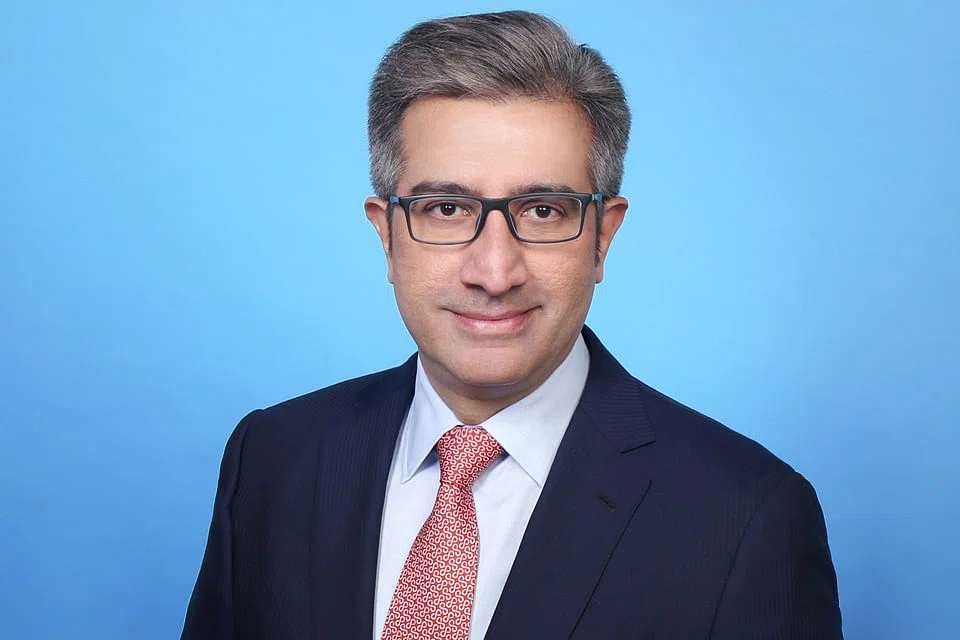
ATTRACTIVE fundamentals and favourable macro economic conditions are creating a favourable backdrop for a turnaround in emerging markets (EM) equities, says Manraj Sekhon, Franklin Templeton Emerging Markets Equity's (FTEME) chief investment officer.
"I believe we're at an interesting point. We've come through 12 to 18 months of significant challenges for the emerging markets. Today, the headwinds have disappeared or receded, or turned into tailwinds. The breadth of opportunity is as wide as it has been for some time.''
Reforms in China, for instance, have put it on a more sustainable footing, reducing its dependence on trade and on the US as an export destination.
He cautions, however, that given the strong rally this year, markets may take a breather in the near term.
Supportive factors include benign interest rates, a more muted US dollar, and the expectation that the outcome of US-China trade talks would not be too damaging. "In our view (US President) Trump has gotten maximum political capital out of the trade war. From this point, there isn't much capital to be extracted, and the pace of the trade war was doing damage to the US economy.''
The emerging markets chalked up returns of minus 14.5 per cent in 2018, compared to the MSCI World Index's minus 10 per cent . In the year to March 29, the MSCI EM Index rose 9.9 per cent, compared to about 12 per cent by the MSCI World Index.
Earnings growth has historically driven EM returns. Between January 2000 and end-December 2018, based on annualised rolling five-year returns, earnings growth accounted for 9.6 per cent of returns and dividends 2.7 per cent. Contribution from valuations was minus one per cent.
Still, EM corporates' cash flows are improving and debt levels are declining. The MSCI EM Index is currently at a discount to the S&P500 based on metrics such as price earnings and price to book ratios.
Mr Sekon joined FTEME in February 2018, shortly after the retirement of Mark Mobius in January as executive chairman of the Templeton Emerging Markets Group.
The group's EM investment capabilities have been consolidated into one platform under FTEME, with total assets under management of US$40 billion. Previously the resources and assets were split between the Templeton Emerging Markets Group and the EM equity teams of Franklin Local Asset Management.
The integration brings together the global perspective of the Templeton Emerging Group and local insights of the teams in markets such as China, Korea, India and Brazil. "We now have one common research and investment platform. Research ideas are shared across the group, and we've built a common investment engine and process,'' says Mr Sekhon.
Mr Sekhon was previously chief executive and chief investment officer of Fullerton Fund Management.
The group has also beefed up its bench of portfolio managers. Four senior portfolio managers were added, for instance. They include Andrew Ness who joined as part of FTEME's global EM team last September. He has over two decades of experience as an EM equity portfolio manager.
Last December Jason Zhu Guoqing joined as managing director and director of portfolio management for China within FTEME. Yu-Jen Shih also joined as portfolio manager and deputy director for research.
Going forward, FTEME seeks to broaden its institutional client base. It also aims to expand its China suite of products, and also focus on total return products which have "more of an absolute return outcome'', says Mr Sekhon.






