

Is property still a good investment for Singaporeans?
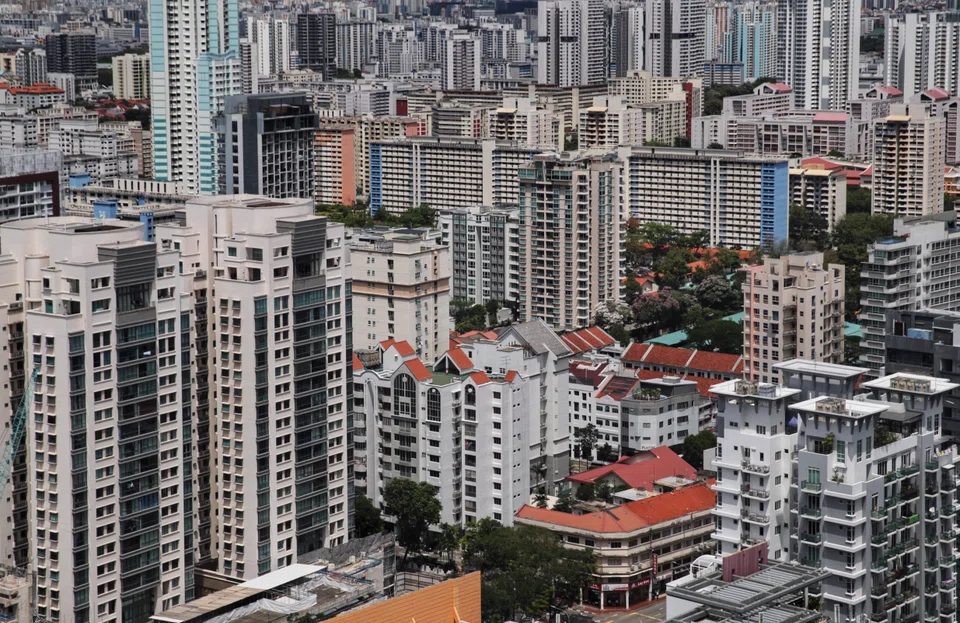
SINGAPOREANS have a penchant for residential properties, seeing them as a good investment for capital gains and for passive income during retirement. The turbulence in financial markets in recent years has added to the allure of properties, which are perceived as relatively more stable and able to offer good long-term value.
The positive perception of the Singapore property market is not without merit. The Urban Redevelopment Authority’s residential property price index shows a strong 36 per cent gain in the past five years, up to the end of the third quarter of 2022. In comparison, Singapore’s benchmark Straits Times Index, which tracks the local stock market, is down by nearly 3 per cent during the same period. Even global equities, as measured by the MSCI World Index, are up by a smaller 26 per cent in Singapore dollar terms in the corresponding period.
The sharp gains in the property market have caught the attention of many investors, who may be keen to get on the bandwagon and purchase an investment property. However, these gains have also caught the attention of Singapore’s authorities, who on Sep 29 announced a fresh set of property cooling measures. Though these were mainly targeted at the resale public housing market, there will be some impact on the private residential property segment too.
One of the cooling measures was an increase in the medium-term interest rate floor used by private financial institutions to compute a borrower’s total debt servicing ratio and mortgage servicing ratio, by 0.5 percentage points. This is to ensure that purchasers borrow prudently amid rising interest rates, as a property loan is a long-term commitment and usually a household’s largest liability.
The government is clearly concerned that interest rates could rise much more, which will hurt property investors who invest beyond their means. These concerns are valid. The United States Federal Reserve has increased interest rates sharply this year and has indicated that it will continue to raise rates until it succeeds in crushing inflation, which is running at more than 8 per cent.
So local interest rates, which are influenced by US rates among other factors, may also continue to rise. This includes mortgage rates, which have already increased significantly and are at the highest level in years, with some close to 4 per cent per annum.
The impact of rising mortgage rates should not be taken lightly. In the US, mortgage rates have surged to the highest level since 2007. This resulted in US home prices falling for the first time in a decade in July – and prices could weaken further. The last real estate crash in the US ended in 2012, ushering in 10 years of price gains capped off by the two-year pandemic buying frenzy.
House prices have fallen in Australia too, as steep interest rate hikes sour demand. In Sydney, Australia’s largest property market and its bellwether, home prices have fallen for eight straight months as of September, pulling nationwide property values lower.
Investors here should therefore not assume that property prices are a one-way street and will continue to rise unhindered. Aside from rising interest rates and questions of supply and demand, the market can be affected by further policy intervention if prices continue to rise sharply.
The move to invest in a property should be a carefully considered decision. Property investments should be viewed within the wider context of holistic financial planning. Remember that properties are lumpy and illiquid, unlike investments in most financial assets that are publicly traded. It may not be easy to dispose of your property at a good price, especially if it is a pricey unit and situated in a location that is not ideal.
A lot also hinges on which part of the property market cycle you plan to sell at, and market sentiment at that point. In addition, selling too soon may result in penalties in the form of seller’s stamp duties.
Before taking the plunge into the property market, it is important to look at your overall finances, your holding power and the competing needs for your funds in the short and medium term, to assess if you can afford to take on the liability which comes with a property purchase.
Investors often display biases such as getting drawn into a market frenzy and buying in the hope that a trend will continue. While there is nothing wrong with hoping and being optimistic, it is important to make prudent choices and not stretch one’s finances unduly. This was one worry the government had when it announced cooling measures last month. If the property frenzy continues, do not be surprised if more cooling measures are announced.
So tread cautiously and invest only if you have a long-term horizon and the staying power to ride out market cycles. Remember that prices of almost all investment assets move in cycles and the property market is no exception. The cheap money that drove many investment asset classes is slowly disappearing as central banks tighten policy, hike rates and rein in excess liquidity.
It may be a long while before interest rates come down again to levels seen after the pandemic, and this may limit the upside for local property prices. In the meantime, there are other headwinds that might be overlooked amid the property market frenzy, such as fresh supply coming onto the market in 2023 and beyond, as well as the risk of a recession.
Here’s the bottom line: Property may be a good long-term investment, but to benefit from its intrinsic value you must be prepared to hold it for the long term and have the financial ability to do so – especially the ability to absorb rising borrowing costs.
The writer is executive director of investment strategy at OCBC.






