

Rethink market assumptions, including those related to emerging markets: HSBC Asset Management executive
Company’s global chief strategist says there is a nuance now that needs to be understood by investors

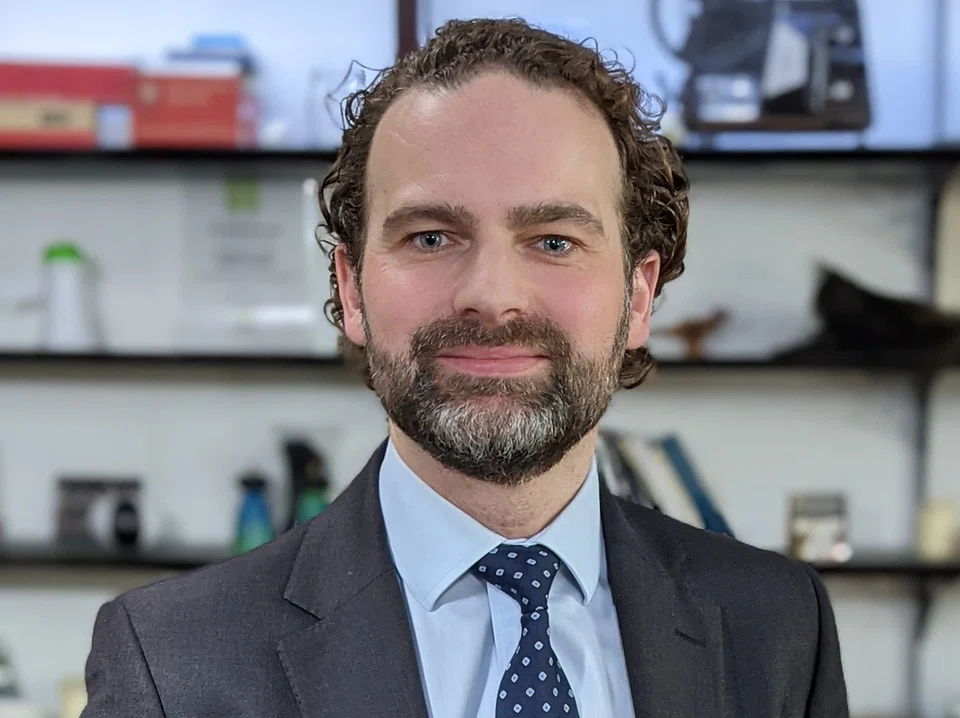
[SINGAPORE] Policy uncertainty and the fragmented economic leadership prevailing in today’s markets suggest that this is a good time for investors to reassess long-held assumptions, including those regarding assets traditionally seen as safe havens, said Joseph Little, HSBC Asset Management global chief strategist.
“We think some of the rules that have been successful and worked for investors in the recent past might need to be revisited or tweaked slightly. It’s always shades of grey; never black and white. There’s a nuance now that needs to be understood by investors.”
An example of a shift is what Little calls the “G-zero economy” – that is, the global economic leadership is no longer confined to the G7 or G10, which are groupings of industrialised economies.
Economic growth in the US is cooling rapidly, he noted. “The leading premium growth rates are clearly in this region in South-east Asia and other parts of Asia, and the Global South. The balance of economic power has changed, and, when we look a little further ahead, we expect that shift to become more prominent.
“Investors need to revise their assumptions around the exceptionalism of the US stock market, and rethink the role that emerging markets can play, with a much greater focus on granular allocation.”
HSBC Asset Management recently published its 2025 mid-year outlook, titled New Rules. In it, it argues that a structurally weaker US dollar, greater policy flexibility in key regions, and a broad transition to a multipolar world create a “supportive environment” for emerging-market assets, particularly equities and local-currency bonds.
“We still see many parts of Asian equity and bond markets offering very attractive valuations. It’s only recently that global investors have started to ask me again about the opportunity in emerging markets,” said Little.
A resilient portfolio would be “more balanced across geographies and regions than the market portfolio today”, he noted. “There is a rotation away from US assets into other parts of the world... I think there is recognition of how economic power is split around the world, and that trend is intensifying.”
Investors, he added, are set to recognise China and India, for instance, as “key strategic allocations in the portfolio which need to be managed differently”.
“We’re going to see more regionalisation. It’s a tougher environment with more volatility, and probably a more emotional journey in investing. But there’s an opportunity for investors to capture good diversification by allocating to different parts of the world in a more decisive way.”
He maintained that the US stock market is overvalued. “There are question marks around profits and elevated bond yields which are... not falling as growth risks are coming into conversation. That means the valuation position of US stocks is really not looking that good. The equity risk premium looks vulnerable.”
“No longer the only game in town”
Another aspect that needs a rethink is the question of which assets qualify as safe havens. “Investors have grown up with the mindset that the US Treasury market and the US dollar are safe assets. They remain very liquid for portfolios, but are no longer the only game in town for global investors.”
Eurozone bonds, which are attracting increasing interest, is a possible proxy for safety, although the development is likely to be gradual. “There is an idea that a euro bond market could be created, although it (will not) happen overnight. We’ve seen huge demand for Swiss franc assets. And in Asia, the China and India bond markets are seen as opportunities.”
He believes the highest-quality credits in the private debt space are also worth a look. “Investment-grade private credits can lift yields a bit, but it’s also true that the highest-quality segments of the corporate sector have better balance sheets than Western governments in particular.”
Between 2010 and 2019, foreign investors held an average of 58 per cent of the eurozone government debt. But this dropped to 43 per cent in 2022 before showing signs of recovery in 2023 and 2024, said HSBC Asset Management in its report.
TRENDING NOW

Grab CEO’s wife Chloe Tong on life with Anthony Tan and finding her purpose

What role can Japan play in Asean’s future?

He built the Vingroup empire. Now South-east Asia’s richest man is handing some key roles to his sons
Asean’s challenge is to become resilient against global geopolitics: former Indonesia trade minister

