The S$1 million National Day paradox: ‘money dysmorphia’ amid a wealth surge

Why Singapore’s wealth boom is making the next generation feel poor
Summarise
    • As National Day approaches, Singapore is a winner by most traditional measures. But despite more people qualifying as millionaires, many do not feel financially secure.
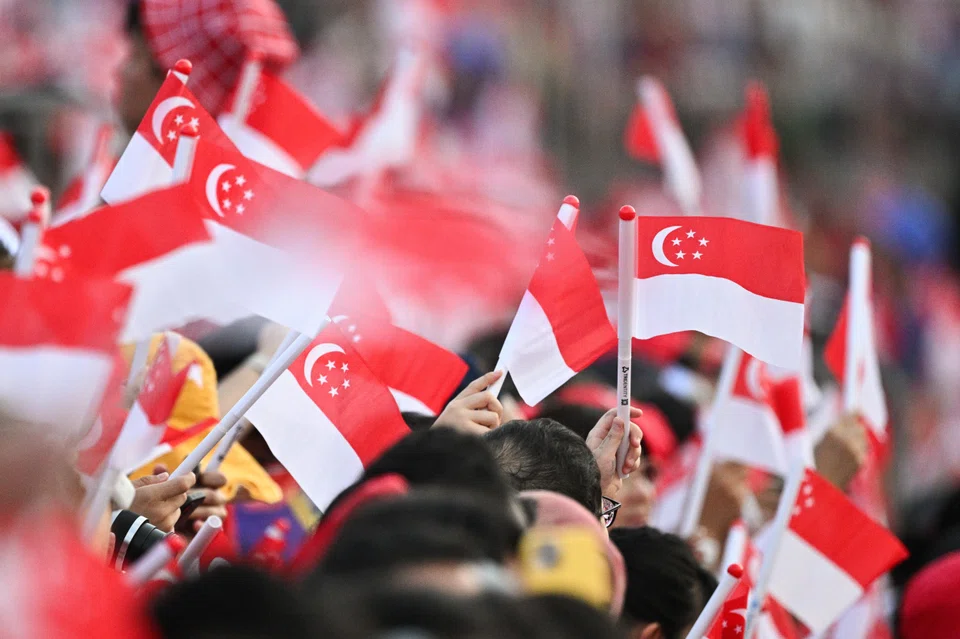
    • As National Day approaches, Singapore is a winner by most traditional measures. But despite more people qualifying as millionaires, many do not feel financially secure. PHOTO: BT FILE
    Published Fri, Jul 31, 2026 · 03:00 PM

    SINGAPORE celebrates another chapter as one of the world’s greatest economic success stories this National Day. We have transformed from a small trading port with no natural resources into one of the world’s strongest sovereign balance sheets in just 61 years.

    Today, more Singaporeans are millionaires than ever before. Rising property values, Central Provident Fund savings, investments and decades of disciplined wealth accumulation have quietly created a nation in which many households have a net worth running into seven figures.

    By almost every traditional measure, Singapore is a winner. Yet whenever I speak to university students, young professionals and mid-career executives, I hear a very different story. They do not feel financially secure. They feel anxious.

    This is Singapore’s new S$1 million National Day paradox. Singaporeans have become “paper millionaires” through state-subsidised housing, yet feel financially strapped due to the high cost of living, the catch-22 of selling and rebuying a home, and wealth being completely tied up in the roof over their heads.

    They are asset-rich but cash-poor, making retirement planning difficult without liquidating their homes to downsize.

    When people don’t feel rich

    The UBS Global Wealth Report 2026 indicates that the average wealth of each Singapore adult is US$527,217.

    The report also estimates that Singapore is now home to about 244,000 US-dollar millionaires, with their wealth continuing to be supported by strong property ownership, retirement savings and financial assets.

    However, averages tell only part of the story. Household wealth is not the same as disposable cash flow.

    Much of Singaporeans’ wealth is tied up in homes, CPF balances and long-term investments, rather than money that can be spent freely.

    At the same time, wealth is unevenly distributed, meaning average figures mask very different lived experiences among households.

    This creates what I call “money dysmorphia”. In the Moneyverse, people measure wealth very differently from economists. They compare themselves against what they believe they need to feel safe.

    Someone may technically be a millionaire because they own a home that increased in value over 25 years. Yet they may simultaneously worry whether they can educate their children, support ageing parents, manage healthcare costs, comfortably retire – and still enjoy life.

    Housing the most visible expression of the paradox

    No asset better illustrates this point than housing. The term “million-dollar HDB (flat)” transitioned from a shocking headline into a regular market feature.

    For early generations, housing has been the single largest creator of personal wealth. Property values have strengthened their retirement balance sheets and lifted their household net worth over the past four decades.

    For younger Singaporeans, however, the same rising prices mean greater income commitments – higher deposits, larger mortgages, longer repayment periods.

    Furthermore, securing a prime-location BTO (Build-To-Order) flat requires navigating stricter subsidy clawback models and 10-year Minimum Occupation Periods.

    Consequently, young couples face a difficult choice. Should they lock up their capital in a restricted asset for over a decade, or enter the expensive resale market, where a standard flat commands a seven-figure price tag?

    While older homeowners celebrate rising valuations, first-time buyers experience the opposite emotion. Every increase in property prices represents another step further away from affordability.

    The wealth accumulated by one generation has unintentionally raised the entry point for the next. Those with homes worth S$1 million on paper may appear wealthy, but it does not necessarily make daily life feel more affordable, unless they can monetise their properties.

    A different definition of financial security

    Singaporeans’ definition of financial security has quietly shifted.

    For decades, our formula for financial security was relatively straightforward. Study hard. Secure a stable job. Buy a home. Work hard. Retire comfortably.

    The Moneyverse reality is very different for the country’s millennial and Gen Zs households. They are expected to live longer than previous generations.

    Healthcare costs continue to rise. Artificial intelligence is reshaping careers. Investment opportunities have become global, digital and increasingly complex.

    Furthermore, those in the bottom 20 per cent, holding a S$293,000 net worth, would need to save 100 per cent of their earnings for 451 years to match the S$5.3 million average wealth of the top 20 per cent.

    In other words, their financial well-being is no longer determined solely by how much money they earn.

    That is why I distinguish between financial literacy and money literacy. Financial literacy is knowledge of how products like mortgages, insurance, investments and CPF work; money literacy, on the other hand, is knowledge of how wealth behaves over an entire lifetime.

    It asks the relevant questions: How do I make decisions under uncertainty? How do I avoid lifestyle inflation? How do I prepare for careers that may not yet exist?

    How do I achieve work optionality? These are the questions that will define our next generation’s financial security.

    The National Day question

    Singapore’s challenge ahead is psychological as much as financial. National wealth should ultimately improve the quality of life for all Singaporeans, and not merely increase the value of our sovereign balance sheets.

    As we celebrate another National Day, the most important question we need to ask ourselves is not how many millionaires Singapore has created.

    It is how many Singaporeans wake up each morning believing that financial security remains within reach for themselves and their families. Because in the Moneyverse, the greatest financial achievement is not simply becoming wealthy. It is feeling secure enough to live well.

    Part two of this National Day theme will address how Gen-Z graduates, sandwiched mid-career professionals and young families in Singapore, can financial-proof their “Singapore Dream”.

    The writer is partner at InvesUnited and Penguin Random House author of Into the Moneyverse