

The SaaS apocalyse: When fear does the thinking
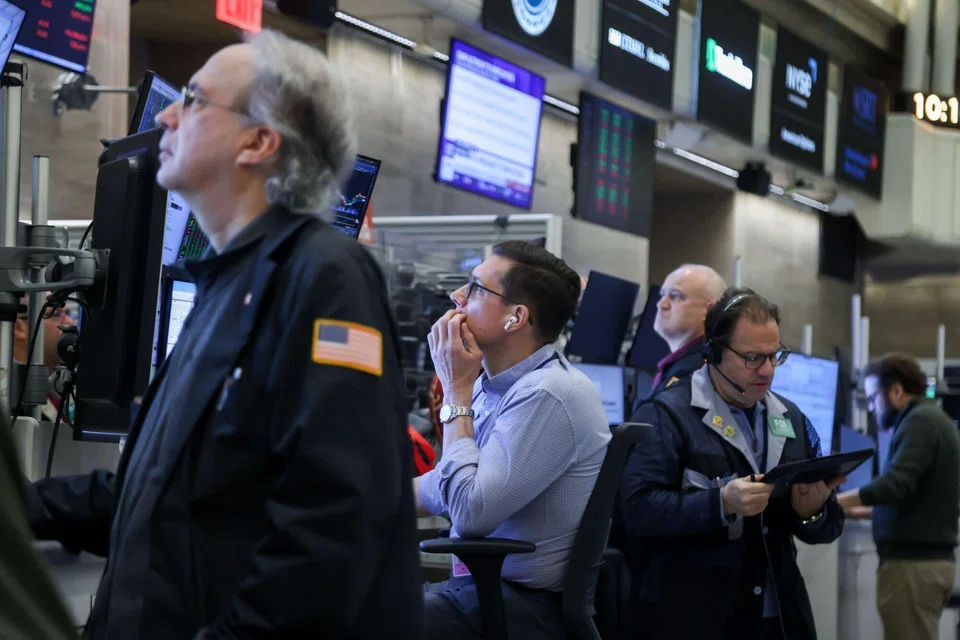
THE stock market can’t make up its mind. On the one hand, it is fretting over the hundreds of billions of dollars being spent on artificial intelligence (AI) infrastructure.
Tech giants such as Amazon, Alphabet, Meta Platforms and Microsoft have collectively earmarked more than US$600 billion in capital expenditure for 2026 alone, a figure that comfortably surpasses Singapore’s entire gross domestic product.
Investors are asking: Will all this spending ever pay off?
On the other hand, the same stock market is saying that AI is so powerful it will wipe out the entire software-as-a-service (SaaS) industry.
In case you missed it, the SaaS sector has been under siege. Since the start of the year, shares of ServiceNow have fallen by over a third, despite the company beating earnings expectations in its latest quarter.
Over the same period, Salesforce and Adobe shares declined by 28 per cent and 23 per cent, respectively.
On a broader scale, the iShares Expanded Tech-Software Sector Exchange-Traded Fund has dropped by nearly 25 per cent this year alone.
“The arrival of a powerful new competitor or trend does not automatically spell doom for incumbents. The best companies adapt, evolve and find ways to coexist, often emerging stronger than before. ”
The rapid plunge in stock prices has led analysts at Jefferies to coin the term “SaaSpocalypse”.
Could both narratives hold some truth? It’s possible. AI spending may well be excessive in the short term, and some SaaS companies will face disruption.
But here’s the problem. The market is not pricing in a nuanced middle ground. It is pricing in both worst-case scenarios simultaneously – and that’s where the logic breaks down.
The logical impossibility of extremes
Let’s pause and think about these narratives. If AI is powerful enough to destroy the entire SaaS industry, then the massive AI infrastructure spending by the tech giants could be justified.
But what if the opposite is true? If the infrastructure spending is wasteful – if AI will never generate the returns to justify the investment – then why are we so sure it will be powerful enough to wipe out an entire industry?
You can’t have it both ways. Yet, the stock market is behaving as if it can. This is what happens when fear does the thinking.
The late Nobel laureate Daniel Kahneman would recognise this pattern. In his book Thinking, Fast and Slow, he describes how our reflexive brain (System 1) often overwhelms our analytical brain (System 2) before the latter has a chance to kick in.
The SaaSpocalypse is a textbook case of System 1 in action: Sell first, ask questions later.
Beyond the paradox, there is a deeper assumption embedded in this sell-off – that AI and SaaS are locked in a fight to the death, and only one can survive.
But history suggests otherwise. For years, the prevailing narrative was that Amazon would destroy traditional retail. The term “retail apocalypse” became a media favourite, with pundits predicting the demise of bricks-and-mortar stores.
Walmart, with its sprawling network of physical stores, was seen as especially vulnerable. Fast-forward to today: Walmart is not only still standing, but also thriving.
The retail giant has built a formidable e-commerce business and grown its revenue to more than US$700 billion, becoming the first retailer to cross US$1 trillion in market valuation.
Meanwhile, Amazon is worth more than US$2.2 trillion.
The arrival of a powerful new competitor or trend does not automatically spell doom for incumbents. The best companies adapt, evolve and find ways to coexist, often emerging stronger than before.
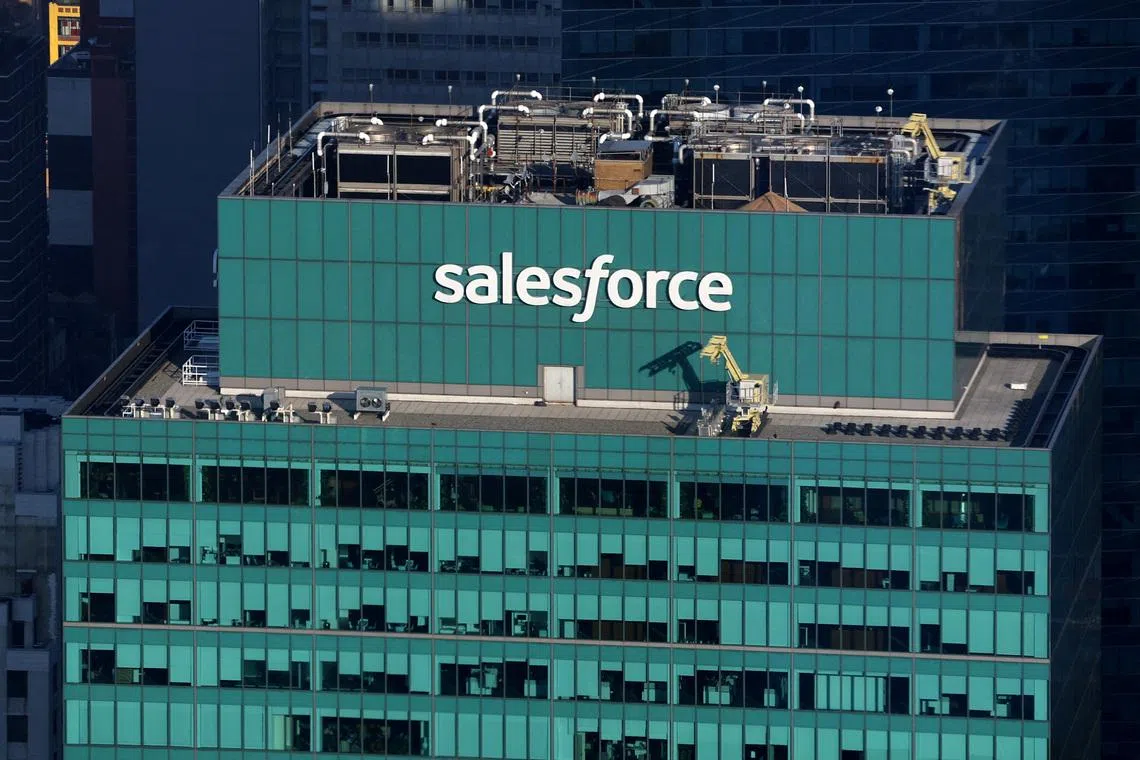
What’s more, the SaaS companies in question are not sitting idle.
ServiceNow’s AI platform, Now Assist, has amassed US$600 million in annual contract value and is on track to exceed US$1 billion for 2026.
Elsewhere, Salesforce’s AI solutions, namely Agentforce and Data Cloud, have reached nearly US$1.4 billion in annual recurring revenue.
These are not the moves of companies waiting to be disrupted. They are adapting, just as businesses have always done in the face of new technology.
The more likely outcome is that AI becomes a tool that enhances existing software, not one that replaces it entirely.
Nvidia chief executive officer Jensen Huang echoed this view, calling the notion that AI will replace the software industry “the most illogical thing in the world”.
Guilty before trial
The most telling detail of the SaaSpocalypse is this: Most of the SaaS companies have yet to report their latest earnings.
In other words, the sell-off is not driven by poor business results. Instead, it is driven by a change in market sentiment.
Consider ServiceNow’s latest quarter. The company exceeded guidance across all its top-line growth and profitability metrics. Subscription revenue hit US$3.5 billion, representing 21 per cent year-on-year growth.
The reward? A 10 per cent drop on the day of the announcement.
When the stock market punishes good results, it is telling you that sentiment has overtaken fundamentals.
“Let the data, not the narrative, guide your next move.”
As investors, we should always ask: Are we reacting to what has happened, or to what we fear might happen?
The late Roy Amara, a systems scientist and technology forecaster, once observed that we tend to overestimate the effect of a technology in the short run and underestimate it in the long run. This is what we are witnessing with the SaaSpocalypse today.
A falling stock price creates a false sense of urgency. When shares drop 25 per cent in a matter of weeks, it feels like you need to act – and act now. But that urgency is an illusion.
The stock market moves in days. Business disruption, on the other hand, takes years. Even if AI does reshape the software industry, the process will not happen overnight.
Enterprise software is deeply embedded in the daily operations of businesses worldwide. Ripping out and replacing these systems is a costly, complex and time-consuming undertaking.
In other words, you will have plenty of time to observe, assess and act. There is no need to make a decision today. Instead, watch how these companies adapt. Track their revenue. Follow their earnings.
Let the data, not the narrative, guide your next move. In my experience, actual events which cause permanent damage to a business are rarer than most people think.
What is far more common is the stock market overreacting to a story, only to correct itself when the facts catch up.
The SaaSpocalypse may grab headlines today. But for patient investors, time is on your side.
The writer owns shares of Alphabet, Amazon, Adobe, Meta Platforms and Microsoft. He is co-founder of The Smart Investor, a website that aims to help people invest smartly by providing investor education, stock commentary and market coverage.
TRENDING NOW

Britain’s mansion tax shows the difficulty of targeting wealth

Once staunchly pro-China, Malaysian Chinese businesses are now distancing themselves from Beijing

The only common thing in S-E Asia is that we all eat rice: Cisco’s Asean president
Singapore data centre operator DayOne opts for US IPO at likely US$20 billion valuation

