

Share financing: Why disciplined positioning matters more than market momentum
A recent Money Hacks podcast episode puts the focus back on asset consolidation, risk awareness and fundamentals
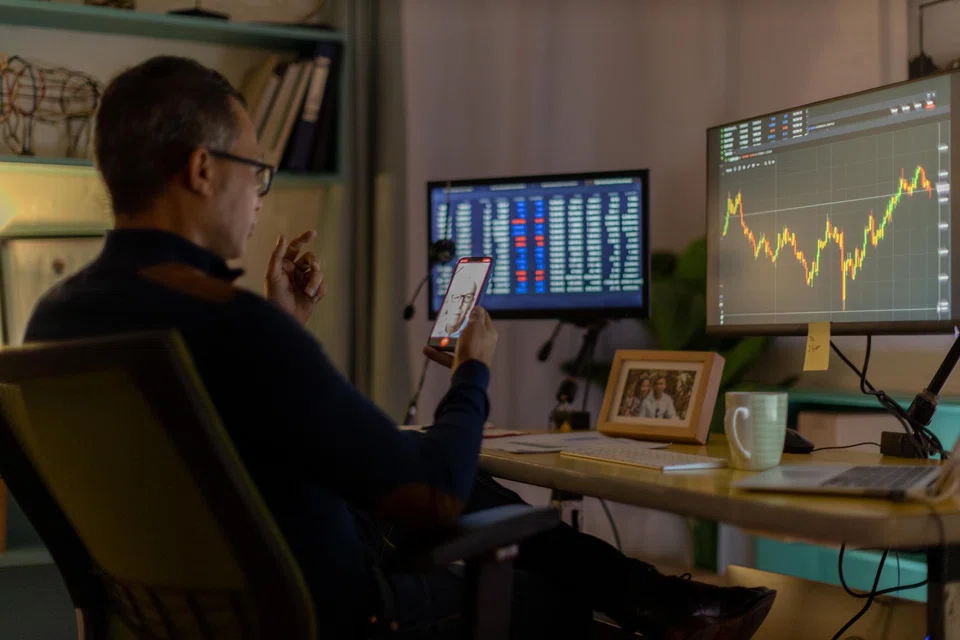
EQUITY markets in Hong Kong, Singapore and the United States have swung between rallies and sharp pullbacks in recent months. Shifting expectations around interest rates, coupled with geopolitical tensions including the evolving situation in Iran, have kept volatility elevated.
Some investors may consider using leverage – borrowing to invest – to capture opportunities that emerge amid the volatility by taking on larger positions.
One common form of leverage is share financing, which allows investors to borrow against pledged securities to buy more shares in the market.
Speaking on a recent episode of the Money Hacks podcast, Ben Paul, senior correspondent with The Business Times, emphasised that leverage is a tool that demands discipline. “It is a higher risk way of investing and you’ve got to know what you’re doing.”
He noted that interest rate environments influence how investors think about borrowing. In periods of lower rates, some have used leverage to hold high-dividend-yielding stocks and real estate investment trusts.
The quality of the underlying stock is also important. Marginable counters are generally more liquid and less volatile, making it possibly easier to exit if sentiment shifts. By contrast, illiquid or highly speculative names can amplify losses when leverage is applied.
The Business Times podcast host Howie Lim cautioned during the episode: “Investors may stand to earn higher returns from share financing, but they could also face the risk of significantly amplified losses.”
Find your risk tolerance
In the same podcast episode, David Kuo, co-founder of The Smart Investor, emphasised focusing on fundamentals when using share financing. Investors should ask whether they would be comfortable owning the business for the long term rather than attempting to time short term price movements.
“Look at the fundamentals of the company and say…is this a company that I really love and I would like to hold it forever,” he said.
That makes research even more important when borrowed funds are involved. Investors should examine factors such as earnings track record, debt levels and cash flow strength before committing capital.
Once you’ve decided to use share financing, how much leverage to take on depends on the individual, Kuo noted. “It is really up to the individual. Ultimately, it is your risk tolerance.”
David also referred to a “pyramid” approach to building an equity portfolio. In this model, about 60 per cent of holdings are in income-generating stocks that provide relatively steady dividends, forming the base of the portfolio. Another 30 per cent can be allocated to growth stocks with stronger capital appreciation potential, while a smaller portion – around 10 per cent – may be set aside for more speculative ideas.
The structure reflects a balance between stability and opportunity: relatively more dependable dividend payers may potentially anchor the portfolio, while growth and higher-risk positions offer the potential for stronger returns.
Consolidate to unlock opportunities
Share financing becomes easier to use when an investor’s shares and cash are consolidated with one broker, allowing them to view their portfolio clearly and access investment services more conveniently.
Most local investors are familiar with holding Singapore-listed securities in their Central Depository (CDP) accounts. However, Paul noted that the Singapore Exchange is looking to facilitate the broader use of broker custody accounts. Moving assets into a broker’s custody, he said, “opens the door to a range of services that the broker could provide, including share financing”.
In a market where trading is largely conducted through digital platforms, a single consolidated view reduces the need to toggle between multiple accounts. A clearer snapshot of holdings across markets can support more informed, as well as speedier, decisions.
Said Wilson He, managing director of OCBC Securities: “As markets evolve, capital efficiency becomes the real driver of long‑term wealth. By consolidating your equity investments with one broker and employing prudent financing, investors can unlock more productivity from the assets they already hold.
Full service brokers and advanced trading platforms can potentially help investors stay supported through market cycles. It is this broader ecosystem that drives wealth compounding over time. That matters when you are considering share financing, because the decision is about total portfolio risk.”
The process of transferring shares from a CDP account to a broker custody one can now be done digitally, making it more convenient for investors. OCBC Securities was one of the first brokers in Singapore to make this simplified process available to its customers.
Custody accounts are segregated from the broker’s own assets and safeguarded under Singapore’s regulatory framework.
For customers who decide to use share financing, OCBC Securities allows trading of up to five times the original value when cash is pledged as collateral. The brokerage also offers share lending services where customers who lend their shares receive a lending fee of up to 8 per cent per annum, depending on market demand*.
Customers who transfer at least $100,000 worth of eligible assets, of which at least $50,000 must be in shares, by April 10, 2026, can receive up to $1,200 in cash rewards. In addition, customers who participated in the promotion can earn 1 per cent per annum interest on USD and HKD investment fund balances^ held in their eligible trading account until Dec 31, 2026. Promotion terms and conditions apply.
Customers can also take advantage of the iOCBC trading platform’s A.I. Oscar, which provides personalised stock insights based on an investor’s consolidated holdings and trading activity with OCBC Securities.
Share financing is not a shortcut. It is most suited to investors who understand market cycles, monitor their portfolios closely and maintain adequate liquidity alongside leveraged positions. Used thoughtfully, it can expand the range of tools available to capture opportunities while keeping long term holdings intact, but investors should also strongly consider the risks involved and whether it is suitable for them.
Learn more about consolidating your assets with OCBC Securities here.
* The lending of securities is not guaranteed, and the lending fee may vary depending on market conditions. OCBC Securities will only borrow your securities based on prevailing market demand, and there may be instances where some or all of your securities are not lent out. ^ All funds are held in a trust account and subject to the relevant OSPL Standard Trading Terms and Conditions. Important note: This advertisement has not been reviewed by the Monetary Authority of Singapore. Trading in capital markets products and borrowing to finance transactions can be very risky, and you may lose all or more than the amount invested or deposited. Please seek advice from an independent financial adviser before committing to a trade or purchase. Regardless, you should always carefully consider the suitability of the product and any trading decision. The information provided does not consider your investment objectives, financial situation, and particular needs. For any graph, chart, formula or device, there may be limitations and difficulties in its use. Any reference to a company, financial product, asset class or figures is for illustration purposes only. For any historical information, past performance is not necessarily indicative of future performance. OCBC Securities Private Limited (“OSPL”) makes no representations or warranties in respect of any information provided herein or in your personalised AI watchlist (generated based on demographic data and your trading history with OSPL). Any information provided should not be construed as personal trading recommendations or financial advisory from OSPL. OSPL is not responsible for any loss howsoever arising, directly or indirectly, as a result of any person acting on any information provided. The information provided may not be published or circulated in whole or in part without our prior consent. All views or information expressed or provided by the speakers during or in relation to the podcast belong to and are that of the speakers and are for information purposes only. They do not take into account the specific objectives, financial situation or particular needs of any particular person. You should not make any decisions without independently verifying or assessing the contents. For the full disclaimers, refer to go.iocbc.com/AIOscar Risk warning for Share Financing Borrowing to finance the trading of securities (leveraging/gearing) carries a high degree of risk. If the value of the collaterals declines substantially, falling below the maintenance margin requirement, you may be called upon to deposit substantial additional funds on short notice in order to maintain your position. If you fail to comply with a request for additional funds or reduce your loan within the specified time, your position may be liquidated at a loss and you will be liable for any resulting deficit in your account. Risk Warning for Lending Securities
It is important that you fully understand the risks involved in enabling OCBC Securities Private Limited (“OSPL”) to borrow, on-lend or deliver your securities for OSPL’s discharge of OSPL’s delivery obligations of such securities to third parties. These risks include the following:(a) the borrowing and on-lending of your securities will be on a title transfer basis, which will necessarily mean that you will lose your ownership rights (including voting rights) and title to the same. In its place, you shall only have a right to request for the return of equivalent securities from OSPL; (b) where OSPL may, where relevant, have contractually agreed to use its reasonable endeavours to arrange for any voting rights to be exercised in accordance with your instructions, there is no assurance that such rights will be exercised as you wish, given that you are not entitled to personally exercise any voting rights attached to the securities lent to OSPL during the period of the loan. Therefore, where a significant corporate action or vote occurs while the securities are on loan, you may be unable to personally vote in accordance with your desired outcome or participate in the vote. Where you request for the return of the securities to you for voting, there is a risk that the securities may not be returned in time for you to exercise any voting rights; (c) your claim for the return of equivalent securities is a contractual claim against OSPL. OSPL will provide collateral to secure the obligation to return equivalent securities. Such collateral may be held by OSPL (itself or through any sub-custodian) and may be commingled together with other clients of OSPL on an aggregated and/or omnibus basis, but your interest in such collateral may not be identifiable by separate certificates or other documents or records; (d) there is a risk that any return of equivalent securities by OSPL may not occur on time for various reasons including due to settlement failures, operational errors, or disruptions in market infrastructure. OSPL may also have the right, in certain circumstances such as in an event of your insolvency, to convert the obligation to return equivalent securities to pay you the aggregate market value of the same; and (e) insofar as you will receive manufactured dividends, you may be required to treat the entire amount as income for tax purposes. For the full disclaimer, visit iocbc.com/disclaimer Information is correct as of the publication date and is subject to change without prior notice.

Share with us your feedback on BT's products and services
TRENDING NOW

DBS, OCBC, UOB rout lops billions off STI as inflation, rate concerns spook investors

Grab CEO’s wife Chloe Tong on life with Anthony Tan and finding her purpose

OCBC sheds S$8 billion in value as shares close nearly 6% down; analysts cautious on banks

Deal between tycoon friends sparks scrutiny of Philippine power sector

