

Singapore CEO’s family gains US$1.2 billion fortune from blockbuster IPO
One of Ravinder Sajwan’s most successful investments is a production company for 5-Hour Energy
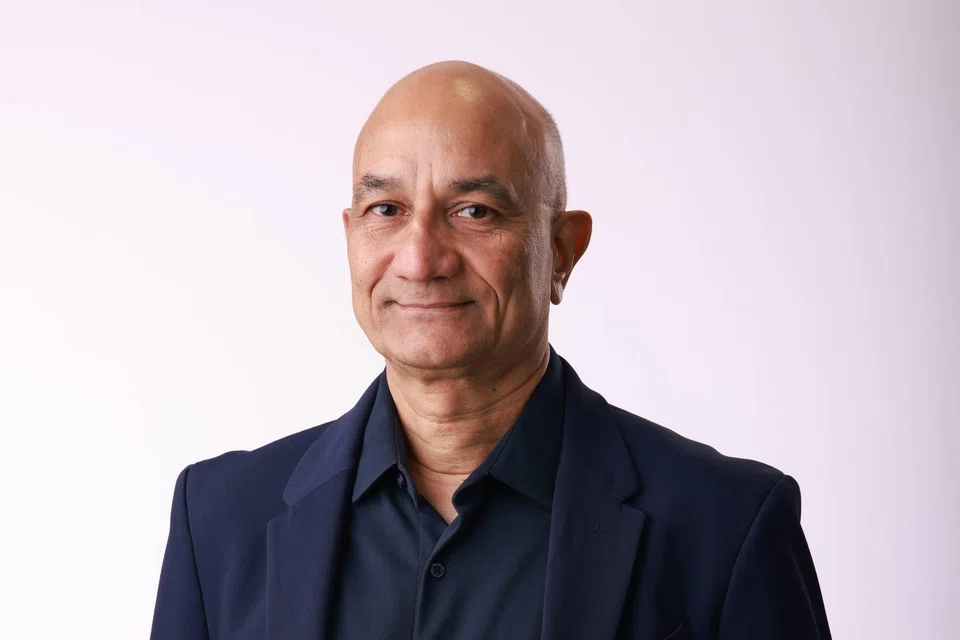
[SINGAPORE] In Ravinder Sajwan’s early Silicon Valley career, he blew through his US$3,000 monthly credit card limit every two days, hustling on a series of tech startups.
“We had no money,” said Sajwan, speaking of his first attempts at building businesses in the 1990s. “I would call the card company, say: ‘I’m really sorry, I think I messed up,’ and then got 20 credit cards. At one point, I had 65 credit cards doing just this.”
With last month’s Singapore listing of UltraGreen.ai, a company that sells fluorescent dye used in surgical imaging, the chief executive officer has struck gold.
The US$400 million initial public offering (IPO), the city-state’s biggest primary listing in eight years outside real estate, handed Sajwan’s family a stake of US$1.2 billion through their Renew Group, according to filings reviewed by the Bloomberg Billionaires Index for the first time. Renew has a majority stake of more than 60 per cent in UltraGreen.
While Sajwan runs the company, he has no direct stakes in it, according to filings. Instead, his sister Indu Rawat and her husband, Mahipal Singh Rawat, are the ultimate beneficiaries of the windfall through a little-known entity called The Saul Trust, the filings show. That entity invests globally in a variety of assets via Singapore-based Renew, of which Sajwan is CEO.
Indu Rawat and Mahipal Singh Rawat run a Hindu monastery, or ashram, in India called Hanslok that was founded by the latter’s father. Entities linked to the two have registered addresses in Singapore, as does Indu Rawat, who holds a permanent resident (PR) status in the city-state, according to filings. Indu Rawat and Mahipal Singh Rawat did not respond to written requests for comment.
Profitable niche
UltraGreen’s dye, paired with a handheld camera, allows surgeons to observe blood flows in their patients. That niche but critical component of surgery had been dominated by companies such as Michigan-based Stryker and Japan’s Daiichi Sankyo before UltraGreen’s ascent.
About a decade ago, Sajwan bought a firm producing the dye in Germany for another healthcare investment, but the company could not secure regulatory approvals, a common challenge for firms competing in the fluorescent dye market. So he decided to pivot, patching together a separate product by investing in, acquiring or partnering with distributors of such dyes as well as platforms that aggregate data and develop software.
Today, UltraGreen holds an 85 per cent market share in the United States, Sajwan said. This is despite the company raising the average cost of its dye vials in the market by 60 per cent and 30 per cent in 2023 and 2024, respectively, according to its IPO prospectus.
SEE ALSO
DBS Group Holdings, Singapore’s largest bank, was the joint bookrunner and underwriter of UltraGreen’s IPO. Sajwan, a Singapore PR and US citizen, says he is good friends with Tan Su Shan, DBS’ chief executive officer, and her husband, Chris Wilson.
Outside Renew, UltraGreen’s other top investors include 65 Equity Partners, a money manager backed by Singapore investment agency Temasek Holdings, London-based private equity firm Vitruvian Partners, which has more than US$20 billion in assets, and former Singapore Exchange chairman Kwa Chong Seng. Kwa was deeply involved in marketing UltraGreen’s share sale to investors, according to sources familiar with the matter, and now chairs the company.
Drinks empire
Sajwan, 64, was born in New Delhi. Over the years, his focus has shifted from chips to energy drinks and now healthcare.
He co-founded three startups that were sold, he said. Acclaim Communications, a maker of computer switches, was bought by Level One Communications in 1998 for about US$120 million. Level One was subsequently sold to Intel for US$2.2 billion.
One of Sajwan’s most successful investments is a production company for 5-Hour Energy, the maker of a zero-sugar energy shot created by close friend and tycoon Manoj Bhargava whose garishly coloured capsules are found in US gas stations and 7-Elevens across Asia. The business yielded strong dividends for Renew, Sajwan said.
Bhargava’s connections to Sajwan’s family go back even further. In the 1970s, he lived as a monk in the ashram Hanslok, where he met Mahipal Singh Rawat, according to interviews with other media. Bhargava did not respond to written requests for comment.
Sajwan says that he rises early to hike with a weighted backpack around Singapore’s western ridges, and drinks as much as 16 shots of espresso per day. His portfolio of businesses is managed from his headquarters, a glass-faced building flanked by a petrol station in MacPherson, an industrial district in the city-state.
Renew runs an assorted mix of companies, including True Hydration, a maker of sugar- and salt-less canned drinks; Cellular Hydration, a pocket-sized electrolyte capsule; and Renew Enhanced Circulation, which is said to improve cardiovascular health through a massage-like pressure treatment, according to its website. BLOOMBERG
Decoding Asia newsletter: your guide to navigating Asia in a new global order. Sign up here to get Decoding Asia newsletter. Delivered to your inbox. Free.
Share with us your feedback on BT's products and services
TRENDING NOW

Once staunchly pro-China, Malaysian Chinese businesses are now distancing themselves from Beijing

Looking beyond looming CEO succession, should UOB potentially pursue a transformative merger?

Could stablecoins be the future of money?

Grab CEO’s wife Chloe Tong on life with Anthony Tan and finding her purpose

