

Singapore firm launches 'blank cheque' company IPO on Nasdaq
Special purpose acquisition company set up to acquire business that aims to prove rewarding for investors.

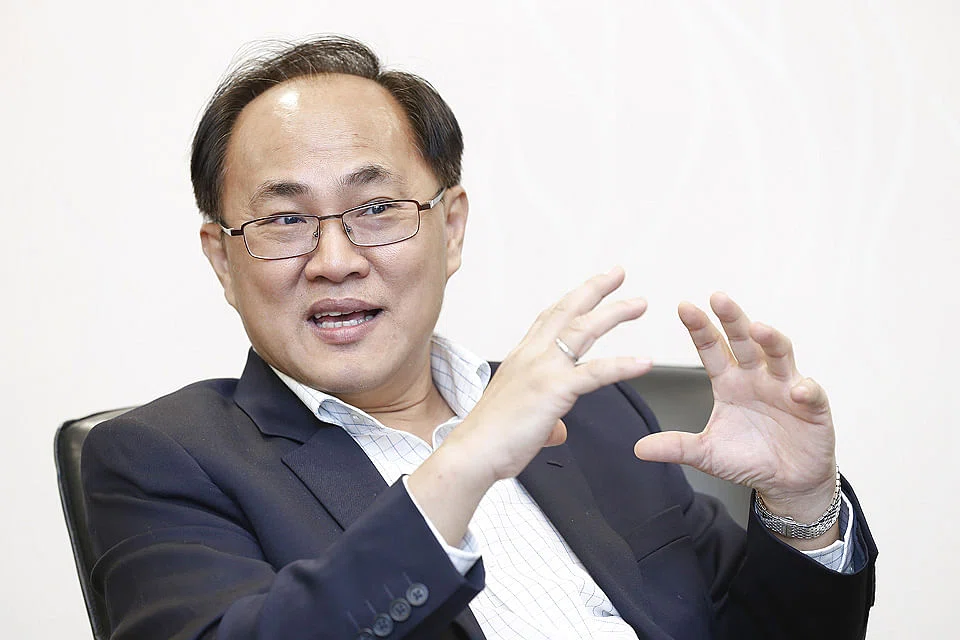
HOMEGROWN 8i Group has launched and listed a special purpose acquisition company (SPAC) on Nasdaq, adding to an asset class that is increasingly attracting institutional and retail monies.
A SPAC is a "blank cheque company'', set up for the purpose of acquiring an operating business that can hopefully prove rewarding for investors. By subscribing to a SPAC initial public offer (IPO), investors hand over a proverbial blank cheque as they have no idea at the outset what business or businesses will eventually be acquired.
8i Enterprises Acquisition Corp raised US$50 million in its listing on Nasdaq in March, comprising 5 million units at US$10 per unit. 8i Enterprises is part of a group of companies founded and headed by James MengDong Tan, who has had more than two decades of senior management and transaction experience in Asia. He was former chief executive of Nasdaq-listed Moxian Inc, and a former director of Nasdaq-listed Pacific Internet, now part of Citic Telecom International Holdings.
8i Enterprises is the first of a series of SPACs that he aims to launch. "I want to share this instrument with Singapore and the Asian community. This is an exciting instrument to help companies grow and to protect investors' money.''
The firm's chief investment officer is William Yap who has over 20 years' experience in sourcing and evaluating potential investment targets in Asia.
Key targets
8i Enterprises aims to focus on growth companies with a current enterprise value of US$150-500 million, initial revenues of US$100-150 million and EBITDA of US$30-60 million. It seeks companies that can leverage on technology to take advantage of Asia's burgeoning middle class. It is open to acquiring businesses in a number of sectors, including healthcare, energy, consumer and retail.
"We're looking at companies with revenue, a high entry barrier and a niche. It should have a strong management team.'' The valuation multiple could currently be 5 to 8 times forward EBITDA, eventually growing to 20 to 30 times.
Funds raised in a SPAC IPO are held in a trust account until a target company is identified. The search for an acquisition and negotiation phase may take up to 18 months, and the closing phase another three to five months. 8i Enterprises aims to complete its acquisition within 12 to 18 months.
The deal has to be approved by a majority of shareholder votes. Those who do not approve are allowed to redeem their units, which means they can expect to exit with their capital plus a pro-rated share of any income earned in the trust account.
Those who stay invested do so because they buy into the vision of the target company and hope to reap a multiple of their investment.
Prior to any acquisition announcement, unitholders are free to sell their units in the open market. They may retain their warrants, however, giving them a free option to own a future acquisition target. If no deal is done, the warrants expire worthless.
For the target company, being acquired or merging with a SPAC gives them an alternative route to listed status via a reverse takeover (RTO). This route is more efficient and costs significantly less than an IPO, which incurs underwriting fees plus other offering costs such as legal and accounting.
In a SPAC transaction, shareholders of the target business end up with a majority share of the new merged entity.
A SPAC unit typically consists of one common share of the new merged entity, plus a warrant and a rights share. For 8i Enterprise, each unit comprises one ordinary share, one warrant to purchase half of an ordinary share, and one right to receive one-tenth of an ordinary share upon completion of the company's business combination or deal.
The securities comprising the ordinary shares, warrants and rights will eventually trade on Nasdaq. In the meantime, units of 8i Enterprises began trading on March 28 under the ticker JFKKU. As at April 11, the shares traded at US$10.0452.
SPACs first emerged in the US in the 1980s but were rife with fraud. They re-emerged in 2003 however and experienced a strong run. By 2007 there were 66 SPAC IPOs, which raised a total of US$12 billion. The SPAC IPO market, however, closed in 2008 when markets collapsed in the financial crisis. They returned in 2010 with strong support from private equity players.
Last year, 46 SPAC IPOs raised US$10.68 billion, the strongest showing since 2007. This year as at early March, there were 12 SPAC IPOs, raising gross proceeds of US$2.64 billion.
SPACs are seen as an avenue for retail investors to participate in private market investments, but they should not be equated with PE. In PE, investors get exposure to a portfolio of companies, but a SPAC invests in one or, at most, two companies.
Annualised return
SPAC promoters may also make mistakes. Data compiled by SPAC Analytics finds that between 2003 and 2019, there were a total of 344 SPACs raising gross proceeds of US$59 billion. Of these, 84 (gross proceeds of US$11 billion) have been liquidated, and 181 completed an acquisition.
Research published by Seeking Alpha finds that a simple quantitative strategy of buying all SPAC units with IPOs between 2015 and 2017, and then liquidating the components at the time of a business combination - or redeeming common shares for cash in trust - would have averaged an annualised return of 8.35 per cent.
The paper points out that much of the upside comes from the performance of the warrants included in SPAC units. "Once an actual acquisition target is presented and a path towards closing a deal appears, warrant valuations often increase dramatically.''
The average warrant "pop'' for deals that went on to be completed within the last few years was over 54 per cent.
TRENDING NOW

He built the Vingroup empire. Now South-east Asia’s richest man is handing some key roles to his sons
Quarter of Singtel special discounted shares sold ahead of CPF Board transfer

Why Tan Aik Keong of digital solutions specialist Agmo wants to make himself less indispensable

Asia needs new energy security architecture

