

Singapore stocks in Q4 2026: A steady anchor in an AI-heavy world
The positive economic backdrop should continue to support the Republic’s market for the remainder of 2026
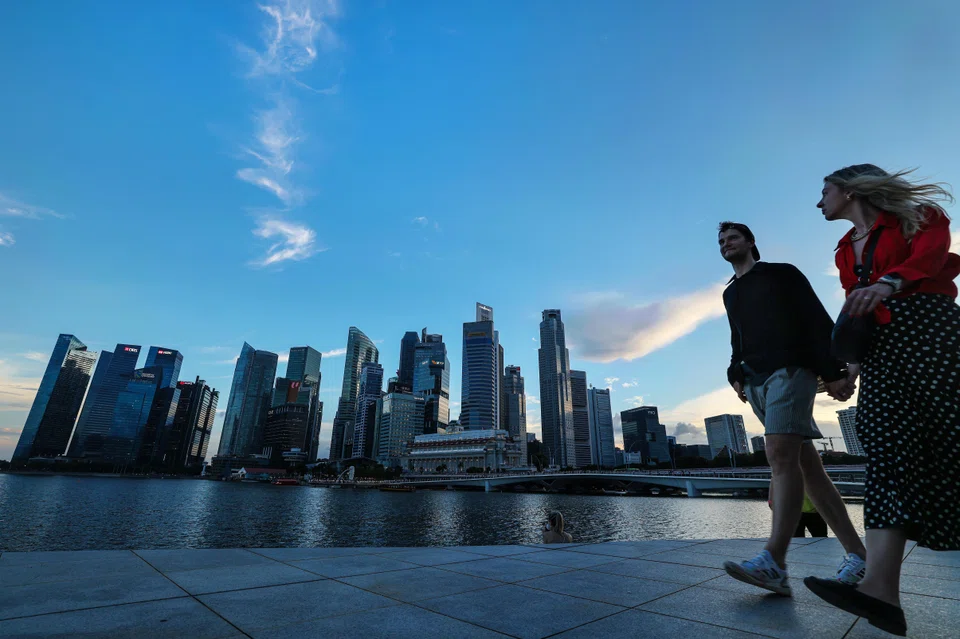
THE Straits Times Index (STI), which tracks Singapore’s 30 largest listed companies, enters the final quarter of 2026 after a strong year-to-date performance. It closed at 5,676 on Sep 30, about 22 per cent higher than at the start of the year.
Much of the gain came in July and August. In July, the STI held steady even as technology-heavy markets in South Korea, Japan and Taiwan fell sharply amid rounds of global tech sell-offs. In August, solid first-half results from most STI companies provided another lift to the index.
The positive economic backdrop should continue to support the Singapore market for the remainder of 2026. Singapore’s economy grew 6.1 per cent in the first half of the year, prompting the government to raise its full-year growth forecast for the second time to 4.5 to 5.5 per cent. Inflation also remains contained at 2.3 per cent.
With growth firm and price pressures manageable, the Monetary Authority of Singapore (MAS) has room to pursue a gradual, data-dependent appreciation path for the Singapore dollar, helping to contain the cost of imported goods. Together, solid economic growth and stable prices should provide a supportive environment for corporate earnings.
Industrials drive growth, banks provide income
Industrial companies are set to remain the main engine of the STI’s earnings growth. ST Engineering and Yangzijiang Shipbuilding have record order books, with contracts for ships, defence equipment and infrastructure already secured for years ahead. This gives investors good visibility on earnings for the next several years.
The three local banks, which make up the largest part of the index, should continue to benefit from wealth flowing into Singapore as a safe financial hub. Their interest income, which shrank as rates fell last year, is set to recover as local interest rates have edged up since May.
Together, these factors should support bank earnings for the rest of 2026 and into 2027. After a strong run, bank shares are now closer to fair value, but their dividends remain an important source of income for investors and a steady contributor to total returns.
Real estate investment trusts (Reits) are the weaker spot, as higher-for-longer interest rates continue to weigh on their payouts.
However, industrials have overtaken Reits to become the second-largest sector in the STI. With banks and industrials continuing to grow, weakness in Reits has a smaller impact on the overall index than in previous years.



Market reforms have further to run
Efforts to make Singapore’s stock market more attractive still have room to run. MAS recently appointed a third batch of Equity Market Development Programme asset managers, bringing total placements to S$5.4 billion across 14 managers and leaving S$1.1 billion of the S$6.5 billion programme still to be deployed.
A further S$20 million has been committed to support market making across around 80 small and mid-cap stocks outside the STI till 2028. Companies are also improving shareholder returns through share buybacks, while a new listing route linking the Singapore Exchange and Nasdaq went live in June.
These changes will take time to reshape the market. The benefits – including broader research coverage, more active trading and a wider choice of companies – should build gradually rather than lift the whole market at once.
This is especially true for smaller companies, which have been among the primary beneficiaries of the reforms. The share prices of many of them have risen significantly since the reforms began, making broad-based gains less likely to repeat.
From here, investors will need to be more selective, focusing on companies whose earnings can keep pace with their higher share prices.
Singapore’s place in portfolios
Based on our earnings forecasts, we expect the STI to reach 6,223 by the end of 2028. Beyond earnings growth, Singapore offers two qualities that are increasingly valuable in today’s market: diversification and income.
Global stock markets have become increasingly dominated by AI and technology companies, bringing strong growth potential but also greater volatility. The STI, made up mainly of banks, industrial companies and Reits, offers a different mix of exposures.
This was evident during the tech sell-offs since July, when many technology-heavy indices fell sharply, while the STI remained resilient and even outperformed during several periods.
Income is another attraction. With a projected dividend yield of 4 to 4.3 per cent between 2026 and 2028, the STI remains among the higher-yielding major equity markets globally.
Dividend income provides an additional source of return that is less dependent on short-term changes in market sentiment, supporting a favourable total return profile for the index.
Singapore’s investment case has therefore evolved from a rerating story into one that is increasingly supported by earnings and income. Earnings growth provides the foundation for returns, dividends add a recurring income component, while the continued rollout of market reforms leaves scope for further rerating over time.
For investors looking to diversify away from concentrated technology exposure, Singapore equities offer a differentiated combination of earnings growth, income and diversification.
The writer is a research analyst with the research and portfolio management team at FSM Global, the B2C division of iFast Financial, which is the Singapore subsidiary of iFast Corp
Decoding Asia newsletter: your guide to navigating Asia in a new global order. Sign up here to get Decoding Asia newsletter. Delivered to your inbox. Free.
Share with us your feedback on BT's products and services
TRENDING NOW

Government to bring forward raising of retirement age, give employers more financial support to create flexi-load jobs

If Europe goes to war, the fallout will be felt in East Asia

Indonesia stocks suffer worst plunge in nearly 30 years as MSCI proposes standalone status

Vietnam’s northern provinces, not Hanoi or Ho Chi Minh City, are powering near 10% GDP growth

