Singapore’s growing financial and telecom industries
Singapore, despite its relatively short history since independence in 1965, has grown into one of the economies with the highest GDP per capita globally. We discuss the rising importance of Financials, Telecommunications and Utilities industries in Singapore to its economy and equity markets

- Singapore’s economy is characterised by a robust services sector, which accounts for 65% of its GDP, marking a significant increase from 55% over the past decades. In particular, the contribution of the finance industry to total GDP rose the most, raising the importance of Singapore’s role as Asia’s financial hub.
- The flagship Singapore equity index, the Straits Times Index, is representative of the Singapore economy. The equity market is highly concentrated in Financials, especially banks. The weight of Financials in the Straits Times Index increased from 34% in 2014 to approximately 53% as of September 2024. The financial industry performed well over the past two years amid the rate hike cycle.
- In addition to Financials, AI beneficiary industries in Singapore – data center and electricity – is a rising area in Singapore’s economy and equity markets. Although Telecom and Utilities in total only account for ~10% of the index weights, the importance is increasing. The two industries have outperformed since 2Q24.
Singapore Macro Backdrop
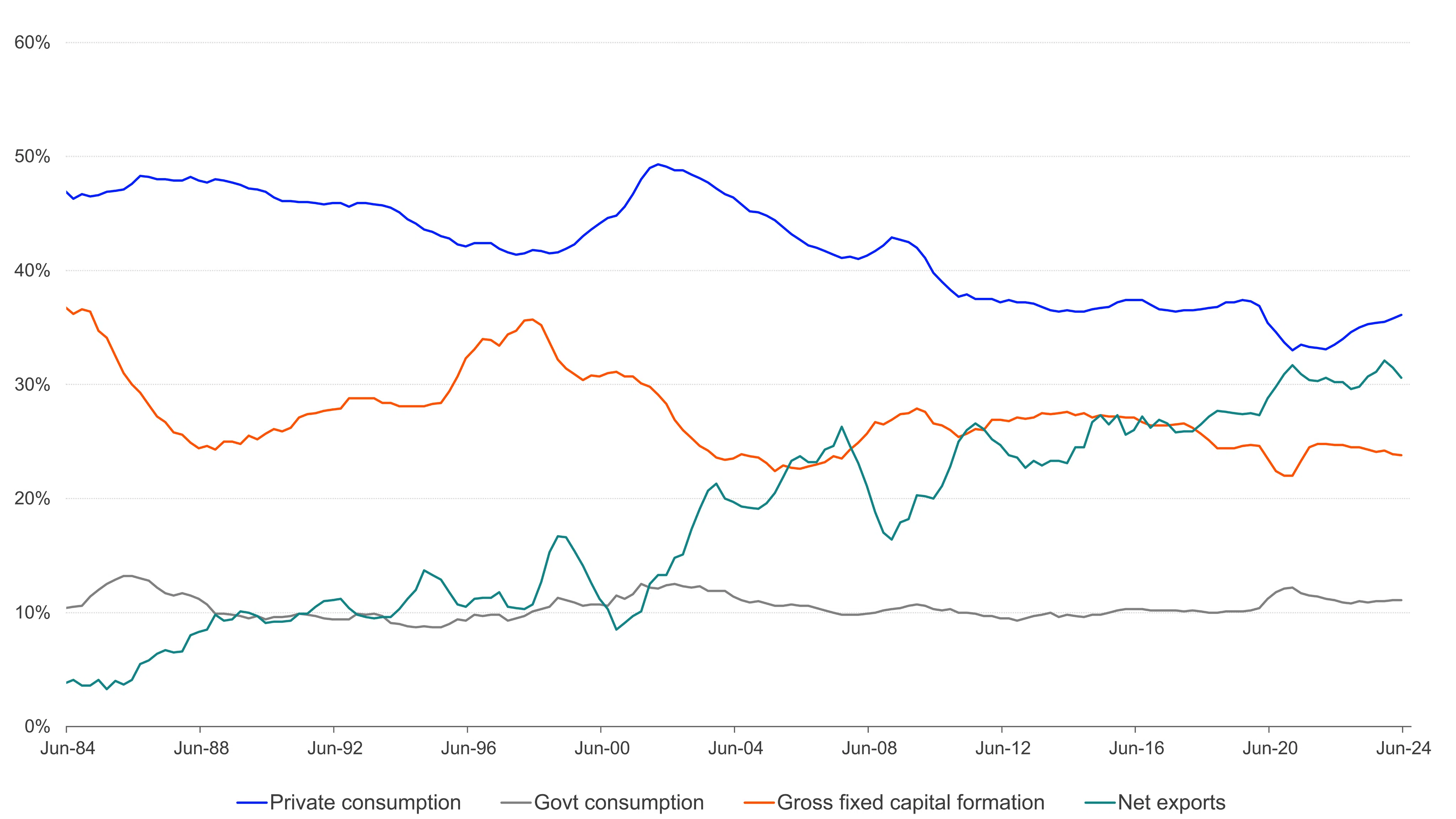
Initially established as an international trade hub, Singapore leveraged its strategic geographic location and built a business-friendly environment with freer foreign exchange frameworks, free trade agreements and tax breaks. In the 1970s, Singapore was one of the Asian Tigers and experienced impressive economic growth, with the contribution of net exports to total GDP increasing from 0% to 15% in the 1990s and further to 30% in the 2020s (Exhibit 1).
EXHIBIT 1: SINGAPORE GDP BREAKDOWN BY EXPENDITURE (% OF TOTAL GDP, 12M SUM)
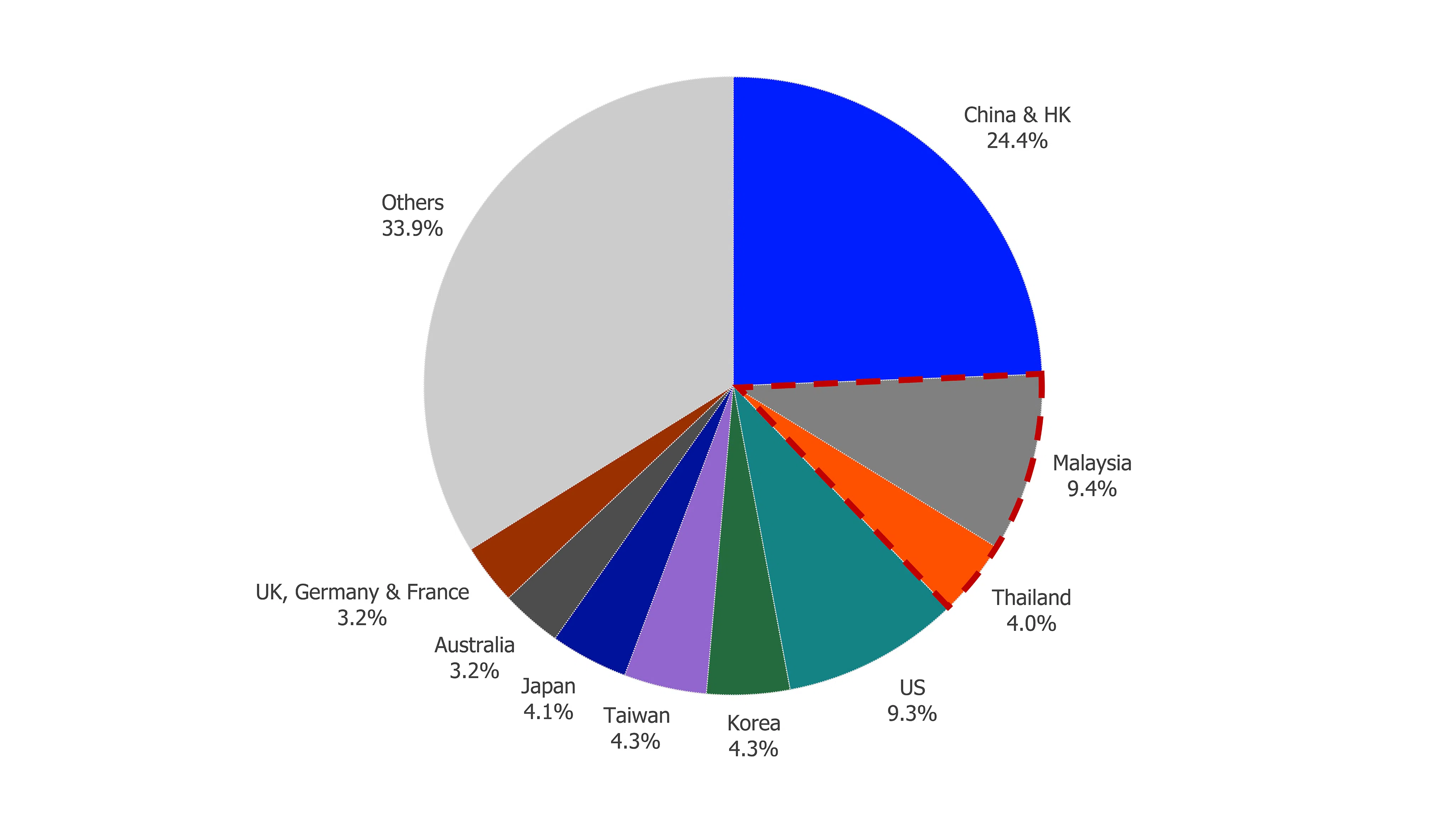
With international trade contributing notably to the economy, Singapore rose as the trade hub of ASEAN (Association of Southeast Asian Nations) and continues to rise as a key regional hub in APAC. ASEAN countries have maintained strong ties with Singapore over the past decades. In the past 10 years, Singapore has become an increasingly important trading partner with China and Hong Kong. Exports to China and Hong Kong from Singapore grew from ~10% of total exports to almost 25% over the past 30 years. Exports to Malaysia and Thailand together accounted for 13% as of end-2023, surpassing the 9.3% of exports to the US (Exhibit 2).
EXHIBIT 2: 2023 SINGAPORE EXPORT BREAKDOWN BY DESTINATION (% OF TOTAL EXPORTS)
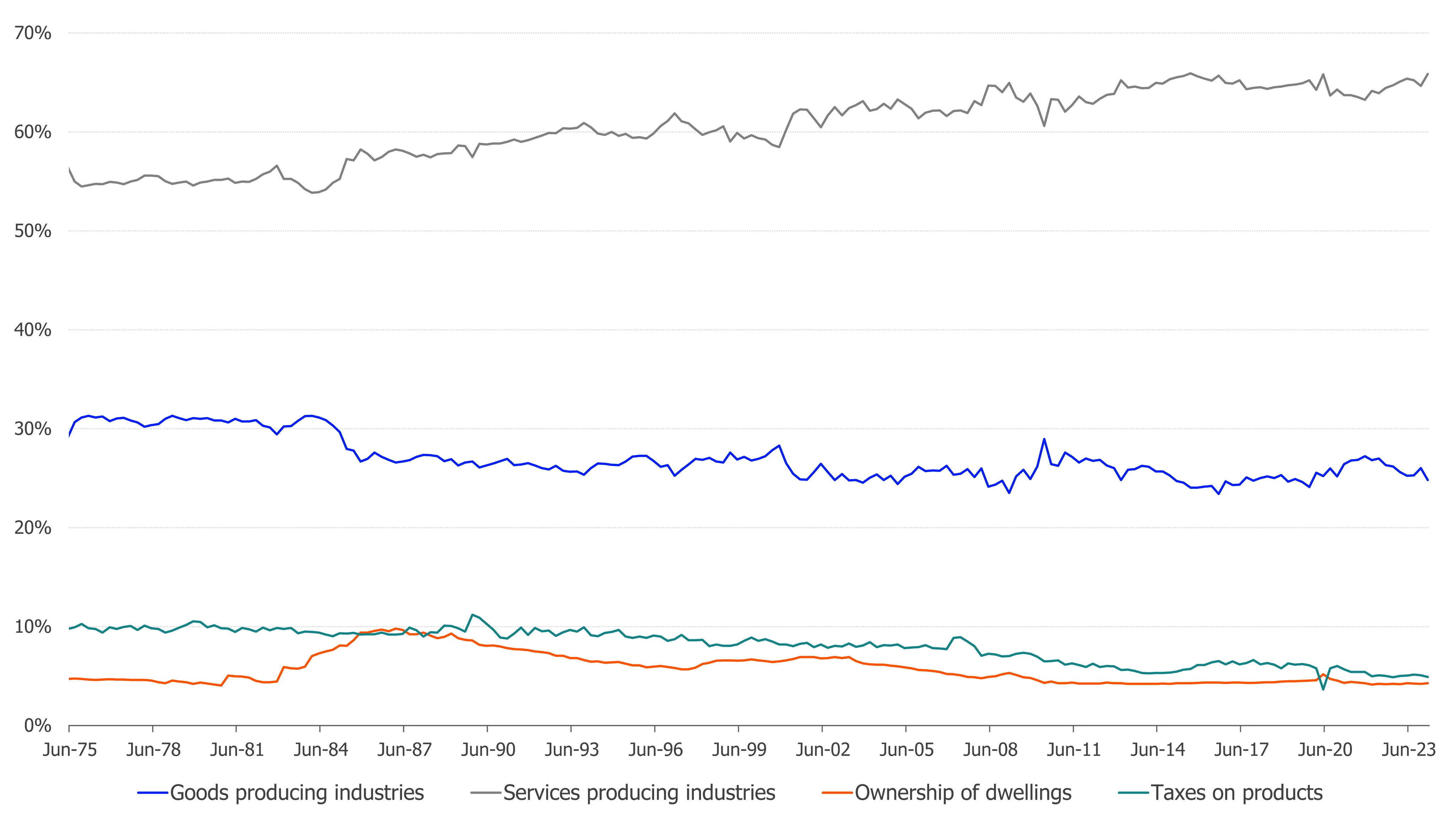
In addition to its critical role in international trade, Singapore possesses an educated and competitive workforce. The investment in human capital not only allows Singapore to offer a skilled labor force for its manufacturing industries, but also attracts foreign talent across APAC and global for its services industries. Singapore’s manufacturing is strong in sectors such as electronics and chemicals. Manufacturing contributes 25% of Singapore’s GDP (Exhibit 3). As for the services sector, it has become even more important to the economy. The services industries account for 65% of its GDP, marking a significant increase from 55% over the past 50 years.
EXHIBIT 3: SINGAPORE GDP BREAKDOWN BY INDUSTRY (% OF TOTAL GDP, 12M SUM)
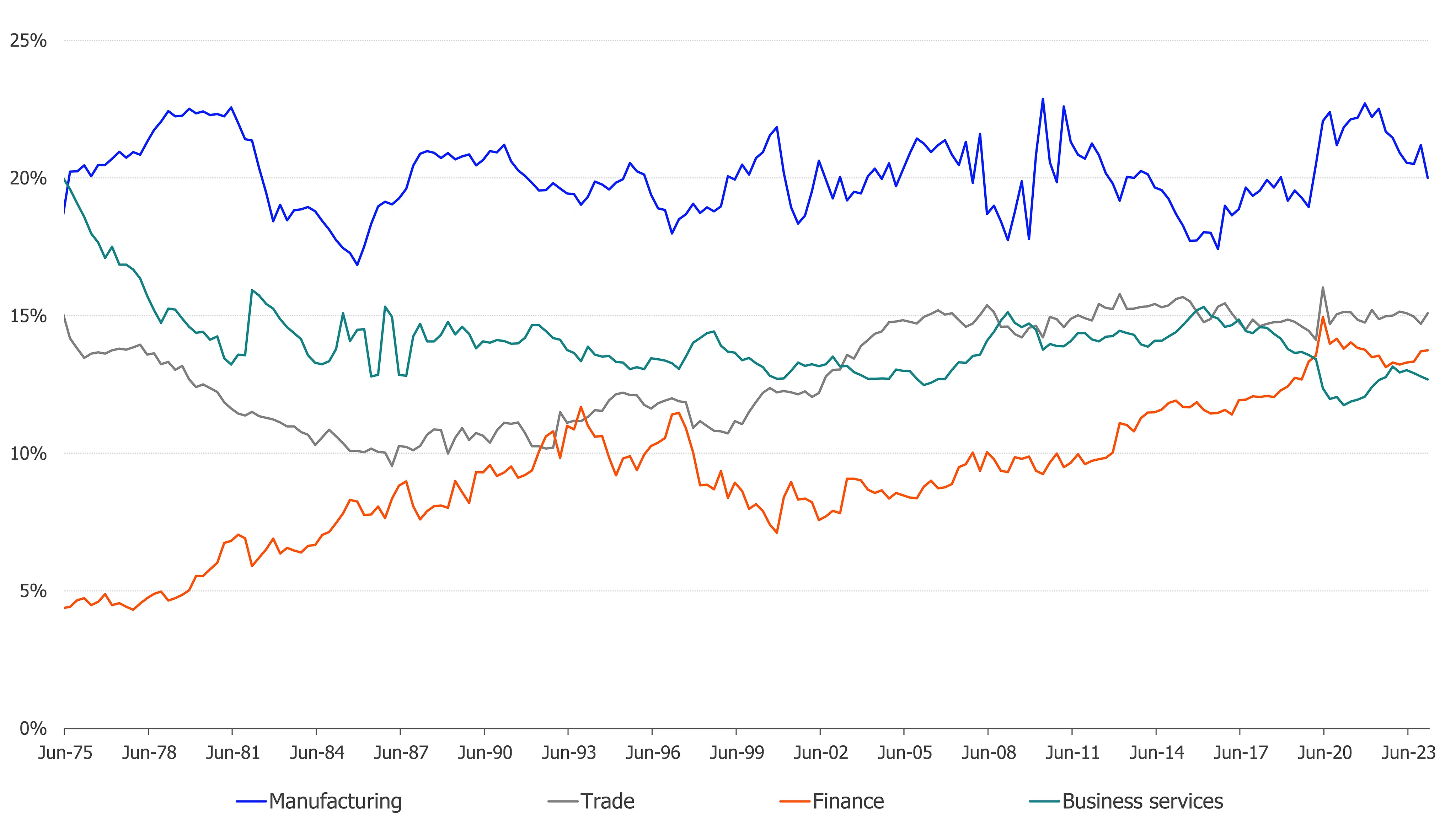
The major sectors of the services industry are Trade, Finance, and Business Services, reflecting its important role as an international trade and financial hub in Asia. As illustrated in Exhibit 4, the Finance sector has seen substantial growth, expanding from a 5% share to 14% of GDP over the last 50 years. Emerging as a rising Asia financial center, Singapore’s finance industries provide a wide range of services such as banking, investment and wealth management, REITs and insurance to both regional and global clients. For example, one notable area of rapid growth in finance is wealth management. According to the Monetary Authority of Singapore, the number of single-family offices grew from 400 in 2020 to 1,650 as of August 2024[1]. The amount of wealth flowing into Singapore is unneglectable, positioning the country as a flourishing, key wealth hub in APAC.
In addition to the rise in the financial industry, much discussion has been around Singapore’s data center and electricity sectors benefiting from the AI waves. Telecommunications and Utilities stocks in Singapore are hence one other area that excites equity markets.
EXHIBIT 4: SINGAPORE GDP OF MAJOR INDUSTRIES (% OF TOTAL GDP, 12M SUM)
Straits Times Index
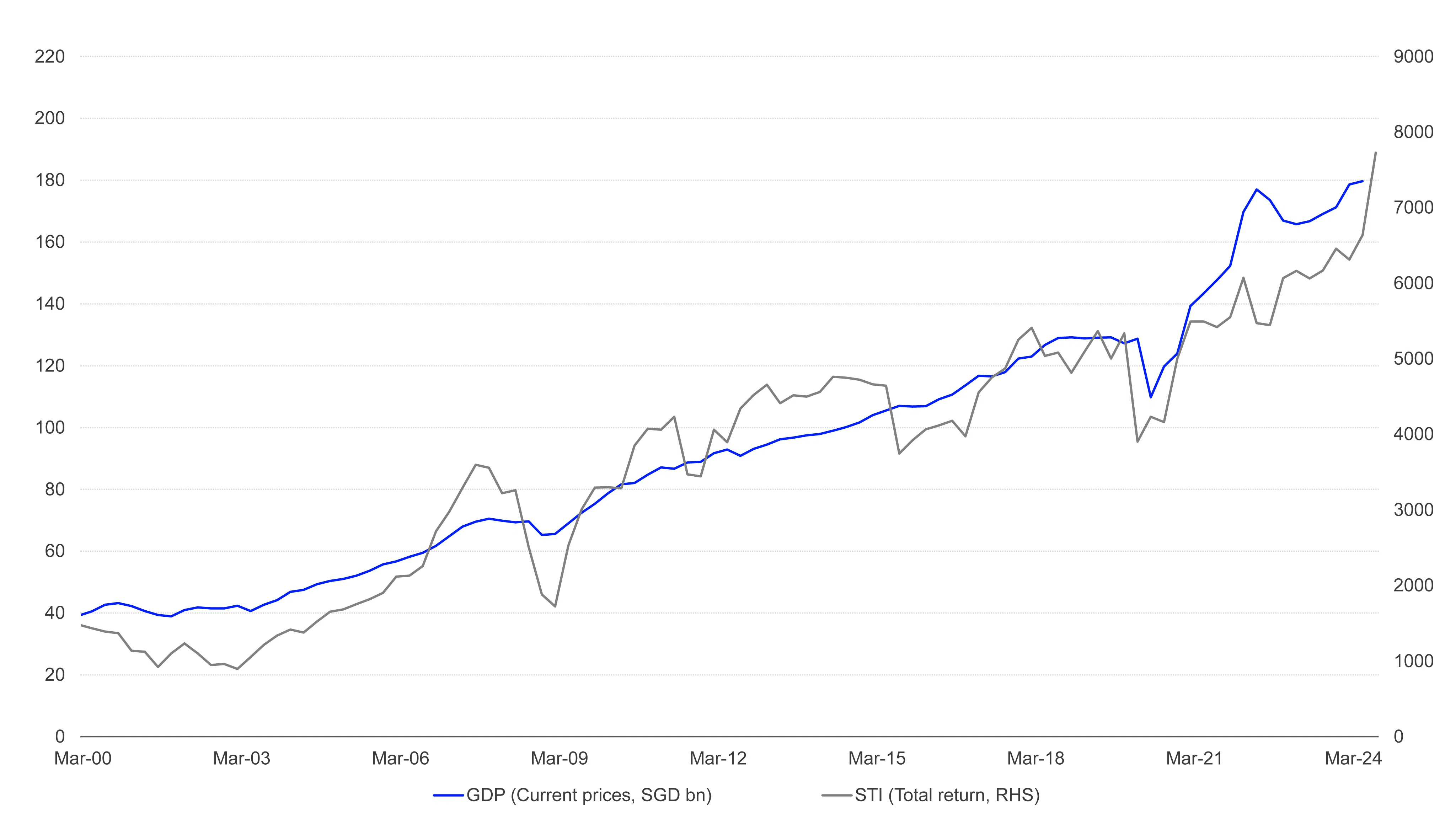
As discussed above, Singapore’s economy is characterized by a robust services sector. The Singapore equity market reflects this. As Exhibit 5 shows, the flagship Singapore equity index, the Straits Times Index (STI), has a strong correlation with GDP. In the below section, we discuss the major industries that notably contribute to both economic growth and the equity markets of Singapore.
EXHIBIT 5: SINGAPORE GDP VS STRAITS TIMES INDEX
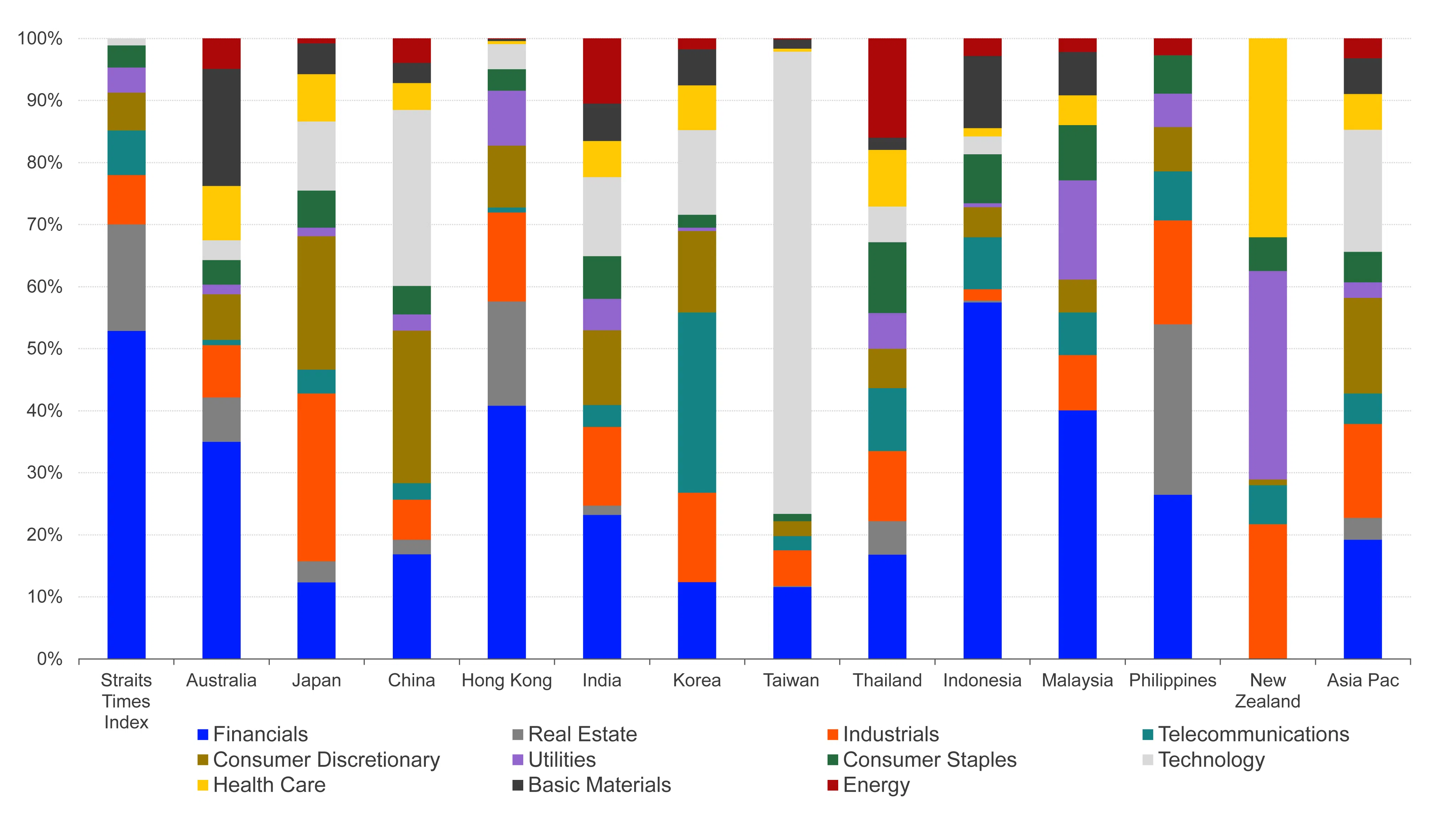
To begin with, we compare the industry weight of STI to other APAC markets, using the FTSE All-World series indices. Exhibit 6 shows that Financials accounted for 53% of the weight in the STI, and Real Estates for 17%. Financials are largely made up of Banks, which accounted for 50% of the total weight. Singapore has the second highest weight in Financials (vs Indonesia’s 57% in Financials), suggesting the rising importance of the finance industry to not only Singapore’s GDP but also its equity market.
EXHIBIT 6: STRAITS TIMES INDEX INDUSTRY WEIGHTS VS FTSE ASIA PAC
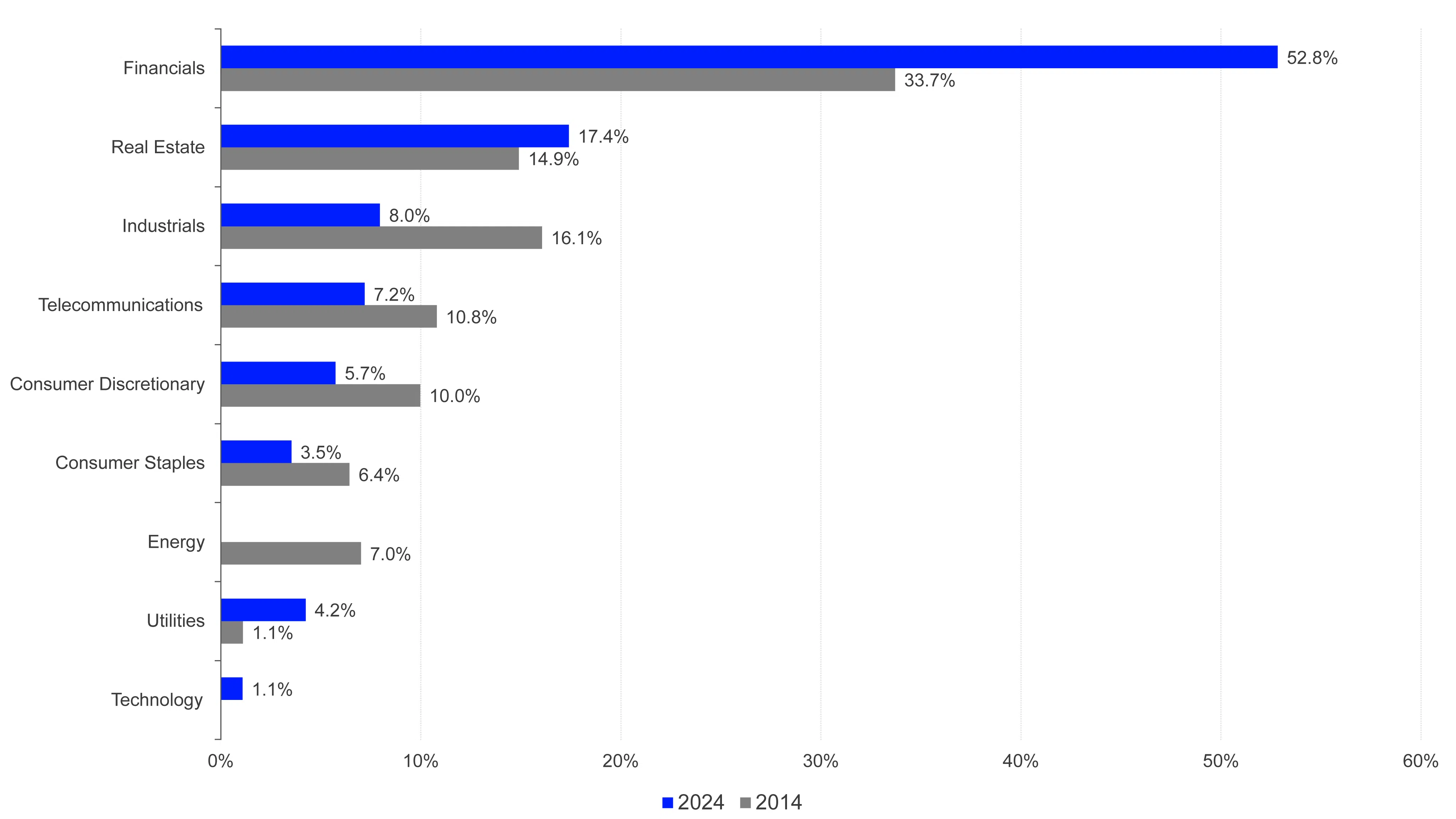
Comparing it to its own history, the weight of Financials increased from 33.7% to 52.8% in the past 10 years (Exhibit 7). Real Estate is another industry of which the weight is relatively high compared to other APAC markets, and has increased from 14.9% to 17.4% over the last 10 years, mainly due to an increase in REITs. The weight of Industrials, on the other hand, decreased from 16.1% in 2014 to 8.0% in 2024. Technology accounts for only 1.1% of the index. Telecommunications and Utilities, which are expected to benefit from rising AI data center demand, together accounted for 11.2%, as of Sep 2024.
EXHIBIT 7: STRAITS TIMES INDEX INDUSTRY WEIGHTS CHANGE - CURRENT VS 2014
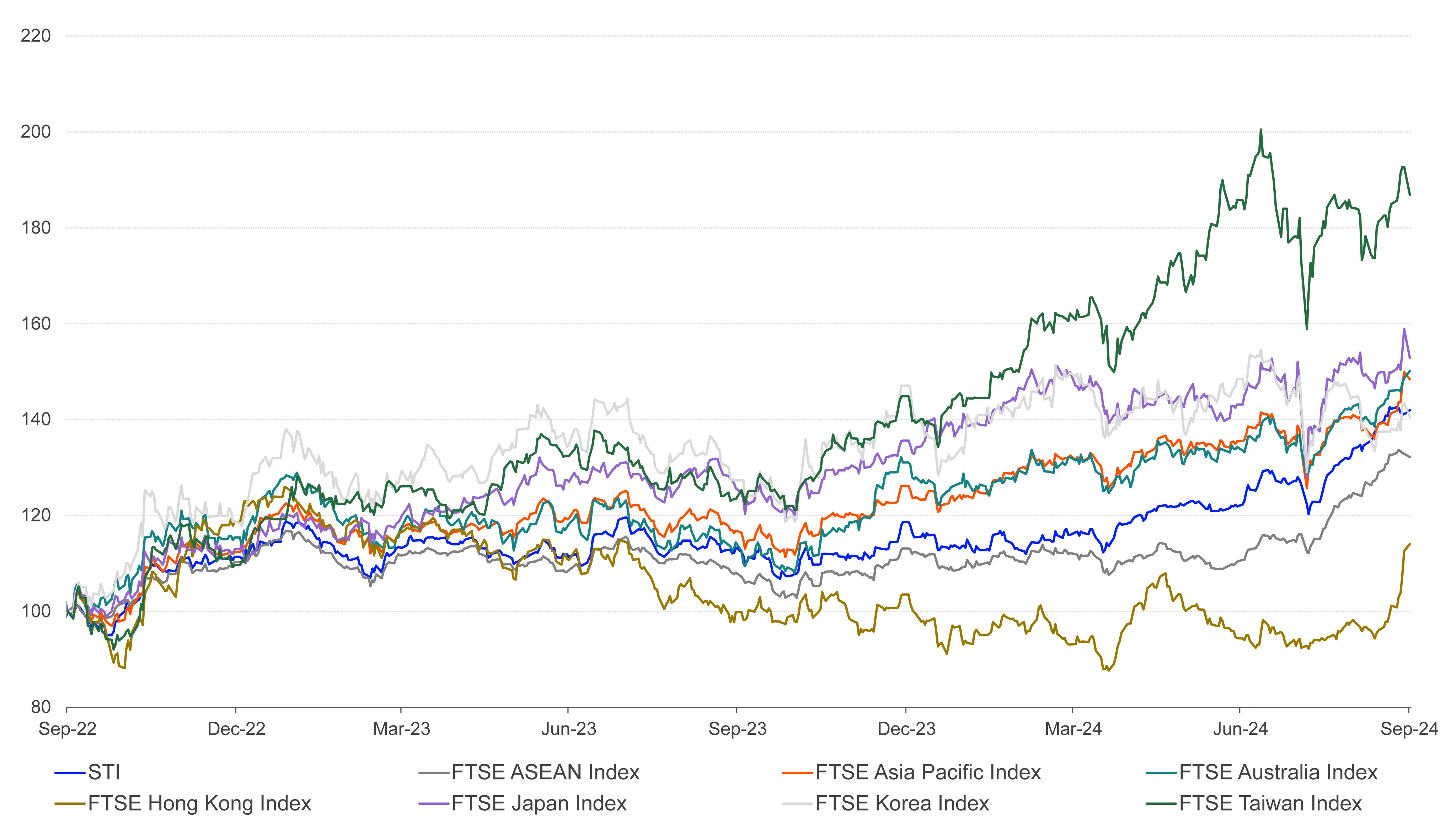
On performance, Exhibit 8 shows that, in the past two years, the STI outperformed most other APAC markets, with the major reasons including the defensive characteristics of the markets and high dividend yields. A high-interest-rate environment allowed Singapore’s Banks to outperform, while Telecommunications and Utilities, despite its lower weight, benefited from the AI cycle since 2022. However, a relatively lower weight in Technology made it harder for Singapore to outperform other markets with higher contributions from Technology, such as Japan and Taiwan.
EXHIBIT 8: STRAITS TIMES INDEX TOTAL RETURN VS OTHER APAC MARKETS (USD, REBASED)
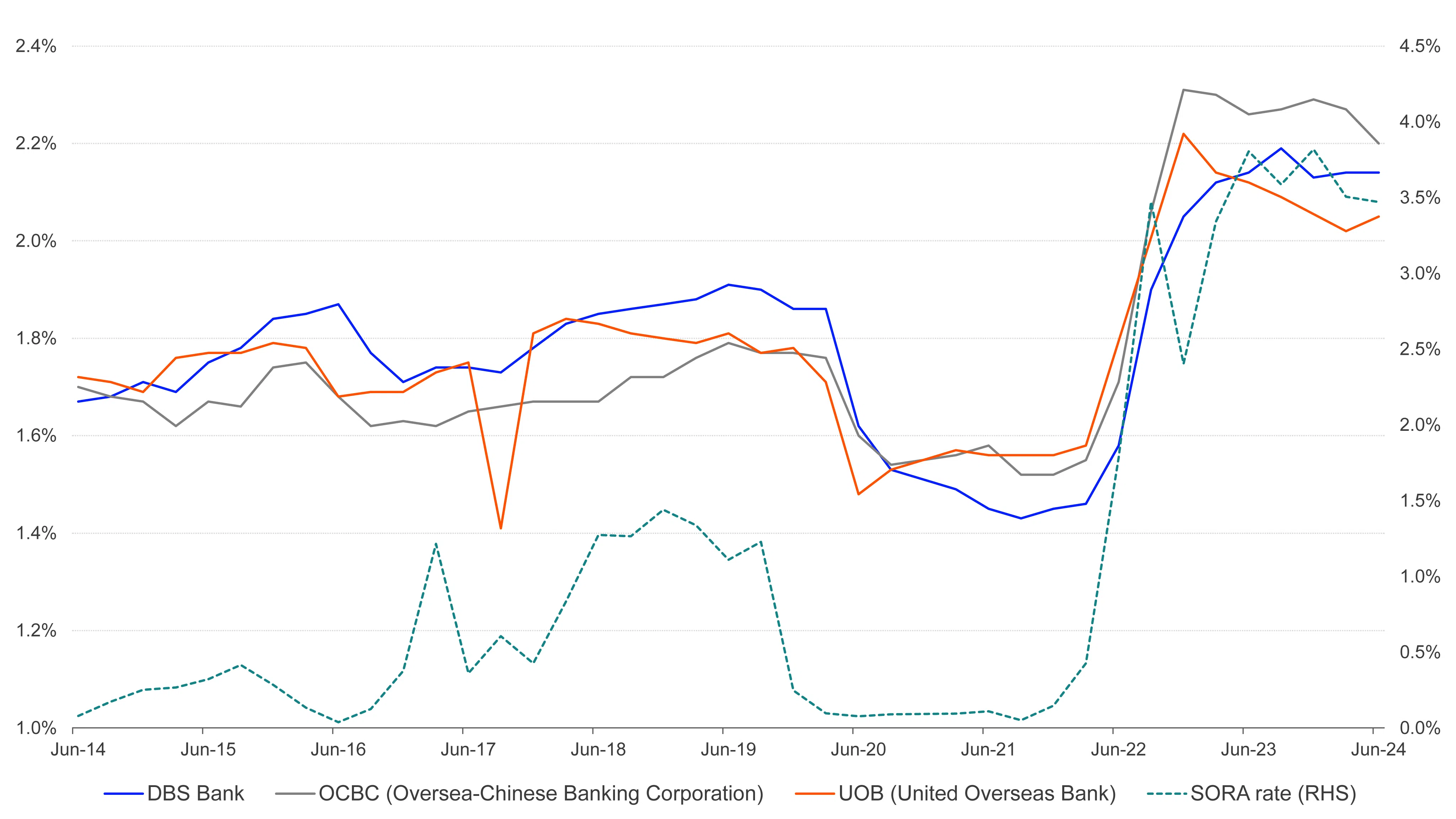
Breaking performance down by industry (Exhibit 9), the main positive contribution of total return came from Financials. Financials, especially Banks, tend to perform better than other industries in a high-interest rate environment which allowed Banks to keep a high net interest margin (Exhibit 10). Singapore rates tend to move closely with US rates. As long as the US Federal Reserve’s rate cut cycle is a shallow one, US and Singapore interest rates could stay at a level that is still high compared to historical levels. As a result, banks could continue to benefit from a “higher for longer” rate environment.
EXHIBIT 9: STRAITS TIMES INDEX TOTAL RETURN BY MAJOR INDUSTRY (USD, REBASED)
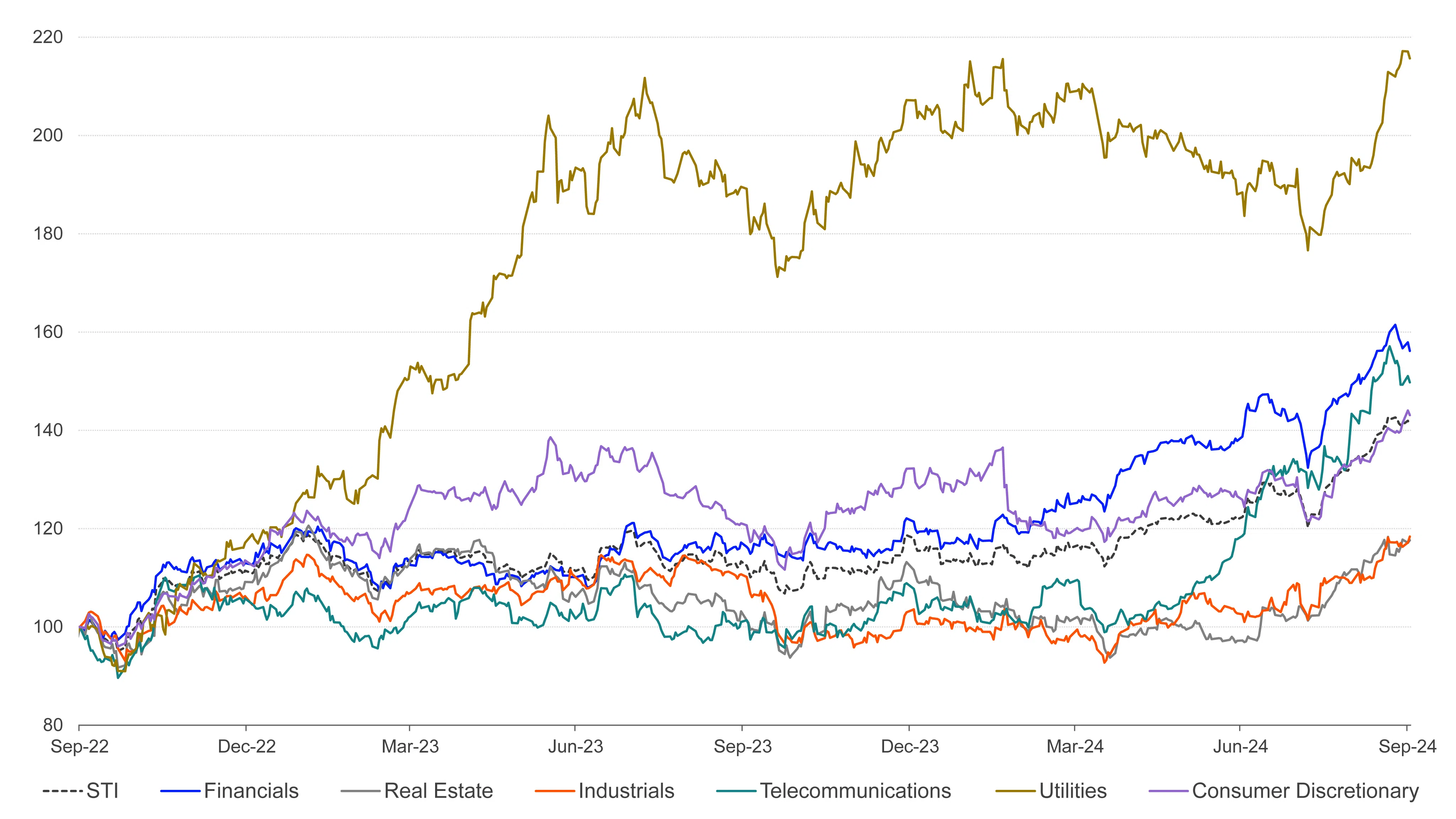
EXHIBIT 10: NET INTEREST MARGIN OF THE THREE BANKS STOCK IN STI VS SORA RATE
Telecommunications and Utilities, though only accounting for 11.2% of index weight, have picked up since 2Q24 as data center demand rises amid the AI boom (Exhibit 9). Singapore announced Green Data Centre Roadmap in May 2024 – the government not only aims to increase more than one-third of its current data center capacity, but also to keep data centers green. As a digital economy has become one major area of development, stock prices of both Telecom and Utilities have benefited as a result since 2Q24.
In conclusion
The Straits Times Index reflects Singapore’s strategic economic focus, with Financials being a critical contributor and Telecommunications and Utilities industries becoming a rising area. As an Asian financial hub, the Financials industry, particularly Banks, benefit from a high-interest-rate environment. Telecommunications and Utilities have gained momentum due to the AI-driven demand for data centers, supported by Singapore government’s Green Data Centre Roadmap. The two industries are expected to become rising contributors to Singapore’s economy and equity markets.
Share with us your feedback on BT's products and services