

Smart yield hunting: CGSI says buy SGD, AUD-issued bonds, 5-10 year investment-grade debt
Analyst recommends investment-grade bonds with mid-term maturity rates

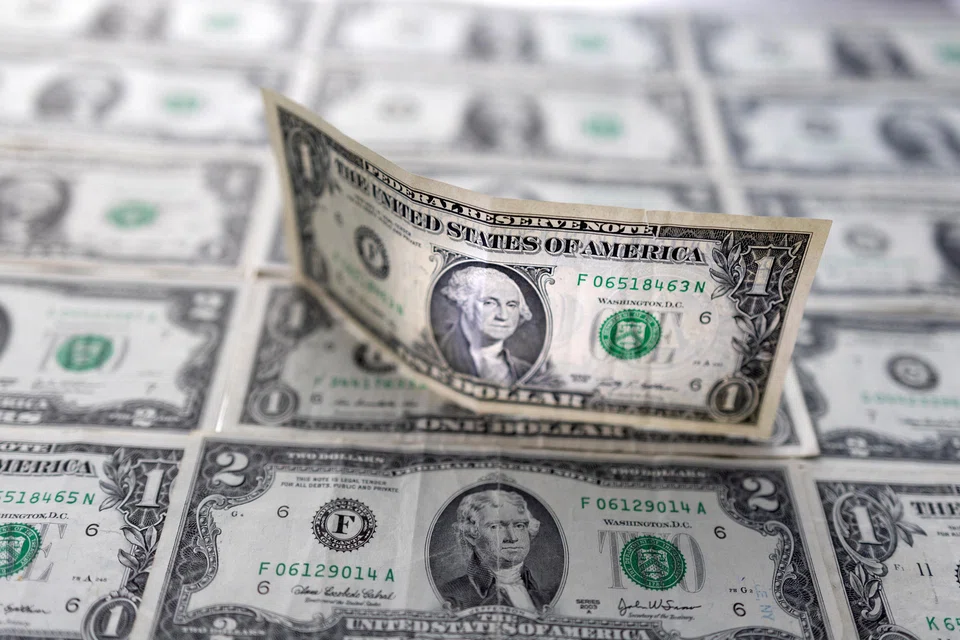
[SINGAPORE] Fixed income is offering the “most attractive” entry point since the post-2008 era due to elevated real yields, said CGSI on Friday (Jan 16).
Despite the US Fed’s rate-cut trajectory, current macro conditions are pointing to a higher-for-longer rates situation, CGSI said.
“Despite the Fed’s rate-cut trajectory, expectations for further easing have been pared back amid stronger‑than‑anticipated economic data and persistent inflation pressures,” it said.
In particular, five to 10-year investment-grade coupon bonds offer an attractive “risk-adjusted positioning”, said CGS international analyst Chan Wai Mei.
The “primary driver” of bonds remains real yields, which are holding at 15-year highs, she said.
“While nominal rates have retreated from their 2023 peaks, real yields persist between 1.5 and 2 per cent.”
Such yields averaged between -1 and 1 per cent for the decade prior to 2022.
Earlier in 2025, the Fed lowered its key interest rates three times, to the current range of 3.5 to 3.75 per cent. Policymakers anticipate only one additional cut of 25 basis points (bps) in 2026, signalling caution amid a resilient US economy, with inflation still above the 2 per cent target.
The Fed also revised its 2026 growth forecast upward to 2.3 per cent, from 1.8 per cent in September 2025.

Chan said: “With yields at current elevations, the path to income appears clear to us. In our view, investors can secure attractive returns without assuming excessive credit or duration risk.”
The Bloomberg US Corporate Index – a primary proxy for global US dollar-denominated investment-grade bonds – had a total yield of 4.85 per cent as at Jan 13, 2026, consisting of a 4.09 per cent risk-free rate and a credit spread of 76 bps.
“While the current spread is significantly lower than the long-term average of 152 bps, the absolute yield and risk-free components remain at 15-year highs,” Chan added.
Five to 10-year investment-grade coupon bonds
Chan is bullish on five to 10-year investment-grade coupon bonds.
She said the 30-year Treasury yield has “repeatedly tested” the 5 per cent threshold during this cycle, caught between opposing forces – of persistent US fiscal deficits and “sticky” core inflation exerting upward pressure – while the Fed’s rate-cutting trajectory pulls yields down.
Long-duration assets, which are over 20 years, are therefore expected to exhibit “significantly higher price volatility” than the rest of the curve throughout 2026.
And while short-term rates – with maturities of under a year – stay attractive by historical standards, they are still expected to decline as the Fed progresses with its easing cycle.
“The ‘belly’ of the curve strikes a balance – maximising yield while avoiding the heightened sensitivity and volatility associated with longer-dated bonds,” Chan said.
To her, this strategy provides durable income and poses lower re-investment risk, compared to rolling over short-term deposits.
“The chosen duration reflects a balanced trade-off between maximising yield and managing duration risk.”
Currency diversification amid US dollar strength
Despite ongoing conversations about de-dollarisation, Chan stressed that the US dollar’s role cannot be fully replaced by alternative currencies, precious metals or crypto assets.
“While its share has gradually declined, no single alternative offers the scale, stability and institutional trust required to displace it in the foreseeable future,” she said.
The US dollar may still be the dominant global reserve and trading currency, but allocating strategically to a basket of major currencies can help “mitigate volatility” stemming from US monetary policy shifts, or idiosyncratic US economic factors.
Bonds issued in other currencies – such as the Singapore dollar and the Australian dollar – are therefore “good options” too, the analyst said.
“Both currencies are backed by the respective countries’ ‘AAA’ rating and real yields are at historical highs – with 10-year government bond yields adjusted for inflation hovering at 1 per cent.”
Decoding Asia newsletter: your guide to navigating Asia in a new global order. Sign up here to get Decoding Asia newsletter. Delivered to your inbox. Free.
Copyright SPH Media. All rights reserved.
TRENDING NOW

Once staunchly pro-China, Malaysian Chinese businesses are now distancing themselves from Beijing

Looking beyond looming CEO succession, should UOB potentially pursue a transformative merger?

Could stablecoins be the future of money?

Grab CEO’s wife Chloe Tong on life with Anthony Tan and finding her purpose

