State of play at half-time of 2026
Investors should design a game plan, stay committed to their strategy and focus on long-term performance
AS THE World Cup season kicks off in June, global equity markets have been in full swing despite a volatile first half.
Despite the headwinds in the Middle East peace process, elevated energy prices, inflationary pressure and rising bond yields, equity markets have rallied in April and May, with developed markets equity indices recording new all-time highs.
Artificial intelligence-related sectors, including semiconductors and large-cap tech stocks in the US and North Asia, enjoyed gains on the back of a rerating. Prospects after the Trump-Xi Summit and US-Iran peace negotiations eased investors’ concerns about the macro, trade and corporate environment.
The imminent listings of at least three mega initial public offerings at favourable valuations also added to the shift in market sentiment.
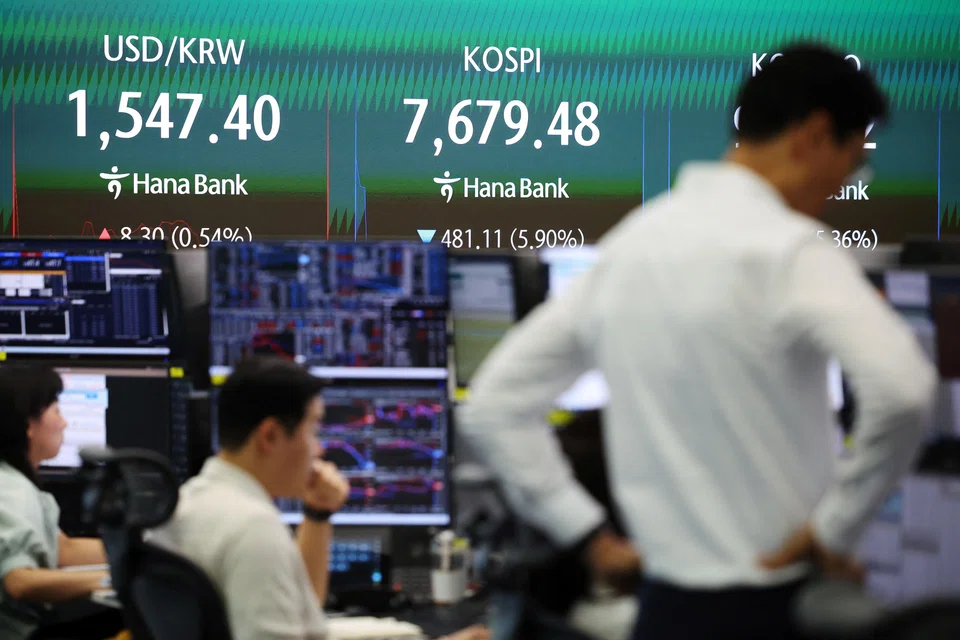
Last Friday (Jun 5), a higher-than-expected US payrolls figure for May prompted an equity market sell-off, which continued in Asia this week. Bouts of volatility can follow after a strong rally of concentrated AI-driven tech and semiconductor positions in April and May.
But Bank of Singapore continues to favour the US equity market with an “overweight” position, underpinned by the following:
1) the US being a net oil exporter;
2) easing Middle East tensions;
3) earnings boost for the energy sector;
4) robust earnings picture for US corporates post-Q1 2026 earnings guidance; and
5) valuations with forward S&P 500 Index price-to-earnings (P/E) multiple at 10 per cent below the peak in November 2025 on earnings upgrades.
What’s next for H2 2026
1) Off-ramp for US-Iran war to buoy risk assets: Prolonged closure of the Strait of Hormuz and the ensuing energy price and supply shocks have led to the sharp repricing of inflationary expectations and higher bond yields.
Several Asian and emerging markets (EM) will likely experience their growth being curtailed, while others face rising fiscal burdens on the back of fuel subsidies and business impact.
The reopening of the strait remains the crux for crude oil prices – which have ranged between US$90 and US$120 a barrel, up sharply from US$60 a barrel at the start of the year – and macro developments in the second half.
History has shown that US equities recover from an oil shock after 12 months, especially if we expect a recession to be averted.
The global economy is relatively less dependent on crude oil compared to the 1970s, due to the rising importance of alternative energy sources, electric vehicles and gross domestic product contribution of service versus manufacturing sectors.
While the final points of a US-Iran peace deal are still elusive since US President Donald Trump’s initial social media post on May 23, expectations of an off-ramp have buoyed markets and constrained crude oil prices below US$100 a barrel.
The timeframe will likely dovetail, with the White House’s goal of ending the war to pivot its focus to the domestic economy ahead of the US midterm elections by year-end.
Continued interest rate volatility is likely.
The strong payrolls print last week pushed 10-year US Treasury yields above 4.5 per cent, as investors revised expectations that the US Federal Reserve may shift towards a neutral stance from its easing bias.
Policy signals from Fed chair Kevin Warsh at the next meeting on Jun 16 to 17 will guide rate expectations for the second half, especially with the stronger incoming inflation and jobs data.
Against this backdrop of rate volatility, active management of bond portfolios is key. We remain cautious on long-term government bonds, favour high quality issuers and maintain a neutral stance on overall portfolio duration.
2) Robust stock market prone to periods of short-term consolidation: Following a strong rally in AI-driven technology and semiconductor stocks, the current profit-taking and paring down of concentrated positions by institutional and retail investors is not unexpected.
Retail participation in the AI-driven rally through single securities, options, exchange traded funds and leveraged ETFs may add to volatility in these stocks.
While we caution against concentrated positions, we remain watchful for such corrections to become opportunities for investors to build strategic positions and broaden exposure to physical AI, agentic AI and inference-related beneficiaries.
The secular AI theme will continue to figure in investment portfolios. Heavy capital expenditure on AI infrastructure and enablers will continue to support the tech hardware supply chain globally.
3) We maintain a core focus on quality growth stocks: We favour global sectors such as information technology, communication services, materials and utilities sectors, but remain cautious on consumer discretionary.
Exposure to disruptive technologies such as the space economy, security and resilience could add alpha.
Within Asia ex-Japan equities, we favour the Hong Kong and China market, with a preference for onshore A-shares with tech and innovation exposure, quality yield stocks and policy beneficiaries.
Singapore equities provide exposure to the Singapore dollar, with relatively defensive characteristics and attractive dividend yields. Market reforms, including the dual-listing bridge, may prompt more new economy listings.
How should investors be positioned?
1. Design a game plan. Depending on your return expectations and risk appetite, it is critical to design and construct a robust diversified portfolio that can stand the test of market cycles and bouts of volatility.
A strategic asset allocation approach is foundational to long-term investing.
This is because the exposures within equities, bonds, commodities and alternatives represent economic exposures, expected returns, factors and risk premiums, whose characteristics and correlations combine to create resilience for long-term performance.
Tactical asset allocation changes, active rebalancing and recalibration are required to avoid drawdowns due to emerging risks.
In a portfolio context, we frame this as the “whole portfolio approach” for wealth investors – a unique lens that draws from institutional investors’ “total portfolio approach”.
This allows us to look beyond traditional asset class silos to actively size exposures and calibrate risks.
2. Stay committed to your strategy. Notwithstanding the short-term performance of asset classes, investors should consider playing the long game with a well diversified portfolio with equities, bonds, gold and alternatives as return drivers for the long-term.
After two years of strong performance, gold is facing near-term headwinds of a potentially more hawkish Fed, India’s duty hike and EM reserve concerns. However, portfolio-level structural drivers for gold remain and its uptrend looks to be delayed, not derailed.
Allocations to alternatives, including hedge funds and private markets, are overlays that provide uncorrelated sources of returns, including market-neutral, alternative yield instruments and exposure to hard assets, such as long-term infrastructure projects.
3. Win-lose-draw. Focus on long-term performance, rather than framing investment performance in quarterly or annual terms against a benchmark. Wealth investors should recognise the trade-offs made, to avoid short-termism at the cost of short-term underperformance.
Beating concentrated equity benchmarks – with tech and AI-related stocks accounting for significant weights – may not fully reflect the objective for risk-adjusted returns for diversified long-term portfolios.
Some wealth investors value avoiding drawdowns over outperformance against benchmarks. Investing in close-ended private markets funds may prioritise overall returns over short-term liquidity.
For investors who play the long game, victory is not final and defeat never permanent.
The writer is global chief investment officer, Bank of Singapore