

STI at 60: The index that grew with Singapore
For six decades, the Straits Times Index has tracked familiar names that helped build Singapore, reflecting how the country has grown from a local trading hub into a regional powerhouse
 Add BT as a preferred source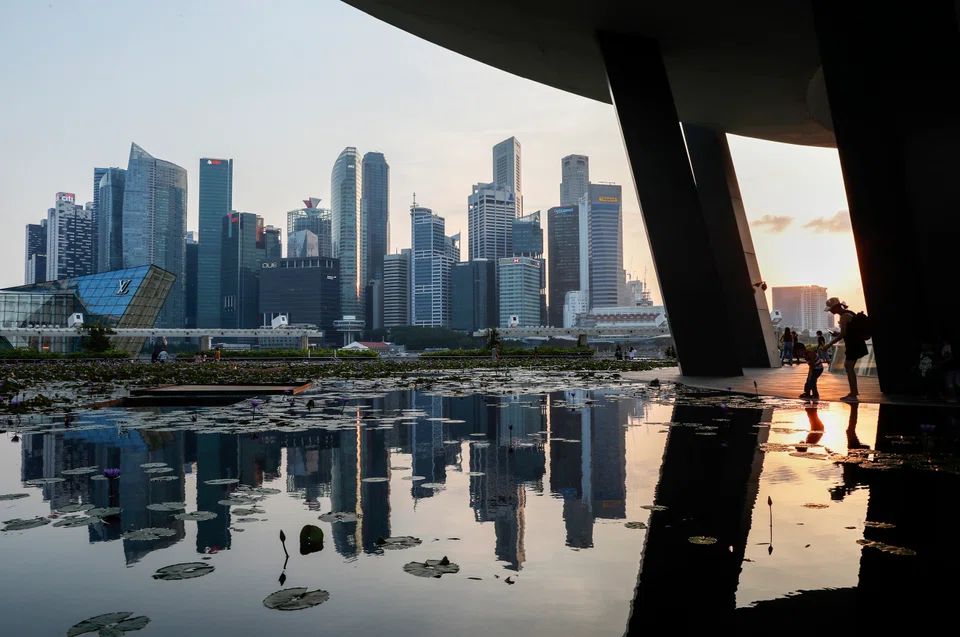
SINGAPORE’S benchmark stock index turns 60 this year, making it almost as old as the nation itself. But history isn’t the only thing the Straits Times Index (STI) shares with Singapore; it is woven into the very fabric of our daily lives.
From the bank where we deposited our first paychecks and the telco behind our first mobile phones, to the national airline of our family vacations and the builders of our cityscape, these are the companies that shaped our home. The STI’s diamond jubilee is more than just a corporate milestone, it is a vivid reminder of how Singapore’s corporate champions have grown hand-in-hand with the country.
Familiar names in our Singapore story
The STI’s history dates back to 1966, when Singapore was still a young nation finding its footing.
As the country industrialised, became a financial centre, expanded its global connections and deepened its role as a regional business hub, the index evolved too.
Today, the STI tracks 30 of the largest and most liquid companies listed on the Singapore Exchange (SGX).
It still is Singapore’s best-known market barometer, but its significance stretches beyond daily numbers.
It captures firms such as DBS, OCBC, UOB, Singtel, Singapore Airlines, ST Engineering, Keppel and CapitaLand, that have helped shape the economy, and in many cases, everyday life.
These are familiar institutions. They finance businesses, connect households, support travel, engineer infrastructure and carry Singapore’s name abroad.
Renewed momentum
The STI’s recent performance helped renew people’s attention.
In 2025, the index delivered a total return of about 23 per cent, ahead of the S&P 500’s total return of about 18 per cent and the Nasdaq Composite’s gain of about 20 per cent.
It also crossed the 5,000 mark for the first time in February 2026, a milestone that once seemed rather distant.
Interest has shown up in funds too.
The two Singapore-listed ETFs tracking the STI - the SPDR STI exchange-traded fund (ETF) and the Amova Singapore STI ETF - had amassed about S$5.4 billion in combined assets by July 10, underscoring growing investor attention in the benchmark.
For investors who do not want to pick individual stocks, it is a simple way to buy into the Singapore growth story.
Banking on regional reach
More often than not, the STI is described through the weight of its banks, but that concentration can also be read as a reflection of how Singapore’s financial sector is a bridge to the region.
Did you know DBS, by market value, is now larger than each of Deutsche Bank, Barclays and BNP Paribas?
This tells us how far Singapore banks have travelled.
DBS, OCBC and UOB are no longer merely domestic institutions as they extend their footprints across key markets in Asean, Greater China and beyond.
When regional trade grows, wealth flows deepen and companies expand across Asia - something that Singapore’s banks are well placed to participate in.
In that sense, STI gives investors exposure not only to Singapore’s domestic economy but also to regional growth.
Onwards into the future
Nor is STI only a bank story.
Keppel has moved from its industrial roots into infrastructure, real estate and connectivity, to address global needs in areas such as energy transition, urbanisation and digitalisation.
Seatrium carries Singapore’s offshore and marine engineering capabilities into global energy markets.
In other sectors, Singtel links consumers, enterprises and digital infrastructure across the region, while ST Engineering reflects the advanced engineering base Singapore has built across aerospace, smart city, defence and public security.
Today, Singapore Airlines remains one of the country’s most visible international brands.
Together, these companies show how Singapore’s market can be small in geography but broad in reach.
That reach is also taking newer forms.
The STI’s familiar names are no longer only tied to traditional sectors.
In fact, some are now part of the digital rails being built for the next phase of growth.
Singtel’s work with Nvidia on AI cloud and GPU-as-a-Service, for instance, brings advanced computing closer to enterprises in Singapore and the region.
Keppel’s partnership with Dell points to the next generation of efficient, AI-ready data centres in Asia, while Venture Corporation reflects the high-value hardware and manufacturing base that sits behind the digital economy.
All these give younger investors exposure to companies involved in the infrastructure behind the region’s AI build-out, from computing power and data centres to engineering and advanced manufacturing.
A future still in play
The ability to go beyond matters.
The STI continues to prove this point.
Its constituents have had to change with Singapore, from an entrepot economy to a manufacturing base, to a regional hub and a global financial centre, and now, onwards as a smarter, sustainable and connected economy.
Like Singapore, the STI’s next chapter will look different from the last.
The look changes as we find new engines of growth in digital infrastructure, sustainability, advanced manufacturing, regional finance and cross-border capital flows.
Some analysts see a path for the STI to reach 10,000 over time.
A question that matters is what such growth would represent.
Would companies have deeper markets and wider participation?
Would Singapore’s economy continue to create value beyond its size?
At 60, the STI is both a record and a possibility.
It not just maps how familiar Singapore names turn into regional and global businesses but continues to grow alongside the Republic as their journeys unfold.
Share with us your feedback on BT's products and services
TRENDING NOW

Tepid investor interest a dampener on Vietnam’s strong IPO pipeline

Air India seeking US$1.5 billion from owners Tata, Singapore Airlines: sources

OK Lim’s daughter loses challenge to exclude evidence in ongoing trial
UOB v Lippo Marina Collection: Court quadruples damages awarded to bank to S$76.1 million

