
Stock market drop accelerated as recession seemed more likely
 Add BT as a preferred source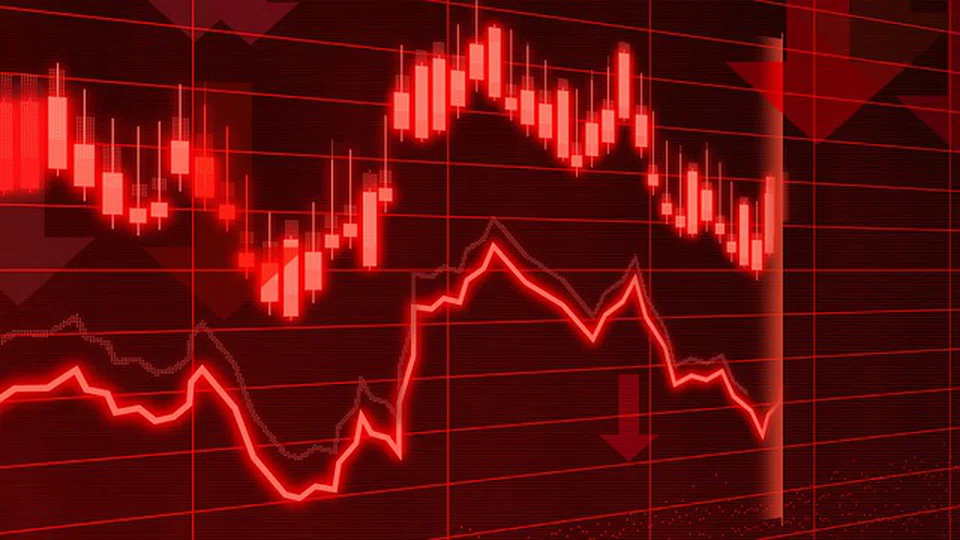
Investors had an awful start to the year as stocks twice entered bear market territory, falling more than 20%. Stocks didn’t hang there long the first time, but the second drop has proved more durable, as Wall Street has come to accept that inflation is more persistent and that the Federal Reserve will have to be more aggressive in combating it.
The S&P 500 lost 16.4 per cent in the second quarter, leaving it 20.6 per cent below its level at the end of 2021.
Where to now? While a bounce in stocks certainly seems due, investment advisers say a lasting recovery is unlikely for now. They warn that a recession is probably on the way, if it’s not here already, and that valuations remain high, even after the big decline.
“I think we’re in for a lot more pain, probably, in US stocks,” said Meb Faber, chief investment officer of Cambria Investment Management.“ Just to get back to historical valuations, we could easily go down a third from here.” Ella Hoxha, a manager of global bond portfolios for Pictet Asset Management, said expectations still haven’t been adjusted to incorporate the likely risk of a recession. It may seem surprising that a recession could catch Wall Street by surprise when the conversation there is about little else. But until recently, Wall Street played down its chances and talked up the prospects of a soft landing, in which growth slows but the economy avoids major, prolonged disruption.
“The odds of a recession have gone up, but the markets have not fully priced in the recession case yet,” Hoxha said. “Not only is the Fed having to correct being too dovish last year, it has to unwind its balance sheet” by selling the bonds and other securities it bought to support the economy and markets.
Market forecasts are increasingly guided by assessments of how severe a recession will be, not whether one will occur. But the erosion in the economic outlook may still have further to go.
Navigate Asia in
a new global order
Get the insights delivered to your inbox.
“The real question is not whether we have a recession, it’s how hard growth decelerates and how long the slowdown is sustained,” said Ron Temple, managing director of Lazard Asset Management. Most people, he said, still expect “a short, shallow recession’‘. A recession hits stock prices mainly by depressing corporate earnings. Just as investors may not be sufficiently factoring in a recession, Temple said that earnings expectations might need to come down further before stocks hit bottom.
“One missing piece of this story is that earnings expectations are probably not in the right place,” he said. “We’re probably going to see more downgrades.” The most likely outcome, in his view, is a further 10 per cent decline in stocks, and his “bear case”, which might come into play with another bad inflation report, is for stocks to fall as much as 25 per cent more as the yield on the 10-year Treasury rises to 4 per cent from just under 3 per cent on June 30.
Owners of domestic stock funds know all about bear cases. The average portfolio fell 15.3 per cent in the second quarter, according to Morningstar, with funds focusing on technology and consumer cyclical companies each losing more than 20 per cent. Still, funds that own utility and health care stocks managed to keep losses to single digits.
Inflation and a sluggish economy are not just American phenomena. Europe has the same issues, along with some particular complications that make dealing with them problematic.
The average international stock fund fell 13.3 per cent in the quarter, with Europe and Latin America portfolios doing slightly worse than average. China funds managed to eke out a 3.7 per cent gain.
When a recession looms, the almost inevitable losses in stocks are usually cushioned by gains in long-term Treasury bonds as the worsening economic conditions push yields lower. A Citi Research report said a 20 per cent decline in stocks on average coincides with a 12 per cent gain in 10-year Treasury prices.
Not this time. Perhaps because the Fed distorted the bond market for so long with artificially low interest rates and quantitative easing, when stocks began to fall this year, so did bonds. In the first half, the 20+ Year Treasury Bond iShares exchange-traded fund fell 22.5 per cent. S&P 500 SPDR, an ETF that tracks that stock index, fell 20.6 per cent.
The average bond fund was down 5.7 per cent in the second quarter, Morningstar said, as long-term government portfolios fell 13.1 per cent. High-yield and emerging-market funds suffered higher-than-average losses, too.
Deciding where to put your money isn’t easy in the best of conditions, and the current conditions are far from that. Beyond the inflationary backdrop and recession worries, uncertainty is certain to linger for several months until the impact of the Fed’s tightening becomes clear, as pandemic-era measures are unwound and as disruptions to trade created by the war in Ukraine work their way through the economy.
Hoxha recommends long-term Treasury bonds after the drubbing they have taken, but her call is less an expression of support for them than of disdain for everything else. She would avoid shorter-term maturities – up to two years – and corporate and European debt.
“When you can get a 3.5 per cent yield and have an unclear picture about equities, you start to get paid a premium to own Treasuries and possibly do better than you can get in cash,” she said. “But don’t go all in. Some cash with some Treasuries might be a good mix.” Faber finds US stocks expensive, but “foreign developed market valuations are totally reasonable, emerging markets are downright cheap and the value cohort for both of those is cheaper than the broad market’‘. He prefers high-quality value stocks, meaning companies that trade at low multiples of earnings even though they generate enough cash to return money regularly to shareholders through dividends and buybacks.
This article originally appeared in The New York Times.
Decoding Asia newsletter: your guide to navigating Asia in a new global order. Sign up here to get Decoding Asia newsletter. Delivered to your inbox. Free.
Copyright SPH Media. All rights reserved.

