Strong Apac wealth creation boosts UBS’ profitability and assets to new record
The bank is eyeing growth by snagging a share of the US$83 trillion ‘great wealth transfer’

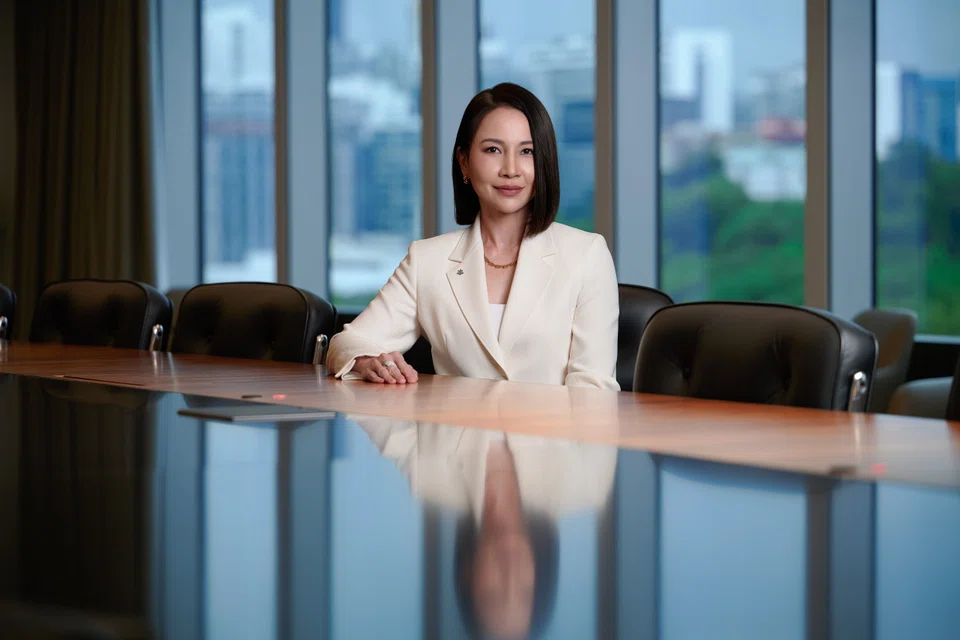
[SINGAPORE] When UBS was asked to acquire its Swiss rival Credit Suisse in 2023 – in a deal orchestrated by the Swiss National Bank and Finma (Swiss Financial Market Supervisory Authority) – it was not at all clear that the merger would be a success.
Today, those reservations have resoundingly been put to rest. In the first quarter, UBS’ Asia-Pacific business hit a record in pre-tax profit of US$600 million, a surge of 40 per cent year on year.
Invested assets rose by 13 per cent to US$781 billion, and net new asset inflows grew by 9.4 per cent to US$18.6 billion.
“Post integration, everyone expected us to shrink, but we’ve proved we are able to grow,” said Young Jin Yee, co-head of UBS global wealth management for the Asia-Pacific, in an interview with The Business Times.
“That shows clients’ confidence in us. Being able to serve them in the right way and with the right advice has yielded a lot of traction.”
Young added that the bank is riding the tailwinds of three major trends in the Asia-Pacific.
The first is the ongoing, robust wealth creation in the region. “As long as wealth creation continues in Apac, I believe UBS will do very well because we are there to capture that growth. We are probably the most diversified in terms of footprint.”
UBS is in 13 markets, spanning Greater China and South-east Asia, as well as Japan, Australia and India.
Australia, a new addition post-merger, is expected to generate “huge growth”. The bank has more than 900 advisers now, and aims to hire 100 more this year.


The second major trend is the “great wealth transfer”. An estimated US$83 trillion in wealth is being handed over to younger generations globally.
Young estimated that Asia’s share of this transfer could exceed US$1 trillion in the next 15 years. The sum comprises around US$800 billion in South and East Asia, and US$400 billion in China.
“China is slightly lower because the entrepreneurs there are still very young, but South and South-east Asia’s entrepreneurs are a little more mature,” she said.
UBS’ projection is an internal estimate and confined to billionaire assets. McKinsey has projected an intergenerational wealth transfer of US$5.8 trillion among ultra-high-net-worth (UHNW) and HNW families between 2023 and 2030.
Women as wealth creators and inheritors
The third trend is the emergence of women as wealth creators and inheritors.
The UBS Billionaire Ambitions Report 2025 found that while male billionaires outnumber females, women’s average wealth has grown by 8 per cent, more than twice the average rate of growth among men, at 3.2 per cent.
Young pointed out that there is a higher proportion of female self-made billionaires in the region.
Women also benefit, she added, from two forms of wealth transfer: vertical, in which wealth is handed down to both male and female children, and horizontal, when divorce occurs.
“It is becoming very important that we engage women in a different way because women take a very different approach to wealth,” she said.
“They view wealth with a broader lens; they care about sustainability more than their male counterparts, and are passionate about family legacy. Our female clients tend to take a much longer perspective. They’re plan-driven, more research-oriented and less driven by emotions. They define the plan and stay by it.”
In Australia, UBS initiated a programme called Women Investment Circle, comprising four educational sessions tackling issues such as investments, insurance and philanthropy. Only female clients and their friends can attend.
“I participated in one of the sessions as a speaker,” said Young. “The questions were very relevant. We were talking about luxury investments. I said: ‘I love my Hermes bags, but instead of buying them, why don’t you buy the shares and participate in the company’s growth?’”
The series is set to launch in Singapore and Asia later this year.
Young noted that in the past, male wealth owners focused on their sons for succession, but that now, the bank’s clients believe that their daughters should have equal share.
“So, in vertical succession, almost half of the wealth would go to women. The female need is a huge one that we need to focus on.”
Unlocking growth from the great wealth transfer
Almost every institution – including smaller wealth management firms – is eyeing a share of the great wealth transfer.
In UBS, even with its current dominant share of the wealth pie, there is no room for complacency. It reckons that three in five billionaires are its clients.
Its latest survey of younger heirs found that half preferred to work with the same institution; eight in 10 cited expertise and experience as the top desirable attributes of wealth managers.
Young said the findings were “surprising”, because “we all thought that the younger generation would want to choose their own wealth manager”.
“But they would probably only change (managers) if there is no engagement and they feel the chemistry is not right,” she added. “As long as we engage them in the right way, and they feel supported, they prefer continuity.”
Young said that her earlier years as a gymnast – as a teen, she represented Singapore at the SEA Games in 1991 and 1993 – have instilled a discipline and work ethic that stand her in good stead.
Describing herself as a disciplined individual who favours structure, she said: “UBS is a big organisation and we have many clients… (I take) a very structured approach. Staying focused means putting clients at the centre of everything we do.”
Risk management provides some guardrails. “When you’re on the (balance) beam, it’s always one-and-a-half minutes. And it takes thousands of hours of preparation to get to those one-and-a-half minutes. Preparation becomes very important,” she said.
“When we approach markets and markets are down, we know we have done our due diligence and have a plan, and we stick to it. You need to look through the fear and ask: ‘Fundamentally, what is the objective?’”
She concluded: “If our objective and plan are clear, we stick to them. That has worked for me.”
Clients are unfazed by geopolitical uncertainty and market volatility. “Our advice is to stay invested,” said Young. “There is repositioning going on because most clients are top-heavy in the US. Asia is one of our top picks. We still believe Asia tech lags that of the US.”
Bond markets are currently “challenged” due to rising inflation expectations, but “selecting the right bonds and fixed income instruments makes a good buffer for the overall portfolio”.
On clients’ businesses, Young said that many have taken on a wait-and-see stance.
“They are not risk-off, but they are waiting to tap into capital markets. For their own businesses, most are waiting to get clarity on the geopolitical situation before they make huge investments,” she added.
“Right now, because they are not investing too much into their businesses, liquidity has come into wealth management.”
Decoding Asia newsletter: your guide to navigating Asia in a new global order. Sign up here to get Decoding Asia newsletter. Delivered to your inbox. Free.
Copyright SPH Media. All rights reserved.