

Tiger Global's US$65b man shrugs off China crackdown threat
Scott Shleifer, head of Tiger's booming venture-capital business, believes China's long-term future is bright and that the investment firm's biggest wins there are yet to come
 Add BT as a preferred source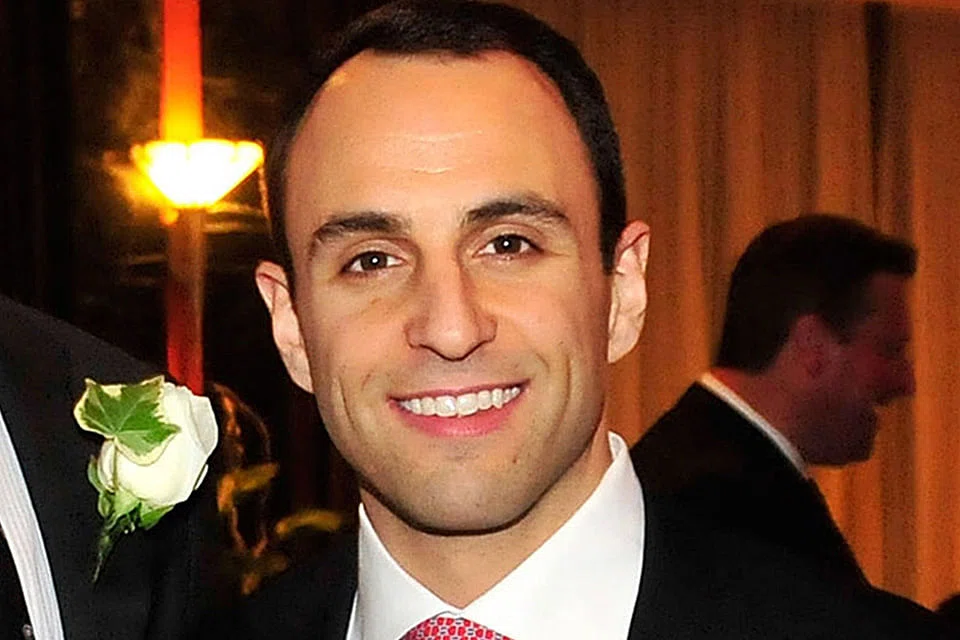
CHASE Coleman is the name most Wall Street professionals associate with Tiger Global Management, the investment firm known for its hot hand in Internet startups and early bets on China.
But it's his lesser-known deputy, Scott Shleifer, who's burnishing his own brand as head of Tiger's booming venture-capital business, where assets have more than tripled to US$65 billion in just a year and now account for almost two-thirds of the firm's total.
His unit recently took a big step toward hitting a US$10 billion target for its biggest venture fund on record. Yet Shleifer, even with his growing prominence at the firm, recognises that things can go very wrong, very fast. "We are humble and hungry, and we know that we could screw this up before lunch," Shleifer, 44, said in July, after Coleman, 46, introduced him during a presentation to some of the firm's top clients.
Tiger has overcome several challenges over its two decades, including losses stemming from the 2008 financial crisis. Coleman and his team regrouped by returning to their tech roots and vowing to avoid industries where politics or macro events could interfere. The firm successfully weathered the pandemic, ranking as the world's top-earning hedge fund last year, while raising and investing billions of dollars for its venture arm.
The latest trouble spot is China. Almost a quarter of Tiger's private wagers as of August were in the world's second-largest economy, a market that has morphed into a minefield for investors. Shleifer's team has backed 16 companies there so far this year, and those bets could languish if the firms fail to go public or decline in value amid Beijing's recent regulatory crackdown.
The terrain changed rapidly. Over the past few months, President Xi Jinping tightened his grip on China's tech sector, imposing new restrictions and imprisoning some executives to rein in what he sees as capitalism's excesses. By allowing the debt crisis enveloping property developer China Evergrande Group, he signalled that government support for even the biggest firms is no sure thing.
Chinese startups that succeed from now on will be those that can play by China's rules and still perform financially, said Nazar Yasin, a former Tiger executive who founded VC firm Rise Capital. "Anyone who has heavily bet on China over recent years is exposed to this risk without question," Yasin said. "There are going to be a lot of venture-capital and late-stage investors who will suffer."
Coleman and Shleifer declined to comment for this story.
Brash disruptor
Tiger has emerged as a brash disruptor in the clubby VC world, rattling rival bidders with its aggressive approach and uncommon speed. Its edge, Shleifer tells clients, is doing so much research and reconnaissance that no one is better prepared to invest.
When it comes time to bid, Tiger frequently offers more than the asking price and takes less than a week to sign off on a deal. The firm now oversees US$100 billion, with most of the recent asset growth coming from the appreciating value of its private wagers.
It's also extremely lean, with a staff of about 30 investment professionals managing Tiger's assets.
Tiger's Private Investment Partners funds - which take non-controlling stakes in startups - returned 27 per cent annually on average over 18 years, outperforming its hedge fund and rivalling some of the top VC firms, including Sequoia Capital and Benchmark Capital.
When the dot-com boom ended, Shleifer was among the first money managers to realise better returns might be found outside of public markets by targeting private technology companies in China, where he expected Internet penetration to soar.
He started building out the firm's venture unit and helped raise US$76 million for the first PIP fund in 2003, which was mostly invested in that country.
The success of Tiger's public and private investing businesses catapulted both men into the ranks of the world's richest people, with Coleman and Shleifer worth US$10.8 billion and US$5.6 billion, respectively, according to the Bloomberg Billionaires Index.
Coleman owns at least 75 per cent of the firm, a filing shows. Shleifer's lesser stake and personal investments in the fund generated more than US$3 billion of earnings over the past decade. He recently plunked down a record US$132 million for a Palm Beach mansion on land once owned by former President Donald Trump.
Beijing's overhaul is now putting them to the test. It has forced Tiger to mark down its small stakes in online-education companies Zuoyebang and Yuanfudao, according to a fund investor. And it's unclear how that will affect some of the firm's biggest investments.
Tiger owns 1.4 per cent of TikTok parent ByteDance and 2.7 per cent of online retailer SheIn, representing the firm's largest unrealised consumer and apparel investments, respectively, investor documents show.
While Tiger posted a US$1 billion gain on the June IPO of ride-sharing giant Didi Global Inc, the subsequent government intervention has battered the stock, which tumbled 36 per cent through Thursday.
US regulators, meanwhile, are clamping down on stock listings by Chinese firms, potentially hamstringing Tiger's efforts to cash out of some positions.
Tiger's wagers on other startups have more than made up for its China losses. It reaped US$14 billion from the initial public offerings of 27 companies in 2021. The hedge fund has gained 13.2 per cent this year through October.
"No one's going to cry for Sequoia or Tiger Global, and I think they have plenty of dollars that are outside China that are doing extraordinarily well right now," Dawn Fitzpatrick, who runs George Soros's family office, said last month during an interview at the Bloomberg Invest conference.
"But my guess is there are a lot of debates going on in their boardrooms about how aggressively to invest going forward."
The onus of navigating that tempest will fall on Shleifer, who has downplayed the risks, telling clients that China's long-term future is bright and that Tiger's biggest wins there are yet to come. If companies can't go public in the United States, he has said, opportunities still exist on Hong Kong exchanges. Tiger continued to back Chinese firms after the nation's crackdown began in June, and it hasn't pared its stakes in ByteDance or SheIn, an investor said.
"It is hugely in China's continued best interest to have wonderful internet-enabled market leaders," Shleifer told clients during the July presentation.
Then Coleman added: "We've answered sceptical questions about China for each of the past 17 years. It was bank balance sheets. It was trade wars. And throughout this entire period, the end result has been that China's GDP share, relative to the US, has gone up 5X."
Even as other top lieutenants have departed in recent years, Shleifer stuck with Coleman. Feroz Dewan, who started at the firm a year after Shleifer and was head of public equities, left in 2015, with Shleifer briefly taking over his job.
In 2019, it was Lee Fixel, co-head of private investments, who decided to quit, leaving Shleifer to run the group on his own.
Shleifer was born and raised in a suburb of Portland, Oregon. His father helped oversee the family business, Shleifer Furniture, which closed in 2015 after an 80-year run, and his mother is an interior designer.
After earning an economics degree from the University of Pennsylvania's Wharton School, he worked at Blackstone Inc as an analyst until he was passed over for a promotion and began looking for a new job.
A mutual friend introduced him to Coleman, who had just started Tiger with US$25 million from hedge fund legend Julian Robertson, and Shleifer became the firm's third employee. Shleifer and Coleman were in their mid-20s at the time. During a recent call with clients, Coleman heaped praise on his No. 2.
"Scott is a uniquely talented investor and has been an incredible partner in building Tiger Global." BLOOMBERG
Decoding Asia newsletter: your guide to navigating Asia in a new global order. Sign up here to get Decoding Asia newsletter. Delivered to your inbox. Free.
Share with us your feedback on BT's products and services
TRENDING NOW

Xi Jinping has just rewritten the rules of US-China rivalry

Yeo’s, Tiger Beer and now Gardenia – flight of food manufacturing from Singapore might be just as planned

Trek 2000 shares jump 41.5% after Osim founder Ron Sim drops claims, sells 7.3% stake to Azure Capital

Germany, Spain push back on European plan to ban Huawei gear

