This time is different: More downside risks unless US reduces tariff rates
Overall growth in Asia could fall to 4% in 2025, down from 5.1% last year, with the trade-driven economies of North Asia, Thailand, Malaysia and Singapore more susceptible
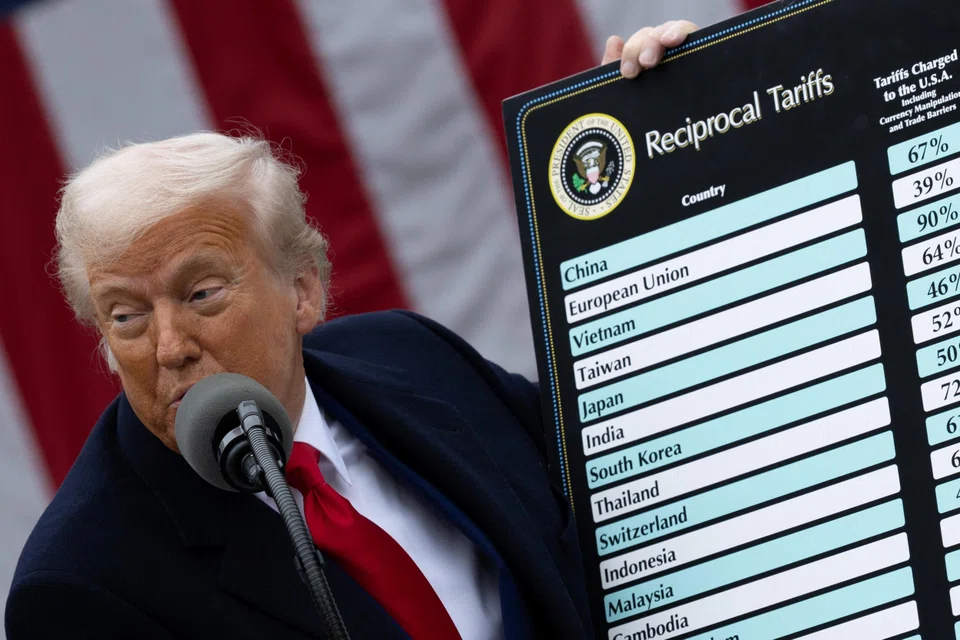
ON APR 2, US President Donald Trump announced one of the biggest changes in US economic policy in a generation. The measures will bring the effective tariff rate on imports in the US to their highest levels in 100 years.
This is an unprecedented reversal of the post-World War II economic order where the US was its chief architect. Global trade was seen as the key to rebuilding economies devastated by the war, and the US led efforts to restore stability.
The US is clearly turning its back on principles of non-discrimination and actual reciprocity – in favour of a new scheme that delivers unilateral trade benefits to the US alone.
In the absence of an ideological slant, there is no overarching aim on the part of the Trump administration beyond getting a better economic and strategic deal. It is a power-based, realist approach that is pragmatic and transactional. It is a sharp departure from traditional US foreign policy, its focus on democracy and human rights, and its role as protector of the free world, trade included.
It reflects the belief that the US has long borne the costs of the global system without sufficient benefit. America now seeks to restructure the global system while preserving American primacy, as it makes allies bear a greater share of the burden.
The use of tariffs as an economic tool has been a recurring theme in US political history. Tariffs have been a part of US trade policy since the founding. For example, the Smoot-Hawley Tariff Act of 1930 was implemented to protect American farmers and manufacturers by raising import duties. In 1971, then-president Richard Nixon imposed a 10 per cent surcharge on all imports.
Thus, Trump’s use of wide-ranging tariffs is not without historical precedent. The US is utilising tariffs to promote re-industrialisation and rebalance what it perceives to be an unjust global system, in part for national security and in part to create jobs.
However, tariffs are more likely to have the opposite effect.
Part of Trump’s argument for tariffs is that they are good for US jobs, with potentially higher employment being worth the higher prices and harm to consumers. However, tariffs are likely to cause negative employment effects because of the way that they ripple through the economy.
Why is that the case? Tariffs create higher input costs for other industries, making them vulnerable to foreign competition. According to a 2023 report by the US International Trade Commission, steel tariffs imposed during Trump’s first term reduced imports of steel by 24 per cent on average, between 2018 and 2021, and raised US steel prices and production by about 2 per cent each.
However, the higher steel prices raised production costs for the manufacturing sector and other steel-intensive industries such as cars, farming machinery, household appliances, construction and oil drilling.
Tariffs frequently backfire because trade deficits are mostly influenced by patterns of investment and savings. The Smoot-Hawley Tariff Act backfired spectacularly. Instead of bolstering the economy, the Act triggered a global trade war, causing international trade to decline by 65 per cent between 1929 and 1934.
Many economists argue that this exacerbated the Great Depression across the global economy because trade literally ground to a halt. It is this resounding fear that we might get a repeat of the 1930s that has stock markets across the world plummeting.
In the near term, we believe the effective tariff rates could be higher still; and without Trump taking active steps to reduce tariffs over the next three to six months, we are likely to enter a downside scenario, including a meaningful US recession and lower equity markets.
Uncertainty could be exacerbated if “maximum pressure” strategies extend into foreign policy (Iran and Ukraine-Russia) and fiscal policy (extension of US tax cuts).
As a result, markets have since been digesting the impact, with equities falling sharply, bonds and gold rallying, and the US dollar depreciating against most major currencies.
Nevertheless, as we look over a three-to-six-month horizon, our base case reflects our belief that the effective tariff rate will gradually reduce as economic, political and business pressures mount.
This will nonetheless mean a period of much slower US and global growth and an extended period of market volatility.
For Asia, we believe growth overall could fall to 4 per cent or lower in 2025, down from around 5.1 per cent last year, with the trade-driven economies of North Asia, Thailand, Malaysia and Singapore more susceptible.
The writer is regional CIO South Apac, UBS Global Wealth Management. He is also adjunct associate professor, Nanyang Business School, Nanyang Technological University.