

Time to put more into equities? Be selective, say private banks
But some say the unprecedented stimulus from governments and central banks globally will put a floor to risk assets.

Genevieve Cua
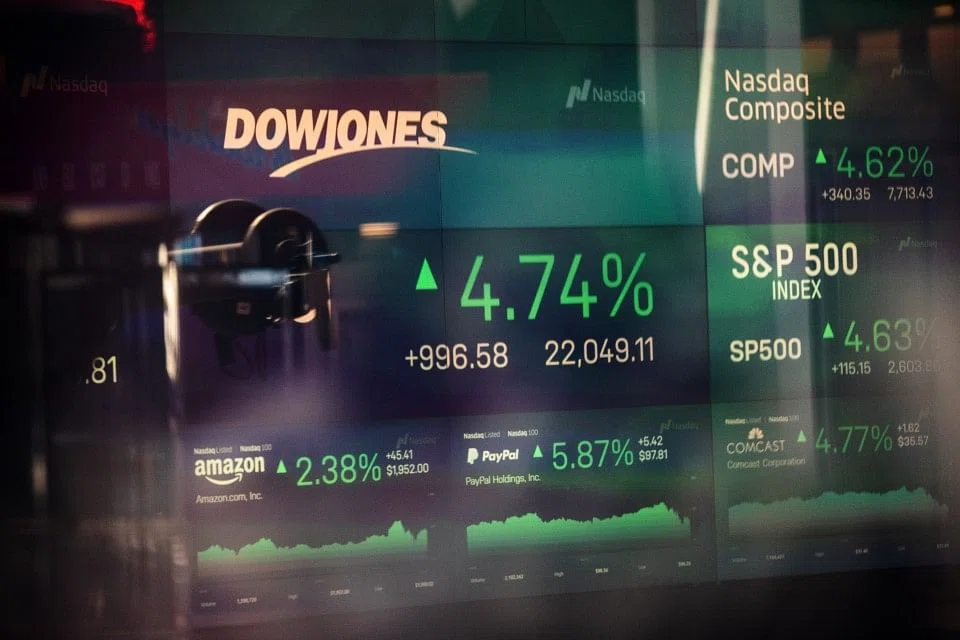
GLOBAL infections from the novel coronavirus continue to mount and fatalities as well. Yet stock markets have shown spurts of strength.
The S&P 500 for example has rebounded by over 27 per cent since its March 23 multi-year low. Is it time to ratchet up your portfolio's risk exposure?
Not surprisingly, a number of private banks are telling their high net worth clients to be selective in the risks they choose to take, favouring credit for instance and other fixed income assets.
A few, however, favour equities. Hou Wey Fook, DBS Bank chief investment officer, recommends that clients with high cash holdings should "dial up" their equity investments.
"In our view, the unprecedented stimulus from governments and central banks across the world will put a floor to risk assets. At the same time the pool of global savings will need to find a home, and equities will be the key beneficiary given the ultra-low levels of cash rates and bond yields today," he says.
Equities as represented by the S&P 500 have continued to climb in recent days, buoyed by a number of factors including optimism over possible treatments for the novel coronavirus, and the expectation that the US could soon relax some of its social distancing measures. Year-to-date the index is down 13 per cent.
Its rise occurs against the backdrop of deepening economic gloom. Global GDP is expected to contract by around 2.8 to 3 per cent, the worst showing since World War II. In the US alone, unemployment in April has hit 22 million.
The April fund manager survey by BofA Securities reflects "peak pessimism". Cash levels jumped to the highest level since the 9/11 terrorist attacks, from 5.1 to 5.9 per cent. Equity allocation is the lowest since March 2009, and 57 per cent believed that the biggest tail risk was a second wave of Covid-19 infections.
DBS' Mr Hou says equities are trading around 15 per cent below their long-term average and the level of fear is comparable to the 2008 global financial crisis. "Hence, we believe much of the negative headwinds has been priced in. For sure the world is in a deep recession from the lockdowns across many cities and countries.
"The pertinent question to ask is whether this is leading to a prolonged recession. Given the swift and massive stimulus policies, we would argue that this is not going to be the case." Overall, he maintains a "neutral weight" call on equities, underweight in bonds and an overweight in alternatives such as gold.
He continues to advocate a "barbell" approach, or an outsized exposure to two areas - income generators such as corporate bonds and dividend equities, and "return enhancers" in secular plays such as technology and healthcare.
In late March, Credit Suisse moved to a "small overweight" in developed market equities. "We saw value after the sharp drop and we expect markets to be higher later this year," says John Woods, the bank's chief investment officer (Asia Pacific). He says the unprecedented measures by central banks and governments have alleviated some of the market stress. "This creates an attractive backdrop once the worst of the pandemic is behind us."
UBS Global Wealth Management managing director Stefan Lecher notes that riskier asset classes have offered "good entry points" in recent weeks. "That is why our CIO has recommended gradually increasing the risk exposure across asset classes such as credit/fixed income). . . Our CIO believes the credit market is more pessimistically priced than stock markets so we believe there are investment opportunities in this space."
Eli Lee, Bank of Singapore head of investment strategy, says leveraged investors should make use of rallies to de-risk and build up liquidity buffers. For those who are not leveraged and are currently neutral-weight or underweight in terms of risk, attempting to time the market bottom is not practical. "We recommend trading up in quality and patiently edging into solid assets that are oversold in terms of fundamental valuations.
"Investors should be very selective as not everything that has been sold off is cheap. Most companies will be permanently impaired and some will not survive. It is critical to focus on high quality assets with resilient balance sheets and growth."
Discretionary portfolios, a service where private clients entrust their funds to their bank to manage, have been relatively resilient, and some banks report greater interest among clients.
Credit Suisse's Mr Woods says penetration of DPM (discretionary portfolio management) has been "steadily rising over time". "Over the years, what we observed was that after every market downturn, more and more clients become open to and invest via discretionary solutions.
"Our data consistently shows the majority of clients would have enjoyed higher risk adjusted returns if they were in a Credit Suisse discretionary solution than when they made their own investment (decisions)."
He says the team raised cash in balanced and equity solutions when conditions took a turn for the worst. Higher-risk all-equity portfolios were "most challenging". "However we still did substantially better than market indices and kept marked-to-market returns to a little below negative 10 percentage points."
DBS Private Bank DPM head Christophe Marciano says year-to-date performance for US dollar mandates range from minus 1.79 per cent for fixed income to minus 13.7 per cent for aggressive portfolios.
"We entered the crisis with an overweight to alternatives and cash. . ." His team favours US and Asian equities over Europe and Japan. It is also overweight on secular themes such as the ageing population and the trend towards a digital economy.
Inflows have been strong. At end-March, assets under management rose by 30 per cent on a year-on-year basis, and the number of accounts by 25 per cent.
UBS has a number of DPM mandates. The 100 per cent Sustainable Investing portfolio crossed US$1 billion in assets in Asia this year. The portfolio has outperformed the overall market in recent months, and benefited from a stronger rebound in recent weeks, thanks to its allocation into sustainable equities.
The flagship Systematic Allocation Portfolios (SAP) also benefitted from active risk management. As markets corrected in early March, SAP assets fell less than 5 per cent even for the most aggressive strategies.
At BOS, Jean Chia, head of portfolio management and research office, says they were net sellers in December and raised cash, given that markets were near record highs.
"While remaining cautious amid financial market and economic disruption, we started reinvesting selectively in February and March into the midst of the selloff." But the selloff was broad based and "the performance of our equity mandates reflects this".
"While the bulk of forced selling might be behind us, our positioning remains cautious for now, focusing on quality and retaining options through higher-than-usual liquidity in portfolios." Recently the team raised cash by reducing exposure to cyclical sectors such as real estate and oil & gas. . . "We aim to deploy this liquidity to defensive sectors including banks, telecommunications, Internet and retail, as volatility stabilises and valuations offer good entry points."
TRENDING NOW

Fed hike throws Singapore banks a margin lifeline; UOB most likely to feel impact

He built the Vingroup empire. Now South-east Asia’s richest man is handing some key roles to his sons

Real-estate veteran Desmond Sim quits from CEO roles at Realion, ETC

Chagee, Mixue and Luckin won the market. Sustaining their edge is the harder part

