The US$100 billion question that SpaceX raised
That question is whether we know the difference between buying into an exciting promise and investing in our own future
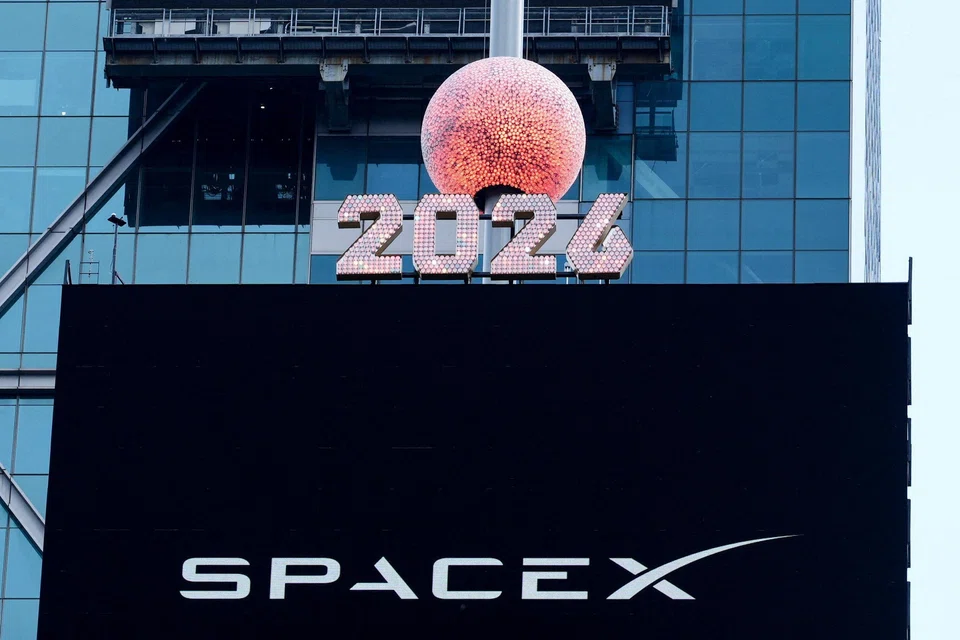
[SINGAPORE] When SpaceX listed on the Nasdaq last month, individual investors were reported to have submitted more than US$100 billion in orders for a slice of the largest initial public offering in history. Demand from retail investors ran so far ahead that most of them likely came away with a fraction of what they asked for, or nothing at all.
The scenes were familiar – the media’s breathless coverage, the desire to own a piece of the future, and the fear of missing out were an irresistible combination.
I want to be careful here because this is not a column about whether SpaceX is a good company. The analysts are still arguing over that one, and I suspect a clean answer is a long way off. Only time will tell.
The more revealing question – the one that actually has a useful answer – is what this level of enthusiasm tells us about how people invest. An allocation to a single company, at a record valuation, based on a story everyone feels they already understand – but do they?
Beyond the fundamentals, if you strip away the rockets and the market fireworks, what you are left with is the most human of instincts: the need to act and be part of something extraordinary. It is an instinct worth examining, because it is the same one that has quietly been costing investors a lot of money, time and again.
Wired to “do something”
Dimensional Fund Advisors made a point at a recent Endowus event that stuck with me: Human beings are built for agency. In almost every domain of life, effort and outcome are correlated; the harder and smarter you work, the better the result tends to be. It is the logic that governs a career, a business, a craft.
Investing systematically violates that rule, and we find it almost impossible to accept.
The successful entrepreneur who built a company by outworking everyone looks at the market and assumes the same equation applies – that attention, conviction and effort will be rewarded in proportion.
That same entrepreneur would be far better served building another company than trying to outtrade firms with hundreds of analysts and supercomputers pointed at exactly the problem she is attempting to solve on her own, in her spare time. Her edge is enormous in one arena and close to zero in the other.
The SpaceX frenzy portrays that fallacy on an industrial scale. Millions of individuals placing orders on a single company, driven by a seemingly irresistible narrative with, for the most part, no strategy, no view on portfolio fit, and little consideration of the price and valuation being paid relative to any reasonable expectation of future return. The action feels like investing, but it is closer to – dare we say – speculation.
What the evidence says
The data on active investing is not encouraging, and it has been remarkably consistent for 50 years. Ever since Michael Jensen’s early 1970s work, which examined active managers going back to the 1920s, the evidence has pointed stubbornly in one direction: Over the last two decades in the US market, where the fund data is comprehensive and we can correct for survivorship bias, fewer than one in five active funds has beaten its benchmark.
Here is a worthwhile reminder – that this has been the record of trained professionals with research teams, direct access to management, sophisticated analytical tools, and decades of experience.
The arithmetic for an individual investor, who faces higher transaction costs, far less information, and a much stronger emotional response to short-term volatility, has proven to be brutally worse.
None of this is an argument against ever owning SpaceX (or any other single stock). It is an argument for being honest with yourself about why you are buying it, and whether the energy and capital you are pouring into the decision translates into an edge. For most of us, that edge is a comfortable round number – zero.
The most expensive instinct
There is a deeper irony here, and it connects to something I wrote in June about the futility of calling market tops. Most of the time, these calls are incorrect, even when they are made by professionals and academics.
The investor who is eager to act typically does so on a prediction – that this company, this price, this moment is “the one”.
But prediction is the part of investing that humans are demonstrably bad at. The economist Paul Samuelson joked that economists had forecast nine of the last five recessions; the ratio has only become worse. The instinct to do something right now, on a single name, is prediction wearing the costume of diligence.
And the cost is rarely the dramatic blow-up. More often, it is the quiet erosion: the concentrated bet that does not pay, the great business bought at a price that already discounted greatness, the long-term plan abandoned for the trade that felt urgent.
For many investors, the reckoning does not come in the form of a total loss of value; stocks rarely go to zero. But the money allocated that yields sub-par returns could have been invested elsewhere, in the context of one’s goals and long-term strategy. Excitement is the fee you pay for the feeling of being in the game.
What disciplined investors do
Here is the part that may sound anticlimactic, but which happens to be true. Some of the most disciplined investors I know check their own personal portfolio balance roughly once a year. It is a deliberate decision about where to spend the scarcest and arguably most precious resources we have – attention and time.
They direct their energy into the things they can genuinely influence such as earning, saving, the rate at which they put capital to work and their behaviour in a downturn.
They refuse to spend it on the things they cannot influence. In addition to potentially harnessing better returns by doing less, they enjoy peace of mind, a priceless by-product.
For the overwhelming majority of investors, the goal should never be to get an allocation in the hottest IPO of the decade, or to out-trade a multi-strategy hedge fund.
It should be to build wealth steadily, across a horizon measured in decades, without making catastrophic and irreversible errors along the way.
Restrained behaviour and delayed gratification
The tools for that are unglamorous and well understood:
- Broad diversification, so that no single story can sink you;
- Deliberate exposure to the systematic drivers of long-run return, which are companies that are smaller, cheaper and more profitable than the market average;
- Low costs; and
- A process you can hold to even when the next “must-buy” opportunity comes along, as it surely will.
None of that will ever trend. But the entire history of this column comes back to the same uncomfortable, but liberating idea – that behaviour that feels like investing and behaviour that builds wealth are often opposites.
So by all means, do admire the rockets and the fireworks. Marvel at the ambition, the engineering, the sheer human audacity of it all. But just be honest about why you are buying.
The US$100 billion question was never really about SpaceX. It was about us and whether we can tell the difference between participating in something extraordinary and investing in our own future.
The science of wealth has always been, at its core, a science of restrained behaviour and delayed gratification.
The writer is co-founder and group chief investment officer of Endowus, the leading Asian digital wealth platform with more than S$15 billion in regional client assets in public and private markets and pension (CPF OA, SA and SRS)