Vickers Venture Partners to deepen focus on ‘deep-tech’ investments

Genevieve Cua
Genevieve Cua

Published Tue, Jun 28, 2022 · 05:50 AM
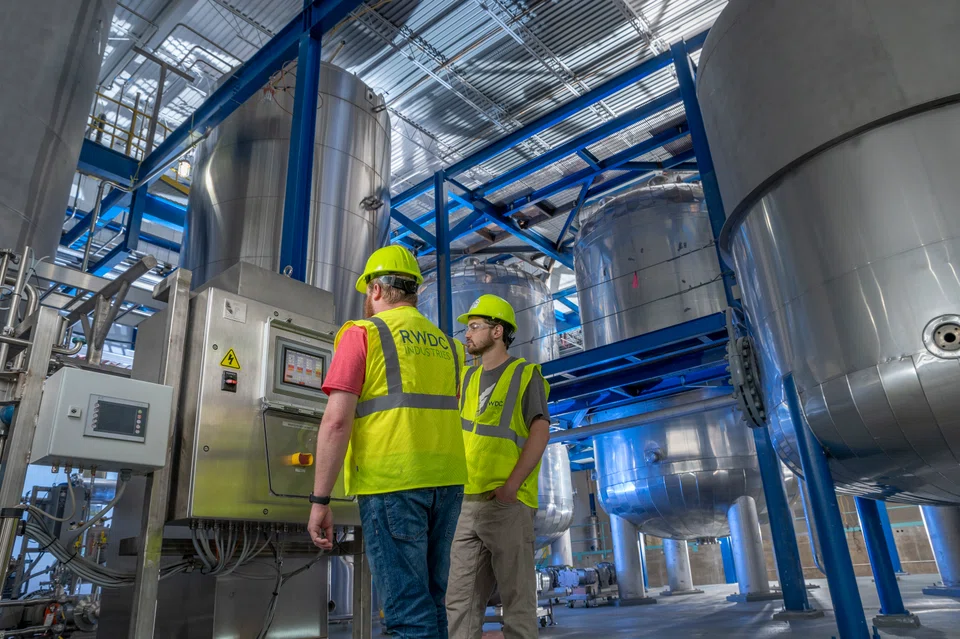
    • RWDC, which produces biodegradable plastic, at  its US plant (pictured), has achieved unicorn status. It is among the companies in which Vickers Venture Partners has invested.
    • RWDC, which produces biodegradable plastic, at its US plant (pictured), has achieved unicorn status. It is among the companies in which Vickers Venture Partners has invested. PHOTO: RWDC INDUSTRIES

    VENTURE capital (VC) firm Vickers Venture Partners, founded by veteran investor Finian Tan, is allocating an even larger portion of its funds in “deep technology’’ (deep tech) investments, as the firm refines its focus.

    Vickers’ latest fund, Fund VI, raised US$255 million in 2021 and is over 80 per cent in deep tech. This is higher than the 60 per cent ratio for Fund V, which raised US$183 million in 2017.

    Redefining Vickers funds’ investment universe towards deep tech — which Tan defines as “breakthrough’’ technologies with the potential for global impact — and away from a generalist VC approach follows a review of the firm’s historical successes to date, and would also help attract startups of a desired profile.


    The firm is gaining recognition as a deep-tech investor, Tan added. Some of its forays into companies such as RWDC Industries, which manufactures biodegradable plastics, have been followed by institutional investors such as Temasek.

    Venture capitalist Finian Tan, founder of Vickers Venture Partners, says the firm has had success with deep tech investments. PHOTO: BT FILE

    Deep tech is also referred to as “hard technology’’ — characterised by engineering or scientific innovation with the potential to catalyse change, as opposed to incremental improvements.

    “We often are the first investor in companies. Most other VCs are generalist, not focused on deep technology … We try not to be a Jack of all trades. In our assessment of performance, we found that the area we were best at with the lowest failure rate was in deep technology. So we doubled down on that, and our performance has increased markedly.

    “As a generalist VC in the past, we were investing in Internet, social networks, e-commerce and game companies as well as deep tech. But from Fund V we began to focus on becoming a global deep-tech fund. And Fund VI is now a pure deep-tech fund focused on funding a better world.’’

    Fund VI (vintage 2019) already has successes. RWDC Industries, for example, achieved unicorn status with Temasek leading the recent round of capital raising. Over 60 per cent of Fund VI has seen an uptick in valuation; it had a net multiple of 1.2 times by the end of its fundraising period last year. The Business Times understands that the funds will be renamed to better reflect their deep-tech profiles.

    Vickers aims to raise US$250 million for a follow-on fund, investing in around 12 companies already in Fund V and Fund VI portfolios.

    Tan noted, however, that the global macro environment of higher interest rates, volatile public markets and general risk aversion has raised challenges, particularly in fundraising and potential exit values.

    “The current environment has 2 main effects — one, on the companies preparing to go public; and two, on fundraising for the younger companies in general.  We have a few companies that are about to go public, and they are affected by the tougher IPO environment. But the bulk of our companies are pre-public, where we expect fundraising to be tougher. That said, good companies will always get funded in any environment. Nonetheless, we’ve already told our companies to prepare for a funding winter.’’

    VC term sheets, he says, are being renegotiated downwards. Higher interest rates typically raise valuation hurdles, and this is already evident in public markets — where previous high-fliers in technology have been significantly revalued downwards.

    “Even though we’ve had a record 12 months in Vickers’ history, we think the next 12 months will be tougher; and we’re preparing ourselves. Many of our companies are hitting major milestones in world-changing breakthroughs, which should put them in good stead.’’

    Tan believes generalist tech firms such as e-commerce and ride-hailing businesses will be more affected by the double whammy of lower valuations and tighter funding conditions.

    “We look for companies (whose products) have a known and ready demand, like a cure for cancer or renewable energy. For us, the risk is the question of ‘will the technology work?’ If it works, we’ll have no trouble finding customers,” he said.

    There are also higher barriers of entry to deep tech, including expertise to evaluate deals. Vickers’ partners are mostly doctorate holders. Tan himself has a PhD in philosophy from Cambridge University. More recent joiners include Poh Hui Chia, associate director, who has a PhD in neuroscience, and Petros Farah who has a PhD in nanophotonics.

    “There is no shortage of Internet deals — everyone has an idea for a next-gen Instagram or TikTok or Uber competitor. But deep tech requires years of R&D before finding a breakthrough that can attract VC money. Our sweet spot is right after proof of concept has been achieved. If it’s still a dream, it’s too risky. If it has already achieved full scalability, it’s too expensive. We’re looking for things that can impact the world, hence our motto ‘funding a better world’.”

    In addition to RWDC, Vickers Ventures portfolio companies include life sciences firm Emergex, which is developing next-generation vaccines for Covid-19 and dengue. There is also Eavor, which seeks to harness geothermal technology to produce scalable and clean baseload power. Vickers led the first institutional round of capital raising for Eavor in 2019. It also participated in a subsequent round in 2020, in which BP, Chevron and Temasek also invested.