Wagering on both the eagle and the dragon

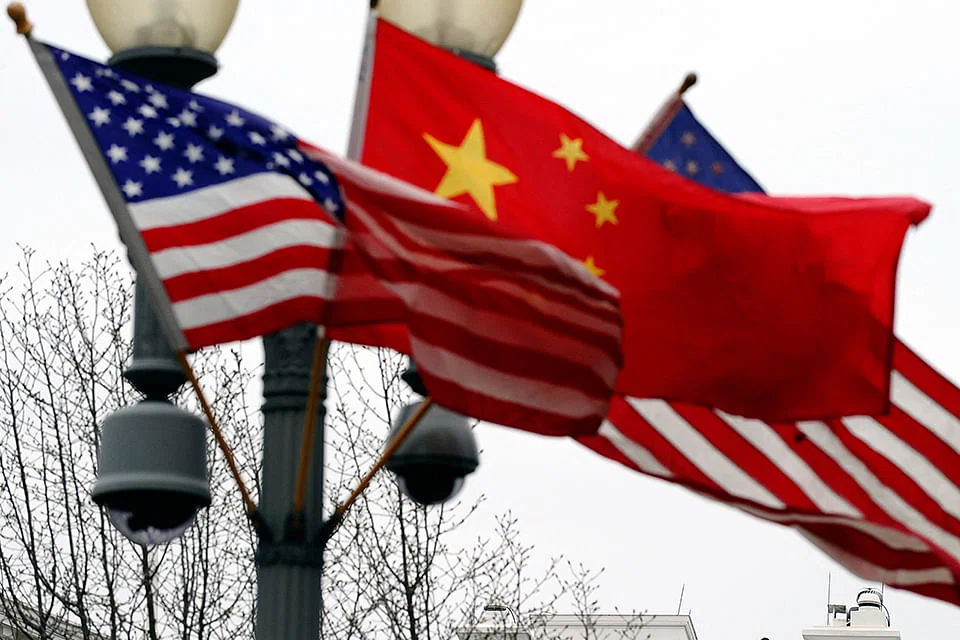
THE United States and China are locked in a battle for supremacy.
China has its Belt and Road Initiative (BRI), which is positioned as an avenue to help emerging countries get the same kind of world class infrastructure that has helped make China a global economic powerhouse. Under the BRI, state-owned Chinese banks typically lend practically all of the money for construction projects to be carried out by Chinese companies.
Launched in 2021, Build Back Better World is the initiative designed to counter China's strategic influence by providing an alternative to the BRI for the infrastructural development of low and middle income countries. Led by the US, the group of seven mainly western industrialised countries will provide around US$40 trillion to the developing countries by 2035 under this plan.
Observers are split over whether the US or China will prevail in the battle for global leadership. But there is much fear that the world will suffer if tensions between the two giants are not well managed.
Distrust between the superpowers can be bad for American and Chinese businesses.
There are tariffs, restrictions and other obstacles to deal with, which make it hard for Chinese companies to access the US market and for US businesses to grow in China. Chinese companies may find it increasingly difficult to tap the US capital markets.
Should investors fret over US-China tensions?
You may perhaps worry and monitor developments, but not lower exposure. Today the US and China boast businesses that are successful in managing the creative destruction brought on by the megatrend of digitalisation.
Among firms created in the last 25 years that are now worth over US$100 billion, nearly all hail from the US and China. Examples include Alphabet, parent company of Google, and Facebook from the US, and Chinese entities Alibaba and Tencent.
Political systems in the US and China differ greatly. The US champions democracy but its politics are increasingly polarised amid partisan divides. In China, questions are raised over the sustainability of its one-party rule and there is uncertainty surrounding transition of power at the top.
But while systems and values differ, the US and China have produced dynamic groups that embrace innovation and provide products and services that excite customers.
Public sentiment could lead to each country becoming more nationalistic and protectionist.
The Chinese government is looking to boost domestic consumption as part of its ''Dual Circulation'' strategy to pivot to self-reliance on domestic consumption, distribution and production.
The US is bringing the manufacturing activities of some of its companies back to its shores.
In a world where there may conceivably be less free trade, American and Chinese businesses would suffer. But adverse effects will likely be felt, possibly even more acutely, by businesses from other countries.
The US and China can rely on their big domestic markets. Think of a world where international travel is highly restricted. There are probably enough Americans to keep the US hospitality sector. China also has enough attractions and visitors for domestic tourism to thrive.
While consumers lose out on price, range or quality, it is plausible to envisage the Americans and Chinese largely consuming products and services of US and Chinese businesses, respectively.
The trade-offs on the part of the consumers from less free trade globally could be deemed acceptable as a reflection of nationalist sentiments to save jobs and livelihoods of citizens.
Each power will likely have countries within their respective spheres of influence. These countries will provide markets for either American or Chinese businesses to tap into.
The US and Chinese governments do at times want to rein in their technology giants but both governments also have vested interests in supporting their technology behemoths, to reap the benefits of global leadership.
The world will be worse off if there is limited constructive engagement between the two giants. There are also problems such as climate change where both powers need to work together and lead the world.
However, American and Chinese businesses may have sizeable enough markets to serve in a relatively decoupled and protectionist world.
Given the above prognosis, investors looking at capital allocation may be advised to place bets on US and Chinese corporations. In looking for profitable champions in fields such as clean energy, electric vehicles, artificial intelligence, pharmaceuticals and digitalisation, expect the US and China to provide the bulk of the winners.
Businesses may at times be forced to venture out of their preferred stance political neutrality neutral when the US and China clash.
Global banks HSBC and Standard Chartered, which do substantial business in Asia including Hong Kong, came out in support of the China-backed National Security Law, introduced in Hong Kong last year.
Under the radar
However, individual investors enjoy the luxury of being under the radar, which enables them to build investment portfolios that invest in market leaders and emerging champions from US and China.
History offers lessons on what happens when a new superpower emerges to challenge the incumbent. Each rivalry has its unique characteristics and circumstances, which makes projections of how a rivalry may unfold difficult.
There is much to admire in the US for its contributions to global peace and prosperity after the second world war. There is also much to admire in China's Deng Xiaopeng whose reforms since the late 1970s have brought enormous progress to a previously backward and impoverished country and created many opportunities for other countries in the Asia Pacific region.
The question of which investments - in China or US - would outperform may come down to how domestic affairs are handled.
Can the US build world class infrastructure and upskill its people? Can China deal with a slowdown in population growth and its rapidly ageing population?
Both nations will need to be adept at dealing with big income inequalities across regions, displacement of jobs caused by digitalisation, keeping technology giants in check without killing their innovation, and the rising costs of social safety nets, among other issues.
Looking optimistically, the US and China may want to avoid any military conflict given the dire consequences. Their great rivalry will hopefully spur more innovation amid the competition for leadership in various fields. They may also do well to focus on improving the lives of their respective peoples so as to prove the superiority of their model.
The wider world will watch eagerly and nervously for the spillover effects of the US-China rivalry.
For investors, set aside political leanings. Ride on both the American eagle and the Chinese dragon for robust returns.