
The war against Big Tech
Regulation of Big Tech entails both commercial and geopolitical considerations, so it's most likely that strategic rationality will prevail
 Add BT as a preferred source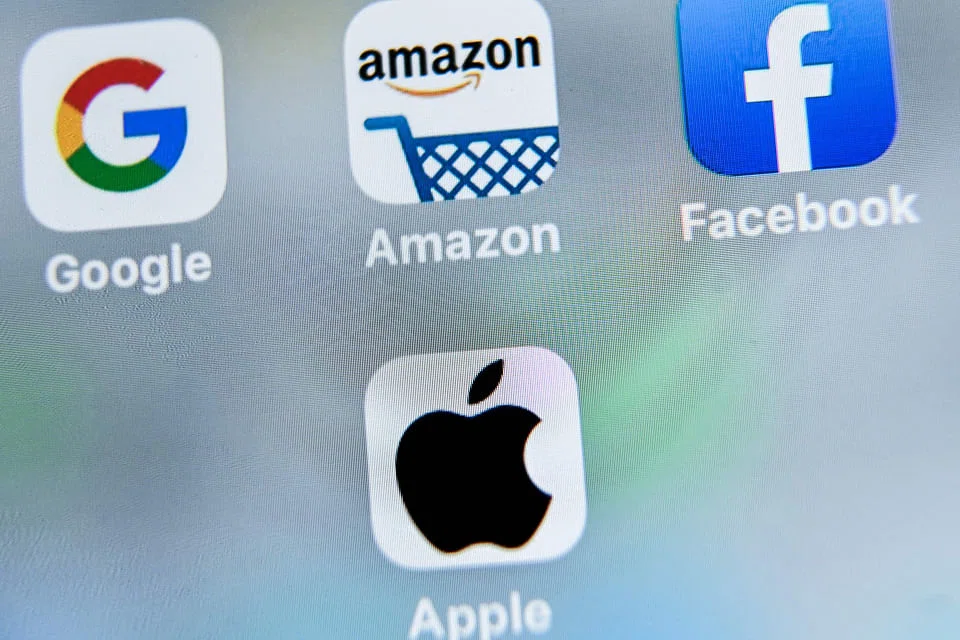
AND so, it has begun. After years of procrastination over how Big Tech should be restrained, words have finally translated into action. The US Department of Justice has filed an antitrust case against Google, claiming that the company has made its search engine the "default" choice in electronic devices, which impedes the abilities of other search platforms to compete.
For the first time, this lawsuit received bipartisan support from both sides of the political aisle, a rare feat considering the deep divisions and extreme polarisation in US politics today.
The landmark lawsuit may herald the start of changing power dynamics between governments and corporates in the years to come.
Is Big Tech getting too big? That is the question.
This antitrust lawsuit is going to be a complex and long-drawn affair, and there will no easy solution.
To begin with: How big is Big Tech and are the accusations valid?
Navigate Asia in
a new global order
Get the insights delivered to your inbox.
Based on the numbers below, there are indeed serious merits to this case.
For instance, the combined market cap of Apple, Amazon, Facebook, Google, and Microsoft in 2020 has reached US$6.8trillion.
This makes up 23.4 per cent of the S&P 500 Index. With a combined revenue of about US$900 billion, Big Tech is equivalent to the 18th largest economy in the world by gross domestic product.
In today's bifurcated world and with the rise of the Internet of Things (IoT), technology has essentially become a part of our daily lives.
The influence of Big Tech in this seismic shift is profound because in today's world, Google commands 92 per cent share of global Internet search engine, whereas Facebook controls 75 per cent of global social media usage.
On the other hand, Amazon accounts for 37 cents of every dollar US consumers spend online.
'Kill Zone' - Strategies employed by Big Tech to limit competition
Big Tech has been known for its "Buy and Kill" strategy. This entails acquiring competitors that pose the biggest threats to their operations and shutting them down before they gain further momentum.
No doubt, the common push-back given by Big Tech is that they are merely "creating synergies" by combining the best features from their competitors' products with their own suite of offerings.
But research from The University of Chicago Booth School of Business suggests otherwise.
The research shows that whenever Big Tech acquires a start-up, it creates a "Kill Zone" - a situation in which the market segment becomes over-concentrated and consequently stifles venture capital (VC) funding for new startups.
According to Chicago Booth, whenever a startup is acquired by Google or Facebook, VC investments in the same space dropped by 46 per cent in the subsequent three years while the number of deals also fell by 42 per cent.
The Counterpunch - Are 20th Century antitrust laws still relevant today?
US antitrust laws were originally created to regulate the large oil and railroad companies of the 19th Century.
These laws are based on the "consumer welfare" standard which dictates that big companies are acceptable so long as the consumer's welfare is not negatively affected.
In the olden days, the price of goods sold essentially constitutes the key component of "consumer welfare".
But in the modern world, the narrative has changed. Today, Big Tech gives away most of their services for free.
Facebook, for instance, does not charge consumers for using its Instagram and WhatsApp platforms. Similarly, Google does not charge for the usage of its Google Maps, Gmail, and YouTube apps.
Instead, Big Tech generates revenue through the monetisation of their users' data by targeting them with advertisements.
Hence, the counter argument against antitrust laws is that the regulators should no longer be fixated about how mergers and acquisitions would reduce competition - as long as prices remain unchanged and "consumer welfare" is not negatively affected.
Investment Implications: Stay calm; 'centrist approach' is likely
Given the high-octane rally in US technology stocks this year, the prospect of rising regulation in the US technology space has unnerved investors. We understand that.
But at the same time, we urge calm and rationality for two reasons.
First, the spin-off of a business division in Big Tech may result in value creation for investors.
Second, prevailing geopolitical realities suggest that policymakers may not be too draconian in their pursuit to regulate Big Tech.
Value accretion arising from spin-offs
Scott Galloway from New York University has been making the case for the break-up of Big Tech, arguing that large companies tend to be less innovative and value creating for shareholders compared to smaller ones.
There are indeed strong merits to this view, and one needs to look no further than the share price performance of PayPal after it spun off from eBay.
Since July 6, 2015, PayPal has outperformed eBay by 346 per cent and trades at 49.2x forward P/E, constituting a 222 per cent premium to eBay.
We believe that the global bifurcation wave, which sees traditional industries getting disrupted by technology companies, will persist in coming years.
Even if Big Tech is forced to break up, there will still be strong merits in staying invested in its spun-off subsidiaries.
'Digital Iron Curtain' between US and China
What started off as a trade war between the US and China has clearly morphed into a fight for global technological dominance.
This development is inevitable, given rapid advancements made by Chinese technology companies in recent years. Judging from the steps the US has taken against Huawei, the fight will only intensify in coming years, regardless of the US elections outcome.
Therefore, in this context and from a geopolitical perspective, it may no longer make strategic sense for the US to undertake draconian steps to break up Big Tech while their Chinese counterparts (for example, Alibaba, Tencent, ByteDance, Baidu, Huawei, Xiaomi, and JD.com) are expanding and widening their reach.
Regulation of Big Tech entails both commercial and geopolitical considerations. Regardless of who wins the upcoming US presidential election, we believe that strategic rationality will prevail; the next incoming president - be it Republican Donald Trump or Democrat Joe Biden - will adopt a "centrist approach" to this issue.
Decoding Asia newsletter: your guide to navigating Asia in a new global order. Sign up here to get Decoding Asia newsletter. Delivered to your inbox. Free.
Share with us your feedback on BT's products and services

