

Weathering the storm of climate risks in China
China is moderately exposed and vulnerable to physical risks arising from climate change. Investors should start incorporating these impacts into valuations.
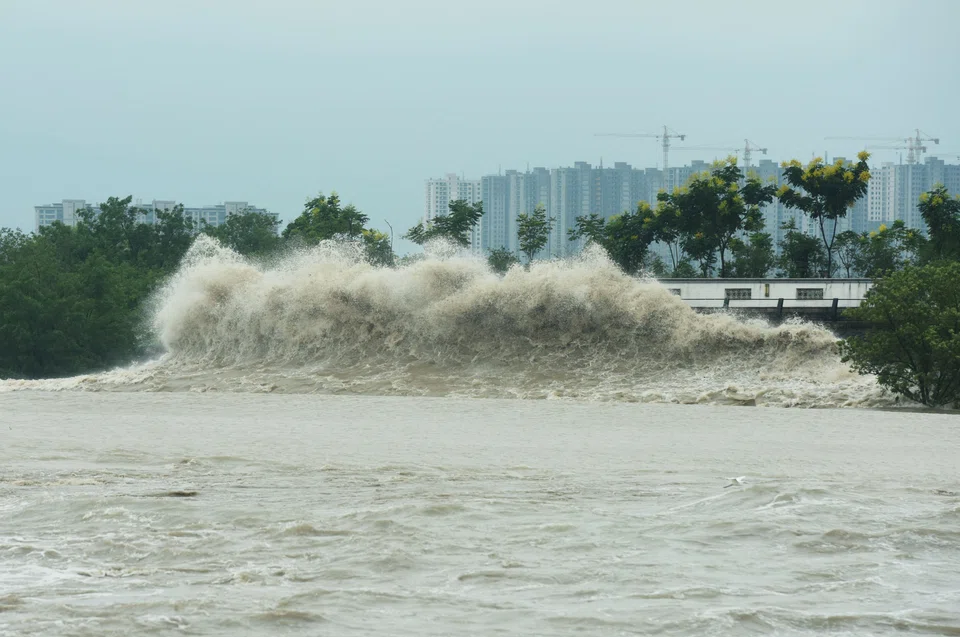
CHINA could be heading into hotter 2030s with more frequent and severe weather events. Global emissions in the past point to more frequent and more severe weather events in the future. The Climate Action Tracker (CAT) developed by the Climate Analytics and NewClimate Institute indicates global warming reaching 1.8°C as an optimistic outcome if prudent measures are taken; otherwise, current policies would result in a 2.7°C increase by the end of the century.
Similarly, China is on track to see warming even in the most optimistic emissions scenario, per the Sixth Assessment Report (AR6) of the Intergovernmental Panel on Climate Change (IPCC). China has already observed some shifts in climate patterns, such as rising temperature, rising sea levels and regional shifts in precipitation patterns. In the future, China is expected to see further warming and shifts in climate patterns as well as heightened risk of acute physical hazards, such as heatwaves, floods and droughts in the future.
Consequently, China will inevitably face physical risks, in the form of acute hazards and chronic shifts. Per the Task Force on Climate-related Financial Disclosures (TCFD), physical risks resulting from climate change are one of the two central sources of climate-related risk that companies should consider. The physical risk can be determined by the physical hazards, exposure and vulnerability combined. Physical hazards can be further broken down to acute physical risks that are event-driven (such as cyclones, hurricanes, floods), as well as chronic physical risks that are longer-term shifts in climate patterns, including sustained temperature rises.
Why should investors care? We believe the market is not well equipped to price in physical risks from climate change. On a sovereign level, the future adaptation costs may not be fully reflected yet in expected GDP growth, as there is a large degree of uncertainty on the scale of investment needed. In addition, the studies by the IMF on aggregate stock market data for 68 economies (representing 95 per cent of world GDP) over 50 years suggests there is only a modest impact on equity markets from physical risks. Coupled with the long time horizon for physical risks from climate change to unfold, the lack of corporate disclosures on physical risks also make it challenging for investors to account for physical risks in their investments.
Compared to other APAC regions, China is moderately exposed and vulnerable to physical risks. From a top-down perspective, China has higher exposure (in terms of population) to physical hazards related to climate change, including floods, tsunamis, tropical cyclones and drought. From an economic perspective, China has a higher GDP impact and lower resilience to climate change. The economy is vulnerable to both chronic and extreme dry weather events, ranking 41st out of 48 countries in Swiss Re Institute’s Climate Economics Index.
From an investment and bottom-up perspective, MSCI China constituents are more affected by water stress and cold-wave risks, if we consider the location of weather events, company operations and sensitivity. On a capitalisation-weighted index level, nonetheless, concentrated consumer discretionary, communication services and financial holdings mean MSCI China has only moderate sensitivity compared to other APAC peers.
Physical hazards could have an impact on companies and value chains both directly and indirectly. Physical risks bring about disruptions to supply chain, logistics and shipments, subsequently leading to changes in the availability and prices of raw materials and resources. Extreme weather and physical hazards hamper production and cause damage to physical assets. Moreover, broader macroeconomic conditions may change because of the physical hazards, in turn affecting the demand of companies’ businesses and products.
What are the implications to investors? Morgan Stanley’s economists expect producers to face upward pressure on upstream prices on the back of a power supply disruption overhang. Consumers are also expected to face stronger food inflation given the susceptibility of agricultural supply chains to extreme weather events. But the pass-through to core CPI should remain manageable over time, as residential energy prices would likely be tightly managed. As extreme weather will affect the utilization of renewables, the power system will also need investment to improve its resilience; otherwise, China will need to rely on fossil energy to meet its power demand. Finally, we believe property & casualty insurers and reinsurers could benefit, thanks to the increasing policy support and potential rise in demand for catastrophe insurance.
We believe investors should start incorporating these impacts into valuation so to have a holistic approach when considering the investment case of climate change risks and opportunities.
The writer is head of sustainability research (Asia Pacific ex-Japan), Morgan Stanley.
TRENDING NOW

Once staunchly pro-China, Malaysian Chinese businesses are now distancing themselves from Beijing

Britain’s mansion tax shows the difficulty of targeting wealth

Three hats, one goal: How Ng Kian Swan runs sustainability at NUHS

COE review: The gap between luxury and mass-market cars isn’t the only one worth bridging

