

WeWin: A failure of dual class shares in private markets
Due to his disproportionate supervoting shares, WeWork founder and ex-CEO Adam Neumann held de facto total control of the firm and so a significant payout was required to push him out
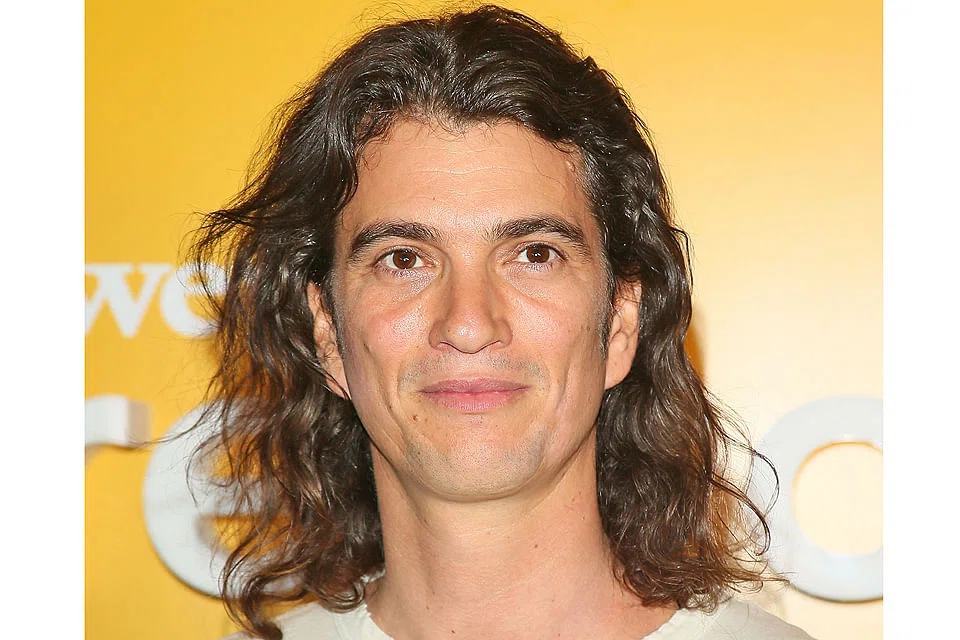
FOR those incredulous over WeWork founder and now ex-CEO Adam Neumann exiting with US$1.7 billion for his not-profitable office sub-letting company, I recommend the memoir Disrupted by Dan Lyons. Mr Lyons, who is a former Newsweek journalist, provides a first-hand account of working under start-up founders less concerned with their products, customers, vision and, God forbid, profitability, and much more concerned with how to market their firms to the highest bidder.
The real currency in Silicon Valley is an ever-increasing company valuation and the game is to maximise this figure from private and eventually public investors. With the valuation of his firm dropping from US$47 billion to US$8 billion in a mere nine months while walking away a very wealthy man, Mr Neumann is possibly both the greatest and worst player of all time. However, from the position of corporate governance and investor protection, the WeWork initial public offering (IPO) debacle will live on as a cautionary tale.
Red flags from the start
WeWork is a provider of well-appointed office spaces on a flexible basis with over 500 locations globally. Since the beginning of its IPO process there were clear red flags on corporate governance. These included unusual related party transactions from the US$6 million purchase of the trademark for the word "We" from a company controlled by Mr Neumann, to several leases signed at buildings owned by Mr Neumann.
The company also provided loans to the founder in order to buy these properties at favourable interest rates. Another concern was the archaic succession plan where in the event that Mr Neumann was unable to act as CEO, a two- or three-member committee headed by his wife would handpick the new CEO.
While much was subsequently remedied, arguably the greatest concern was the outsized control that Mr Neumann was afforded.
The double-edged sword of dual class shares
The headline figure to pay off Mr Neumann seems extraordinarily high, yet this was the premium required from new owner SoftBank to seize control. This stance was confirmed during an internal meeting reported by The Wall Street Journal:
"Employees cheered when one of them asked why Mr Neumann was getting paid so much to leave the company. (WeWork chairman Marcelo) Claure replied that SoftBank needed to take control away from Mr Neumann, and that came at a price. No one clapped."
The steepness of this premium was a direct result of the disproportionate supervoting shares issued to Mr Neumann. In the initial August 2019 S-1 filing with the US Securities and Exchange Commission (SEC), WeWork disclosed three classes of shares, two of which, nearly exclusively held by Mr Neumann, held 20 votes per share.
While dual class shares (DCS) structures are not uncommon among US tech IPOs, WeWork's structure was extreme even compared to other famous listings that left founders with "only" 10 votes per share such as Facebook and Snap Inc. While there was a unique sunset mechanism linking WeWork's supervoting shares to charitable giving, this is now defunct.
The typical argument for DCS is the benefit of a founder guiding a firm without external pressures especially during the early stage of public existence. WeWork proved to be an example of the exact opposite.
Public investors judged Mr Neumann to be detrimental to the future of WeWork, hence the DCS structure, rather than a mechanism to further corporate growth, became a major obstacle.
As disclosed in the S-1, major external investors in the firm held 165 million shares, compared to Mr Neumann's 115 million shares with economic rights, a 60/40 split.
However, in voting power, Mr Neumann's Class B and C shares held over 2.2 billion votes, which dramatically flips the ownership ratio to 7/93.
Due exclusively to his supervoting shares, Mr Neumann held de facto total control of the firm and any effort to push him out would have required a significant payout, which is exactly what transpired with SoftBank footing the bill.
Risks of massive private capital formation
This leads us to the true culprit in this massive paper loss of value, SoftBank. Since announcing their unprecedented US$100 billion "Vision Fund" in 2017, SoftBank has arguably been the leader in inflating private market valuations. This came to an apex during WeWork's January 2019 valuation round prior to filing for IPO, where SoftBank invested an additional US$2 billion at a valuation of US$47 billion, bringing its total investment at that time to US$10 billion.
Now after paying off Mr Neumann for control, SoftBank will have invested nearly US$20 billion in debt and equity in a firm they value at only US$8 billion. The only silver lining is that public shareholders are not on the hook, which would have been the case if the IPO had proceeded. Clearly, there remain major risks from the opaque world of private capital raising.
While a handful of venture capitalists (VCs) will need to take write-downs, the true losers in this whole debacle are the WeWork employees. Not only did this failed IPO trigger a reported 4,000 lay-offs or 27 per cent of the 15,000 workforce, but also employees who were mostly paid in stock awards and options will see their rewards wiped out.
It is estimated that 90 per cent of current and former employees now hold equity awards below their grant price, meaning they are left holding worthless paper while their founder walks away a billionaire.
While illiquidity will always remain a risk when earning equity at any privately held firm, the massive decline in valuation at WeWork is by no means normal. If the cadence of capital raises were better managed, this risk to employees' shares could possibly have been mitigated. Whether SoftBank will be able to turn around WeWork and recapture value for employees remains to be seen, though given the massive amount of capital invested they should be well incentivised to do so.
Protecting investors at all stages of growth
CFA Institute, a premier global association for investment professionals, has written in detail on the shift from public to private capital formation. In our November 2018 report "Capital Formation: The Evolving Role of Public and Private Markets", we highlight the regulatory challenges of maintaining market integrity in the then ebullient private fund-raising environment.
One key policy response would be to encourage better disclosure and transparency standards in private markets as well as improving access to private investments for a broader set of investors, potentially providing better due diligence.
Similarly, once a firm has reached a stage where an IPO is viable, CFA Institute has argued that dual class shares are not preferred and should not exist indefinitely as detailed in the report "Dual Class Shares: The Good, the Bad, and the Ugly". In this sense, WeWork perhaps represents the ugliest of the bunch.
Share with us your feedback on BT's products and services
TRENDING NOW

GCash parent Mynt rises in market debut after South-east Asia’s top 2026 IPO

In the age of AI, what is a university education for?

Singapore to use ‘every legal and regulatory lever’ against companies linked to haze: Shanmugam
‘IPOs are not the only vehicle’: KKR heads for record exits even as firms stay private for longer

