What de-dollarisation? The dollar rules the world
Dollar hegemony is beneficial for the US, its government and most of its citizens – and is likely to last for the foreseeable future
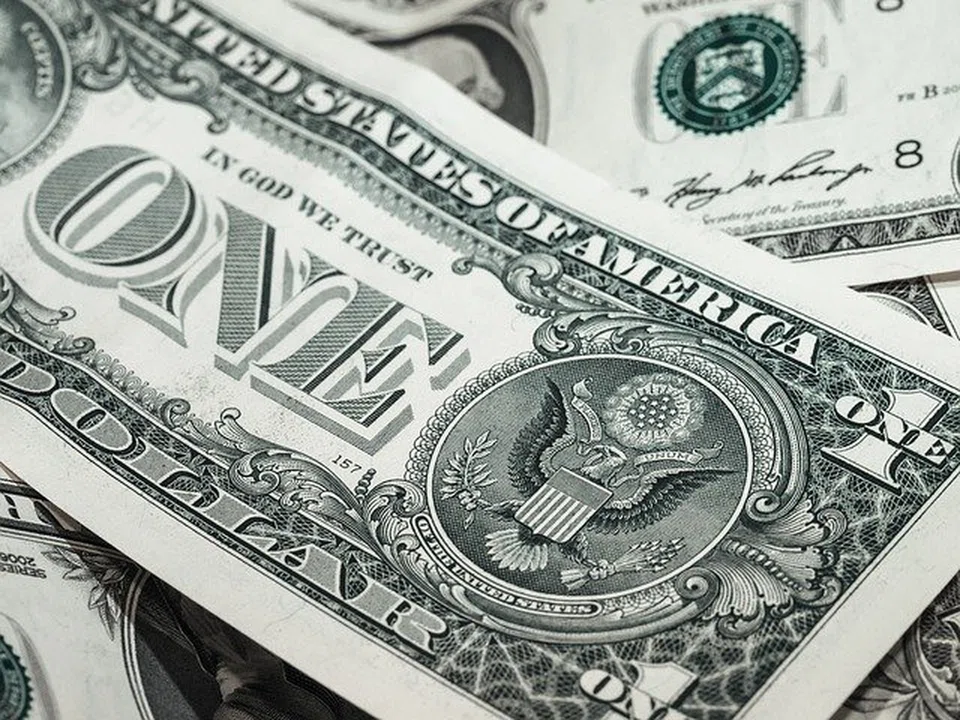
BY ONE estimate, the US dollar is a part of 88 per cent of all international transactions. Some people fear this dominance cannot last, while others question whether it should: Doesn’t a stronger dollar hurt US exports, and thus US workers?
The good news, for Americans at least, is that dollar hegemony is beneficial for the US, its government and most of its citizens. Furthermore, it is likely to last for the foreseeable future.
The issue has become more topical lately. Because of sanctions, Russia is cut off from many dollar-based networks. Other nations, such as Brazil, India and Saudi Arabia, have made at least cosmetic moves towards “de-dollarisation”, hoping to rely less on the US dollar for their international exchanges.
Think of “a sound and focal dollar” as a good or service that the US produces, just as China manufactures phones or Japan makes cars. When Americans trade dollars for foreign goods and services, that measures as a US trade deficit, but it can also be seen as America exporting dollars and “dollar services”. The US brands and markets its dollar, just as Zara or the Gap brands and markets clothing.
So the much-vaunted US trade deficit can be reconceptualised as a form of barter: One service (dollar stability) is being exchanged for another good or service (for example, whatever America buys from China). In essence, branding and selling dollars so effectively – also known as “buying things” – enables US consumers to have a higher standard of living.
To be clear, sometimes selling a particular good or service can be a negative, or at least a mixed blessing. Venezuela’s economy is very dependent on oil revenue, for example, and with unstable oil prices, its revenues are unreliable. Demand for US dollars is not unstable in the same manner. In fact, with conflict in Ukraine and increasing Chinese ambitions, the dollar seems to have a secure future as a safe haven currency – maybe too secure, from a broader point of view.
If there is any danger here, it is that the forthcoming debate in Washington over the debt ceiling somehow results in a US default. Even if that were to happen, however, it would not be an argument against dollar hegemony, nor evidence that dollar hegemony must end. It would just be more proof of the stupidity of America’s politics.
To the extent the US dollar is strong, that does make it harder for America to export other goods and services. But there is nothing special or undesirable about this reality. If South Korea were to export more Samsung phones, for instance, that would boost South Korean wages and the won, and in turn make it harder for Korea to export alternatives such as K-pop.
In any given country, different economic activities have to compete for resources, funding and attention. That’s simply an illustration of the basic economic fact of scarcity. If US dollars are so much in demand, it is testament to America’s history as a beacon of relative stability – which may be a stronger draw than, say, the quality of US tractors or movies.
How far is the talk of de-dollarisation going to proceed? Probably not very. The US has the world’s deepest and most liquid financial markets, and they remain relatively open, in spite of some restrictions on Chinese investment in industries sensitive for national security. There are strong reasons to have a dominant currency in international markets, just as there are strong reasons for having a dominant currency in domestic transactions within the US. Liquidity for a currency begets further liquidity, whether at home or globally.
With the dollar estimated at 88 per cent of all international transactions, the euro at 31 per cent is only a modest competitor (since a transaction may involve two currencies, the total may exceed 100 per cent). The euro, unlike the dollar, will never be tied to a single national government, and the European Union does not come close to the military might of the US.
The yuan is estimated at only 7 per cent of that total of international transactions, and China seems unwilling to open up its capital markets, as that could lead to rapid capital outflows and possibly a financial crisis. But without open capital markets, the yuan is not a strong contender for a global reserve currency.
Economics can sometimes be complicated or hard to explain. When it comes to the US dollar, it is neither. The dollar will retain its focal role, which is good for the US, and the reasons are simple and intuitive. BLOOMBERG