

What to expect after market rout
As oil shocks raise uncertainty to fever pitch, investors should remain cautious and look out for signs of relief ahead.
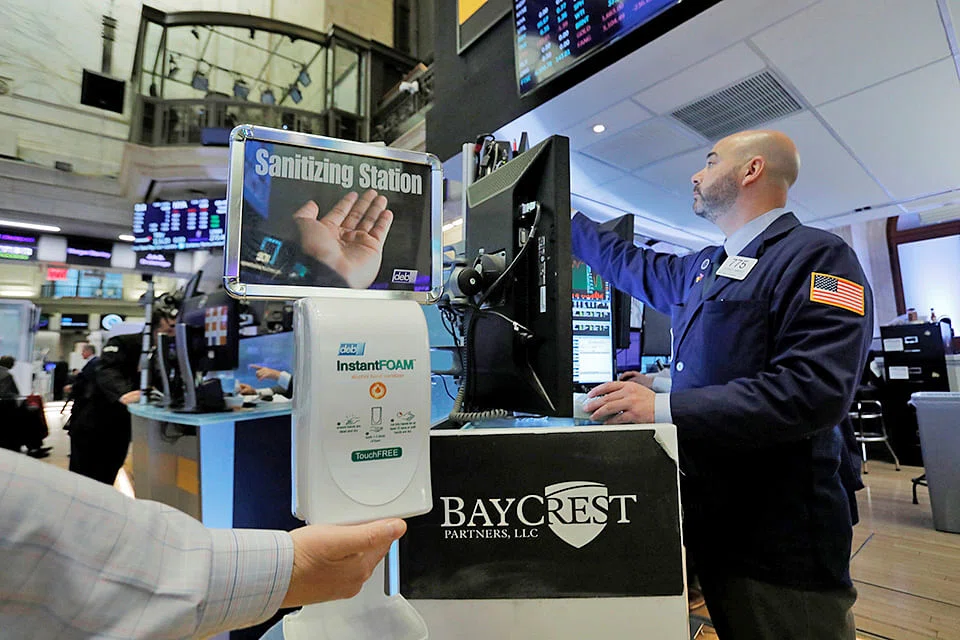
THE plunge in crude oil prices as OPEC+ began a price war further heightened uncertainty for markets that have been under much strain due to the virus outbreak.
In a sharp risk-off move on Monday, global equities declined 7.2 per cent. In the US, we saw one of the steepest single day declines since the Great Financial Crisis, with the 7 per cent plunge in the S&P500 triggering a NYSE circuit breaker early in the session.
Gold rallied above US$1,700 early in the session to a six-year high before profit taking brought it near US$1,680 levels. The Japanese yen and the Swiss franc, both safe haven currencies, also rallied.
The 10-year US Treasury yield hit a low of 0.31 per cent before rebounding to 0.54 per cent at the time of writing, reflecting investor expectations of significant economic weakness ahead and that the Fed would cut rates towards the zero-bound, converging with the European Central Bank and Bank of Japan.
The sharp 20 to 30 per cent slide in crude oil prices on Monday brought us to levels not seen since 2016, and we expect that a price war between major producers Russia, Saudi Arabia and US shale would pressure prices for some time.
While lower oil prices are typically seen, over a long-term horizon, to be positive for the economic outlook, the lesson drawn from the 2015/16 episode is that a very sharp correction in crude prices can do significant short-term harm via: 1) increased downgrade and default risk in the high-yield credit markets, particularly US high-yield with significant exposure to the price-sensitive US shale sector; 2) lower capital expenditure and layoffs across the global oil complex; and 3) weaker fiscal and trade balances for oil exporting countries, at a time when they require fiscal resources to combat the effects of a global virus outbreak.
Recession risk
As the number of daily new cases of virus infection outside of China continues to mount, we expect global governments to take more drastic measures for containment - as we saw in Italy yesterday where nation-wide quarantine measures were implemented.
These portend an impending sharp demand shock and production disruption in major global economies, including the US. We expect a sharp hit to growth in Q2 and Q3 2020 and, considering that the common definition of a recession is two consecutive quarters of negative growth, the recession call would be a close one.
The risk that these rolling shocks will tip global growth into a recession has risen materially, and we will need to see two things before being confident that the economic expansion will continue.
First, we will be monitoring for signs if the global disruption from the outbreak would begin to ease in late Q2 2020.
There are grounds for some hope: after three months of drastic containment measures, China - the world's second largest economy - has shown some success in containing the virus spread with daily new confirmed cases below 100 in the last three days.
The IMF reports that 60 per cent of production capacity has already restarted and will go up to 90 per cent by end-March, and our channel checks corroborate this.
Second, we need to see that global policy responses ahead sufficiently contribute to counteracting the virus hit, and policymakers act with crisis-era programmes and urgency.
To guard against money market pressures, the Fed on Monday announced that it is increasing daily repo operations, which we view to be a small step towards more wide-ranging stimulus ahead.
We believe that the Fed is cognisant that it has limited policy space for conventional cuts today versus past recessions and will look to move more aggressively and ahead of market expectations to extract the maximum efficacy from its rate cuts.
We see the possibility of an additional 50-basis-point rate cut ahead of the scheduled meeting on March 18, and also the Fed leading a globally coordinated effort to implement liquidity measures to stem the market fallout.
Asset purchases would also feature more prominently in the Fed's stimulus efforts. We see the possibility of the Fed increasing its Treasury bill purchases to as much as $100 billion per month, increasing the duration of the assets it purchases, and/or committing to extend the programme from the Q2 to the end of 2020. Global central banks will be under pressure to follow the Fed in easing.
In the days ahead, the markets will also be watching the ability of global governments to deliver fiscal and healthcare responses to counteract the virus outbreak impact, which so far have been underwhelming and insufficiently creative.
On Monday, Germany announced measures to provide fiscal support through a package amounting to under 0.1 per cent of GDP which is wholly inadequate, but more is expected to follow as the outbreak escalates.
We see signs that the US government would announce a fiscal stimulus package targeted at selected industries and affected workers, but again this seems inadequate to address the widespread virus hit.
More volatility ahead
Going forward, we expect more volatility ahead for global markets. Technically, the speed and magnitude of market moves have been exacerbated by the increased role of systematic strategies, such as risk parity or CTAs, and their elevated positioning before the sell-off, and we see equity markets possibly overshooting to the downside into bear market territory (more than 20 per cent correction from peak) as volatility remains elevated.
Conditions are not ripe for stability in financial markets as yet, in our view. The rate of infection for the virus outbreak outside of China has not shown any signs of peaking. Equity valuations are more attractive after the sell-off and are not demanding at current levels, but deep value has not sufficiently emerged for bargain buyers to come in strongly.
What should investors do?
The risk of a global recession has risen materially and is evolving but does not comprise a base case scenario at this point. With this in mind, investors should not sell emotionally or attempt to time the volatile and erratic market moves over the near-term, and should instead focus on the longer-term goals of their investment strategy.
Against the volatile backdrop, investors can monitor closely for opportunities to switch from poorer quality assets into over-sold companies with solid long-term fundamentals that should emerge relatively unscathed from the virus outbreak, and also into selective quality dividend-yielding stocks, such as Singapore Reits, which should benefit from the search for carry as rates continue to fall.
While the outbreak is escalating, investors should avoid sectors that will be directly impacted, for instance, industries such as travel, hospitality, restaurants, offline retail and entertainment.
As rates and crude oil prices fall, we are also cautious on the banking and oil sectors, which would be negatively affected by falling net interest margins and revenue pressures. Additionally, we are underweight in developed markets high yield bonds, where we see significant vulnerability to downgrades and defaults given the exposure to US shale oil and the lower quality CCC-and-below credit names.
It is also critical that investors build up portfolio resilience through active diversification, deleveraging, and explore incorporating hedges into their portfolios, which can include positions such as precious metals and safe haven currencies at suitable entry levels in the event of a relief rally ahead.
TRENDING NOW

Knight Frank’s Tan Tee Khoon leaves firm, Nicholas Keong takes over auction business
Keppel Energy, Sembcorp Utilities and Tuas Power to supply biomethane in pilot project

GovTech retrenches another 38 staff in second round of layoffs

Take-up of new private homes dives 45% in Q3 as prices accelerate with 1.4% rise

