

When an ex-wife fights to control her stroke-stricken ex-hubby’s assets
Why you should make your Lasting Power of Attorney early
MANY people have the misconception that the Lasting Power of Attorney (LPA) is for seniors to make, but the reality is that no one knows when we may become mentally incapacitated, or – in the case of a will – when our time will be up.
This was what happened to David Tan (not his real name) who did not make an LPA and a will. David – now aged 50 – lost mental capacity after he suffered a stroke in March 2023. He has two sons, aged 13 and 15, who are under his ex-wife’s custody after he filed for a divorce against her in 2018.
Being mentally incapacitated means, in the LPA context, you cannot make decisions for yourself on matters relating to your property, finances and welfare. Such a situation could well result in you being in a state of limbo, as your next-of-kin may not be able to deal with matters relating to your properties, access bank accounts or make decisions on your behalf.
This is unless an application to the court is made by an interested party to be appointed as the mentally incapacitated patient’s deputy to manage his property, welfare and affairs, and to make decisions on his behalf.
In an unexpected twist, David’s ex-wife Lisa Lim (not her real name) applied to be his deputy under the Mental Capacity Act (MCA), which governs applications to be made for deputyship of a mentally incapacitated person’s estate.
In doing so, Lisa locked horns with David’s only sibling Diane Tan (not her real name), in a legal dispute that lasted more than two years. David’s parents are deceased. His assets are believed to include a private apartment, a car, insurance policies, bank accounts and Central Provident Fund savings.
It would seem that an altruistic ex-spouse could be entrusted with the responsibility of acting in David’s best interests. However, there is also the invidious possibility that lurking behind that altruism is an agenda of wanting to preserve and ring-fence assets – such as property and insurance plans – that she feels should be kept for the children.
Ultimately, the cardinal question that the court needs to satisfy itself is, who is the better person to appoint to look after David and his property, welfare and affairs in the absence of a valid LPA.
How the court decided
After careful deliberation, the Family Justice Court dismissed Lisa’s application and allowed Diane’s cross-application to be appointed her brother’s sole deputy. The judge cited several reasons:
- Consistency of care: Diane had consistently shown long-term commitment, including regular visits to her brother David, and carried out detailed planning for his eventual care in a nursing home. This is despite his former wife’s declaration that she has the better care plan in converting her rented apartment to cater for his accommodation, as it was more ideal if he was brought to her home to be close to his loved ones, which include his two sons. Just before the court made its decision, a check with the nursing home confirmed that Lisa and her children had not visited David for well over six months after the application was filed.
- Questionable conduct: Upon Diane’s lawyer’s scrutiny of the extensive WhatsApp messages produced by Lisa, it was discovered that the latter had, on multiple occasions, taken control of David’s belongings and disposed of his car, without applying to court for permission to do so.
- Potential conflict of interest: The presiding judge also noted that Lisa’s sons stood to inherit his assets upon his death in accordance with the Intestate Succession Act, as he did not have a valid will prepared. Diane, in contrast, has no stake in David’s estate upon his death.
- Stability and credibility: Diane’s proposals to keep her brother at a nursing home would enable him to receive 24/7 professional medical and nursing care. The court deemed this plan more viable and sustainable than to place him under the care of Lisa, who is staying in a rented apartment with other occupants including her child born out of wedlock – something she did not disclose until confronted with facts presented by Diane’s lawyer.
Given the inconsistencies of the position taken by Lisa, including the past conduct involving concealment, her unilateral actions and the fact that David had formally divorced her, the judge could not say that he was comfortable with the idea of appointing Lisa as David’s deputy.
Get your LPA early
An LPA is drawn up to appoint people (donees) to look after you (the donor) and make decisions on your behalf, at a time when you lose mental capacity. Caregiving has two aspects – personal welfare, and property and financial affairs, including managing the donor’s CPF matters.
If you lose mental capacity and have not done up an LPA, there is no automatic “right” for your family or loved ones to make legal decisions on your behalf or manage your affairs, even if they have your best interests at heart.
In such a scenario, family members may face difficulties in making care arrangements, managing bank accounts and properties, and deciding how to use your financial resources for your daily needs. Your bank accounts and insurance benefits/proceeds may be frozen, and your family may not be able to access your funds to pay for your hospital bills, mortgage and so on, until a court order is obtained.
Your family or loved ones will need to apply to the court to be appointed as your deputy. This process is initiated when a person loses mental capacity and does not have an LPA, for a trusted person to make decisions on his behalf. It can be a costly and time-consuming process, particularly if there is disagreement on who should be the deputy.
What happened to David – the unnecessary and costly legal tussle between his sister and ex-wife – could have been averted if he had made an LPA before he lost mental capacity. There would have been more clarity on his preferred caregiver as he would have appointed responsible and competent individuals, who could be his loved ones or professional deputies.
A deputy, appointed by the court, can make decisions on your behalf, similar to what a donee can do under an LPA, but the process of obtaining a deputyship order is more complex and costlier. In David’s case, his sister chalked up more than S$100,000 in legal fees.
An LPA also helps to protect your estate from being squandered away by irresponsible caregivers if you suffer from mental capacity. As such, it goes hand in hand with setting up a will which takes effect upon death.
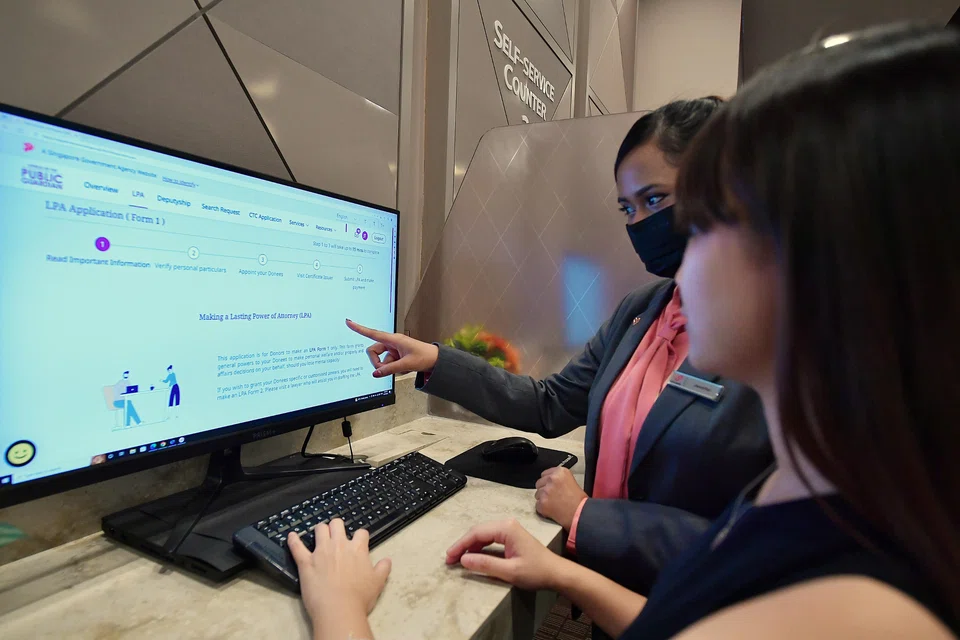
For an LPA to be valid, it must be registered with the Office of the Public Guardian (OPG). Do note that the OPG has extended the LPA Form 1 application fee (S$75) waiver for Singapore citizens to Mar 31, 2026. This is to encourage more Singaporeans to plan ahead and apply for an LPA.
That is why estate planning is for everyone, not just seniors or the wealthy. After all, estate planning is about setting out how you want your estate (or assets) to be managed and distributed.
Besides an LPA, do consider making a will, CPF nomination, insurance nomination, trust (if needed) and an advance care plan for a more complete and sound estate plan.
“David Tan” is a relative of the writer, who is head of financial planning literacy at DBS, and author of bestsellers Retire Smart and Money Smart
TRENDING NOW

Once staunchly pro-China, Malaysian Chinese businesses are now distancing themselves from Beijing

Looking beyond looming CEO succession, should UOB potentially pursue a transformative merger?

Could stablecoins be the future of money?

Grab CEO’s wife Chloe Tong on life with Anthony Tan and finding her purpose

