

Built on trust: Why entrepreneurs think long-term about their banking relationships
What entrepreneurial families are looking for is not a bank for any single stage of the journey, but a partner willing to stay with them through all of it
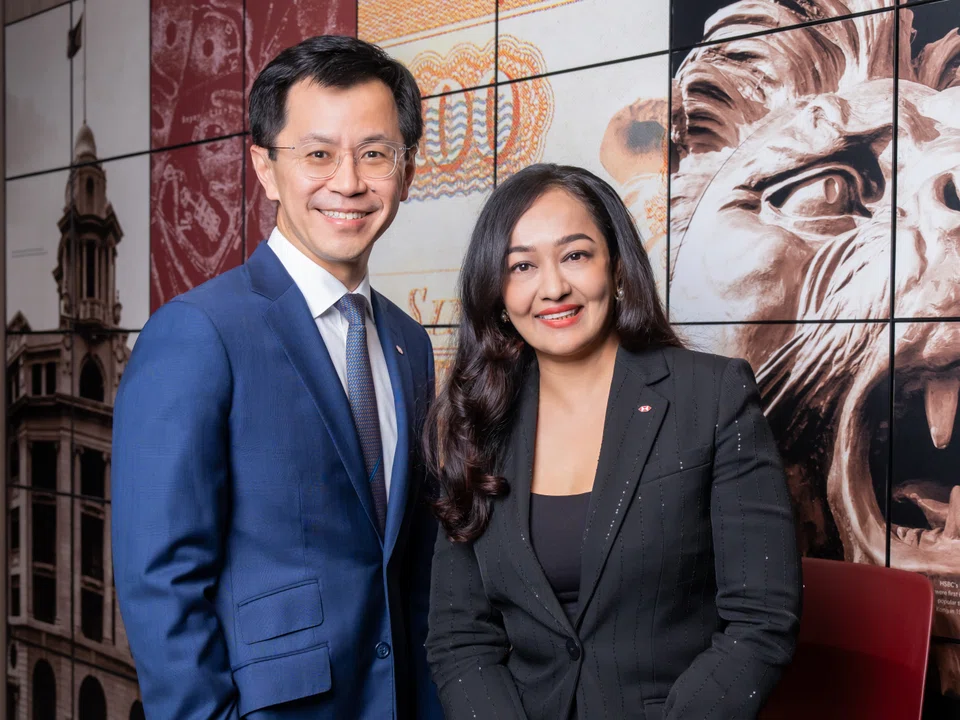
MOST private banks turn up after an entrepreneur has already made their fortune – once the initial public offering has priced or the trade sale has closed and there is real money to manage. HSBC’s approach is to get there first.
That, says Tommy Leung, HSBC’s head of private bank for South Asia, is what sets the bank apart in a crowded field chasing the region’s entrepreneurs and family businesses.
“Most clients would say: that’s too late. I would rather work with someone who was there when I needed them,” Leung says in an interview with The Business Times. “This is where a bank like HSBC – with innovation banking, with the corporate and institutional bank, plus retail and private bank – really has a huge advantage, because we are there early, when the client just started the company or is still in Series A, B or C.”
That early presence is what keeps founders banking with HSBC long after they no longer need a working capital line – through the messy years of scaling a business, the life-changing windfall of a listing or acquisition, and eventually the handover to the next generation.
One bank, every stage
Founders, particularly in the early years, tend to blur the line between their personal finances and their company’s balance sheet, Leung says.
Untangling that is often where HSBC’s private bank first gets involved, working alongside colleagues from Innovation Banking or the broader corporate and institutional bank to help a client separate personal wealth from the day-to-day cash flow of the business.
It is important to start this process early, and HSBC encourages these conversations before major milestones or market events.
For example, Leung points to the 2022 market downturn, when a number of South-east Asian technology companies
that had listed around the pandemic saw their share prices fall sharply.
Many of their founders and senior executives held much of their wealth in company stock and options, and had paid tax on paper gains built up while prices were high.
“If the share price starts to come down, you have a double whammy,” he says. “You have a pretty sizeable tax bill, and you cannot sell the shares because the share price is underwater.”
Episodes like that, he says, tend to be when clients become willing to gradually separate business risk from personal wealth – something the bank tries to raise well before a crisis forces the issue.
That forward planning becomes more pressing as a founder approaches an IPO or acquisition – moments when illiquid paper wealth suddenly becomes real.
Leung says HSBC typically starts those conversations 12 to 18 months ahead of a listing, often recommending a trust structure be set up beforehand – both for tax planning and to shield assets from potential disputes.
The bank also works with founders on lock-up periods and, where a client wants to keep a stake in the business rather than cash out entirely, on credit facilities secured against those shares.
One recent case illustrates how the different parts of the bank work together.
A founder whose company was going through a merger wanted to maintain his shareholding in the combined entity, but did not have the cash on hand to invest.
HSBC set up a lending facility secured against his shares in the unlisted business – typically seen as high-quality but hard-to-sell collateral – freeing up cash for him to reinvest without diluting his overall stake.
Beyond borders
The second pillar of HSBC’s proposition to entrepreneurs is geography.
As South-east Asian businesses expand into new markets, Leung says, founders want both a trusted partner who can navigate local rules and access to a bank’s existing relationships with potential customers, suppliers and investors.
HSBC’s history in the region – close to 150 years in Singapore, and a presence in Thailand, Malaysia and Indonesia that in some cases stretches back more than a century – gives it a network few rivals can match, he says.
He cited a case in which an HSBC client seeking to acquire an asset in Australia found the seller was also an existing HSBC client, a connection that helped move the deal along; the bank went on to finance the acquisition.
For the client, it is a reminder of what a single banking relationship can unlock: a deal sourced through the bank’s own network on one side of a transaction, and the financing to close it on the other, without having to bring in a separate lender or adviser.
Cross-border deals can also get structurally complicated. Leung described a recent facility for an Indian billionaire family that used shares in an India-listed company as collateral to fund a Singapore holding company’s acquisition of an operating asset in Indonesia – a transaction spanning three jurisdictions, coordinated with HSBC’s global markets team in Hong Kong and Singapore.
“Through it all, it was just the dialogue between him and his relationship manager,” Leung says, describing the single-point-of-contact model HSBC uses for clients whose business and family interests span several countries.
That same network extends to the next generation.
HSBC runs an annual Future Family Leaders Forum for clients’ adult children already active in their family businesses or family offices; this year’s gathering was held in Athens in May.
Leung recounted meeting a participant who runs a high-end retail business in the Philippines, who had used the previous year’s forum to connect with a European fashion brand and bring it into the Philippine market.
This is a small but telling example, he says, of the network working in both directions, not just helping local businesses go global but bringing global brands home.
Increasingly, entrepreneurs are less focused on simply preserving what they have built and more concerned with preparing their children to lead the business and manage that wealth responsibly. This is what makes forums like this one, aimed squarely at the next generation, a growing part of the bank’s offering.
Built to last
The third strand of HSBC’s offering – and one it is marking this year – is trust and succession planning.
HSBC’s Singapore trust business, established in 1946, turns 80 this year – a milestone Leung sees as central to how the bank pitches itself to entrepreneurial families thinking beyond their own generation.
Longevity, in his view, is the point.
Over eight decades the region has been through the 1997-98 Asian financial crisis, wars, banking failures and a pandemic – a run of events that, taken individually, might each be dismissed as unlikely.
“Improbable events happen all the time,” he says. “This is probably the lesson learned running a trust over the last 80 years.”
That track record, he argues, is what persuades families to place their legacy in a structure designed to outlast any single crisis, or generation.
Succession, he adds, is rarely a single decision made on a single day. It tends to unfold over years of conversations, and lands better, in his experience, when framed around responsibility rather than money.
“It’s not always about passing on the wealth; it’s about passing on the responsibility,” he says. Approached that way, families are more willing to discuss sensitive questions about who should run the business next and what each generation expects of the other.
The bank also positions itself as a neutral party in those discussions – part technical adviser, drawing on 80 years of experience with family structures, and part mediator when relatives disagree.
Singapore is also home to a significant number of philanthropic trusts that HSBC administers, some of which have continued for decades after the founding family members themselves have passed on, keeping a family’s name and giving intact long after the individuals are gone.
Asked what ultimately separates families that hold on to their wealth across generations from those that do not, Leung points not to structures or tax planning but to something less tangible.
“Have a very clear sense of their value system, what they stand for,” he says. “That is quite critical.”
It is a fitting note for a bank marking 80 years in the trust business: the products change, but the relationships, in HSBC’s telling, are what keep entrepreneurs coming back.
What entrepreneurial families are ultimately looking for is not a bank for any single stage of the journey, but a partner willing to stay with them through all of it – from the first funding round to the boardroom handover a generation later.

Share with us your feedback on BT's products and services
TRENDING NOW

Government to bring forward raising of retirement age, give employers more financial support to create flexi-load jobs

If Europe goes to war, the fallout will be felt in East Asia

Indonesia stocks suffer worst plunge in nearly 30 years as MSCI proposes standalone status

Vietnam’s northern provinces, not Hanoi or Ho Chi Minh City, are powering near 10% GDP growth

