

The inside track: Maybank Private banks on Asean reach, human touch to widen wealth franchise
At the core of Maybank’s wealth proposition is what the bank calls Humanising Financial Services – a philosophy that emphasises on people over products
EVERY private bank chasing South-east Asia’s wealthy families says it’s relationship-led, not product-driven, and singularly attuned to what clients need. Maybank Private’s answer to that chorus is geography.
It is, by its own reckoning, the only bank with a presence in 10 of Asean’s original member states, backed by roughly 2,600 offices stretching from Jakarta to London, New York and the Middle East.
That reach, built up over Maybank Group’s 60-year history, is what the private banking arm describes as a “truly Asean franchise”.
Reach, though, is only half of that pitch. The other half is what Maybank calls “humanising financial services” – a conviction that the biggest wealth decisions rarely start with markets at all, but with protecting a family’s future, preparing the next generation and deciding what legacy to leave behind.
It’s this philosophy, as much as the network map, that Maybank Private is banking on to win over Asean’s wealthy families.
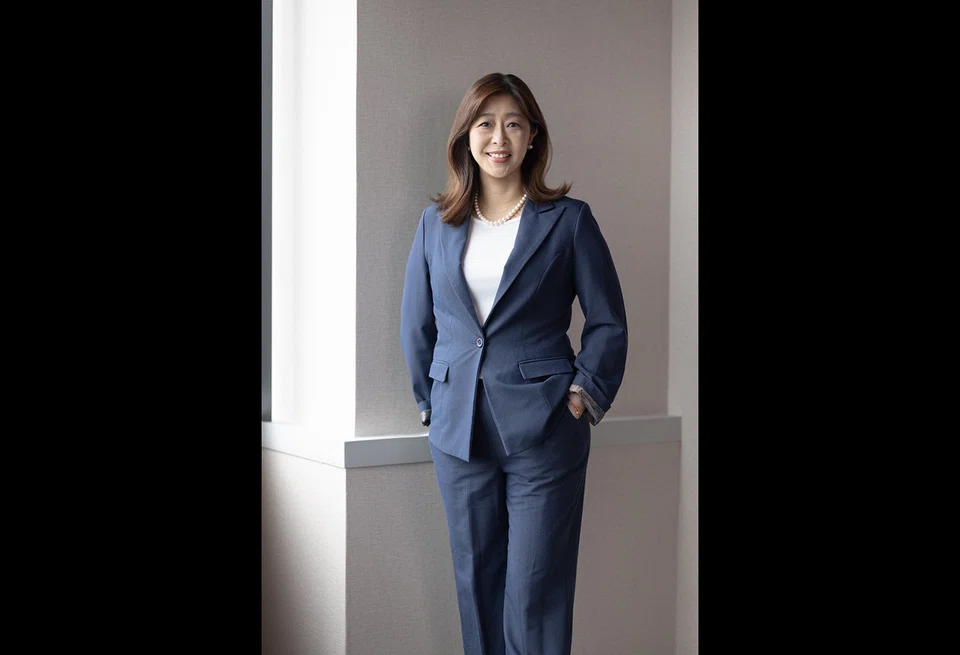
Alice Tan, Maybank’s head of group wealth management, frames the case around how tangled a modern business owner’s life has become.
A founder might manufacture in Vietnam, buy from suppliers in Thailand, expand into Indonesia and bank their investments in Singapore, while children and grandchildren scatter further across the region still.
“Business owners today rarely operate within the borders of a single country,” she says.
The scale of that shift is easy to underestimate. Asean’s 10 original members are home to some 693 million people and a combined economy worth more than US$4.2 trillion. Regional foreign direct investments hit an estimated US$246 billion last year, and total goods trade across the bloc topped US$4.3 trillion – numbers that go some way towards explaining why fewer and fewer family businesses stay inside a single country’s borders.
A bank spread across those same 10 markets, the logic goes, can follow that sprawl with one point of contact – sparing the client from juggling a different private banker, and a different set of local rules on tax, trusts and inheritance, in every jurisdiction they touch.
The problem this is meant to fix is a familiar complaint in private banking: business owners whose personal wealth advice and corporate banking relationship sit in separate silos, run by people who barely speak to each other.
Tan argues the two have become impossible to separate anyway – decisions made for the business, she says, increasingly carry consequences for family wealth and succession.
For Maybank, the emphasis is on making banking relationships simpler and more connected. Clients work through a single relationship manager who draws on expertise across the Group, backed by decades of experience supporting businesses and families across the region.
With an established presence in 10 Asean countries, Maybank is uniquely positioned to connect clients to opportunities across the region. Tan says this extensive footprint allows the bank to support customers throughout their business and wealth journeys, combining local expertise with integrated cross-border solutions through Maybank’s distinctive Asean Connectivity proposition.
“We see ourselves as the bridge that connects our clients to opportunities across Asean,” she adds.
One relationship manager, many hats
That regional sprawl brings complications as well as opportunity.
Families with businesses, investments and property scattered across multiple jurisdictions face a patchwork of legal, tax and regulatory regimes – friction that can derail succession plans if left unmanaged.
Rather than treating each issue in isolation, Tan says Maybank works with clients “to understand their broader objectives and coordinate solutions across our regional network and trusted professional partners”. This spans wealth structuring, succession planning, trust services and cross-border financing, depending on each family’s circumstances.
That role is more than theoretical: Maybank says it facilitated more than RM20 billion (S$6.3 billion) in financing and investments into the Johor-Singapore Special Economic Zone in 2025 alone, a sign of the network translating into capital on the ground.
Under Maybank’s model, a single relationship manager acts as the client’s point of contact, drawing on expertise from across the Maybank Group – corporate and investment banking, Islamic wealth management, asset management and trust services – rather than leaving clients to coordinate between separate teams themselves.
But what does a genuine relationship-first approach look like in practice? Tan believes it starts with listening rather than selling.
“A relationship-first approach means taking time to understand the client’s ambitions, family dynamics and long-term objectives before discussing financial solutions,” she says.
Humanising financial services
That emphasis on people over products ties into the bank’s people-first philosophy that it positions as the emotional core of its wealth proposition.
Behind the balance sheets and portfolio reviews, Tan says, most client conversations tend to centre on far more personal territory, mostly surrounding family, relationships and life transitions, rather than markets.
Succession planning, she notes, is often as much about preparing the next generation as transferring assets, while selling a business can be “an emotional milestone after years of building something meaningful”.
“Humanising financial services means recognising that behind every portfolio is a person with aspirations, responsibilities and values,” she says. “We create space for those conversations and work alongside families to develop solutions that reflect not only financial outcomes but also the legacy they want to leave behind.”
That same long-term lens, Tan says, is what Maybank encourages clients to hold onto when markets turn volatile.
Rather than reacting to short-term headlines, clients are encouraged to anchor decisions against durable goals such as funding a child’s education, retirement planning or preserving family wealth across generations.
“Those goals tend to remain far more stable than market sentiment,” she says.
Beyond its regional footprint and advisory model, Maybank Private is also positioning its Islamic Wealth Management proposition as a point of differentiation in a crowded private banking market.
The offering is structured around five pillars – creation, accumulation, preservation, purification and distribution – which the bank says maps the full lifecycle of wealth rather than treating it as a single transaction.
“Modern investors are increasingly looking beyond investment performance alone. They want a clearer connection between wealth creation, wealth preservation and the long-term purpose of their capital,” Tan says.
Client appetite appears to bear that out: Islamic wealth management fees at Maybank grew 100 per cent year-on-year, Tan says – evidence, she argues, that the framework’s appeal reaches well beyond the bank’s traditionally Muslim client base.
Its principles, she says, are ones “many investors value regardless of faith background: disciplined risk management, responsible ownership, long-term stewardship and thoughtful legacy planning”.
In practice, Islamic and conventional wealth solutions at Maybank work side by side rather than as separate tracks.
Shariah-compliant options span equities, sukuk, structured solutions and protection planning, folded into the same advisory process covering wealth creation, protection, succession and legacy planning that runs across the rest of the private bank’s offering.
Passing the legacy
Succession itself, Tan acknowledges, is rarely straightforward, particularly when founders and their heirs hold different views on risk, sustainability or the future of the family business.
She says family governance and regular dialogue help bridge that gap over time, with younger family members often bringing “fresh perspectives around sustainability, technology and innovation”, while founders contribute “valuable experience and long-term thinking”.
Maybank’s role, she says, is to facilitate conversations “that respect both viewpoints and help families develop a shared vision for the future”.
Asked how high-net-worth families should think about legacy beyond financial returns, Tan points to a broader shift in how clients define success.
“Increasingly, successful families define legacy by the values they pass on, the resilience they build across generations and the positive impact they create through their businesses, philanthropy and communities,” she says.
A successful legacy, she adds, means preparing the next generation “to become responsible stewards of wealth, not simply beneficiaries of it”, so that wealth continues to create opportunities and strengthen family unity well beyond the founding generation.
For Maybank Private, that philosophy underpins a wealth proposition it hopes will resonate with entrepreneurs, family offices and senior executives juggling wealth across multiple markets.
That combination – deep regional roots, capital that follows clients across borders, and a relationship model built around listening before selling – is what Maybank Private is betting will set it apart as Asean’s wealthy families increasingly think, and bank, across the region rather than within a single market.
Ultimately, Maybank Private’s edge lies in bridging scale with personal values. By combining comprehensive regional coverage with a deep commitment to stewardship and human-centric advice, the bank offers clients a unified platform for both business growth and family legacy.
As South-east Asia’s wealthy families look toward the future, Maybank stands uniquely equipped to protect, grow, and transition their wealth across borders and generations alike.

Share with us your feedback on BT's products and services
TRENDING NOW

Government to bring forward raising of retirement age, give employers more financial support to create flexi-load jobs

If Europe goes to war, the fallout will be felt in East Asia

Indonesia stocks suffer worst plunge in nearly 30 years as MSCI proposes standalone status

Vietnam’s northern provinces, not Hanoi or Ho Chi Minh City, are powering near 10% GDP growth

