

Why bear markets don’t always lead to recession
Understanding the relationship between bear markets and recessions will help investors separate short-term headwinds from long-term structural change
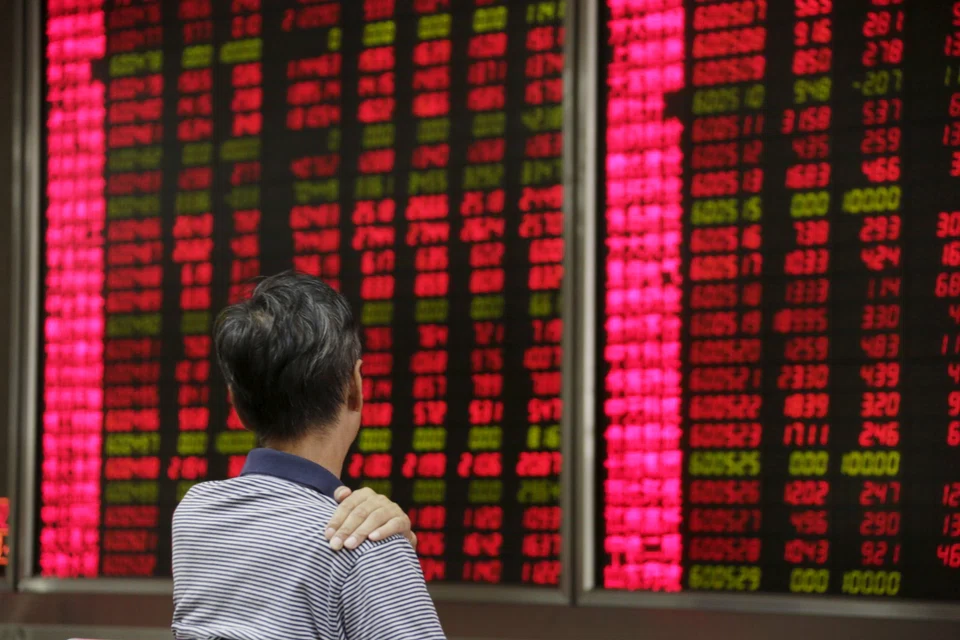
RECENTLY major equity market indices breached their bear-market levels (a fall of 20 per cent or more), which has deepened investors’ concerns that a recession is around the corner. However, we believe that bear markets do not always lead to a recession. Understanding the relationship between bear markets and recessions will help investors to separate short-term headwinds from long-term structural change. This will usher in new perspectives for global equity investors as we enter a new paradigm of lower market returns, less predictable inflation, and higher volatility.
4 lessons from bear markets
Before delving into an analysis of the relationship between bear markets and recessions, it is important to understand the main characteristics of bear markets. Taking the US experience and the S&P 500 as an example, there are four key takeaways that investors should bear in mind.
Firstly, bear markets are not unusual. Since 1928, there have been 26 bear markets in the S&P 500. Secondly, bear markets tend to be shorter than bull markets. The average length of a bear market is 289 days. With the S&P 500 having fallen 22 per cent as of June 14 , we are currently 161 days into this downturn, approximately half of the average time taken. Bull markets by comparison have averaged 991 days. Thirdly, S&P 500 has lost 36 per cent on average in a bear market since 1948. By contrast, S&P 500 has gained 114 per cent on average during a bull market.
Last, but not least, a bear market does not necessarily indicate an economic recession. There have been 26 bear markets since 1929, but only 15 recessions. What investors need to keep in mind is that bear markets tend to track a slowing economy. But a declining stock market does not necessarily mean that a recession is looming.
Early pricing of recession risks
We next consider recessions, their relation to equities and what potential lessons history may have for us. So far, we have had one quarter of negative quarter-on-quarter growth in US GDP (-1.4 per cent annualized for Q1 2022, first reported by the US Department of Commerce on April 28). According to a Bloomberg survey released on May 13, the expectation of a US recession in the next 12 months is quite high at 31.5 per cent. Markets are arguably pricing in an even higher recession risk when investors consider the magnitude of the peak-to-trough move in the S&P 500 in 2022 versus history. However, when analysing recessions and their impact on equities, it is important to consider the following factors.
The first thing is its frequency and amplitude. Since the end of the World War II (WWII), there have been 12 recessions in the US and the median peak-to-trough decline in the S&P 500 has been 24 per cent. The average decline has been greater at around 30 per cent. If we think of the largest drawdown in the S&P 500 this year of 22 per cent versus the average decline in a recession, that could be taken to imply that markets were pricing in a 75 per cent probability of recession. A key point of timing worth noting is that peak-to-trough market declines do not necessarily reflect the performance of the market for the duration of a recession. Markets are forward-looking and usually discount much of the bad news in advance. Thus, the S&P 500 has had positive returns in half of the recessionary periods since 1948.
The second thing to take note of is multiple contraction. The market price/earnings multiple typically starts contracting ahead of a recession. Research by Goldman Sachs indicates that since 1980, the market multiple on average has peaked eight months before the recession and contracted by a median of 21 per cent from peaknto trough. Looking at the S&P 500 market multiple in 2022, it had come down by around 20 per cent by the May low before stabilizing in early June.
The third factor to consider is earnings during a recession. For the same post-war period, earnings for the S&P 500 dropped by some 13 per cent around recessions. Currently, the market is still forecasting decent earnings growth for 2022, but recently consensus earnings have been cut by 1 per cent compared to previous estimates. History would suggest that equity analysts’ cuts are a lagging indicator. Since 1990, the median earnings per share cut ahead of a recession was about 10 per cent, while the next six months from the start of a recession saw further significant earnings downgrades of around 13 per cent.
Last, but not least, markets move in advance. Research indicates that across 12 instances of recessions since WWII, equity markets began to price a recession on average seven months before the official recognition of a US recession by the NBER (National Bureau of Economic Research).
Keeping corrections in perspective
Despite what markets currently appear to be pricing in and the amount of uncertainty in the environment, we believe that there are positive changes after the past recessions that are worth paying attention to.
Earnings tend to bounce back after recessions. While median earnings have fallen 13 per cent on average around recessions, in the 4 quarters following the trough, median earnings have rebounded by 17 per cent.
Moreover, growth outweighs contractions. Excluding the Great Depression from 1928-1939, US recessions have lasted an average of about 10 months. The recession which followed the global financial crisis in 2008 was unusually severe and lasted 18 months. On the other hand, the economic expansion that followed was the longest on record and lasted more than 10 years.
It is also worth noting that stock markets can perform even during recessions. The S&P 500 has actually returned positive performances in 6 of the 12 recession periods post-WWII as defined by the NBER. Moreover, when looking at market performance after periods of recession, it has tended to be quite strong. Historic annual performance of the S&P 500 in the last seven decades also tells us that equity returns over the 12-24 months following a recession have been strongly positive.
It is easy to forget that recessions are part of the business and economic cycle. While every recession will likely have a different cause, there are some similarities in how they play out in markets – multiples compress in advance, earnings cuts follow, and then post the trough as business and consumer confidence expands, we typically see earnings respond robustly, with a strong market recovery. Keeping pullbacks and market corrections in proper perspective is important, and they should be a time for investors to assess the risks and opportunities that the market presents.
The writer is portfolio specialist for global equity strategies at T. Rowe Price
TRENDING NOW

First Resources blames El Nino, outside fires for Kalimantan hotspots amid haze scrutiny

High Court rules against Julius Baer’s Singapore trust arm in US$50 million family trust dispute

Singapore key exports jump by higher-than-expected 68.4% in September, led by non-electronics

MSCI proposes downgrading Indonesia to standalone market status

