

Why sustainable equity investors should pay close attention to Singapore
From electric vehicles to energy-efficient data centres, the green economy is a growing global market in which many countries are trying to become leaders. With Asia playing a key role in the global green economy and Singapore acting as the region’s technology innovation and capital markets hub, the city state’s equity market merits close attention from sustainable equity investors
- Singapore’s green revenue share in the STI reached 10.9% by end-2024, surpassing global averages and leading in sectors like energy and real estate.
- The Singapore Green Plan 2030 and sustainability disclosures make the city a competitive hub for green investment across real estate, technology, and renewables.
- Transparency in sustainability data is increasing, with new disclosure rules coming in 2025 to enhance the green economy landscape for investors.
In this FTSE Russell insight, we examine Singapore’s role in the green economy, focusing on green revenues, sectoral exposures and the current level of disclosure of climate and sustainability data.
Green revenues by country
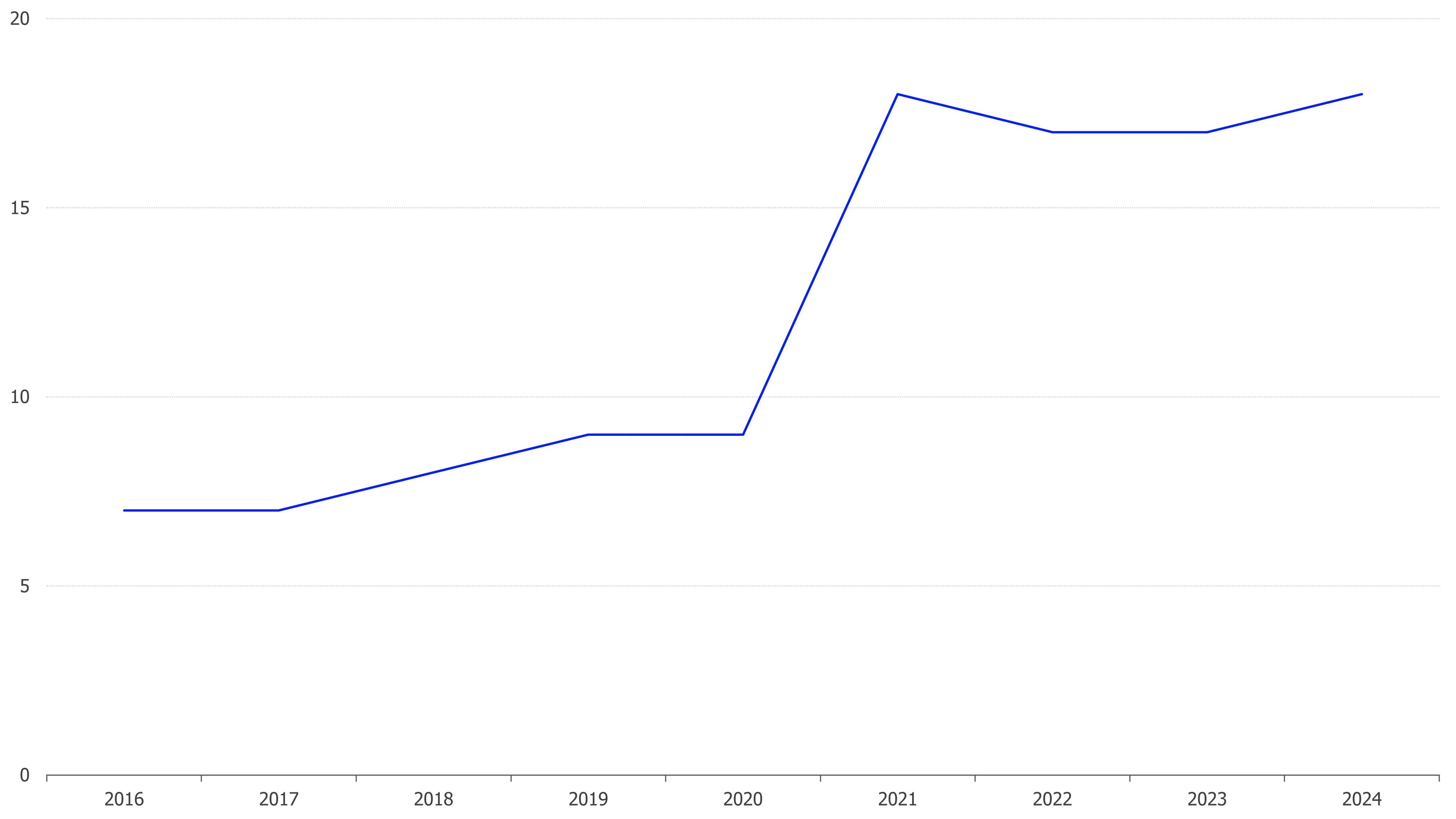
The green economy exposure of Singapore’s best-known equity market benchmark, the Straits Times Index (“STI”), was 10.9%[1] of market capitalisation at the end of December 2024, based on LSEG Green Revenues data. This revenue share is up from less than 4.2% in 2016. 18 companies in the 30-stock index had green revenues at end-2024, compared with only 7 companies in 2016.
Weighted average green revenues for select Asian equity markets
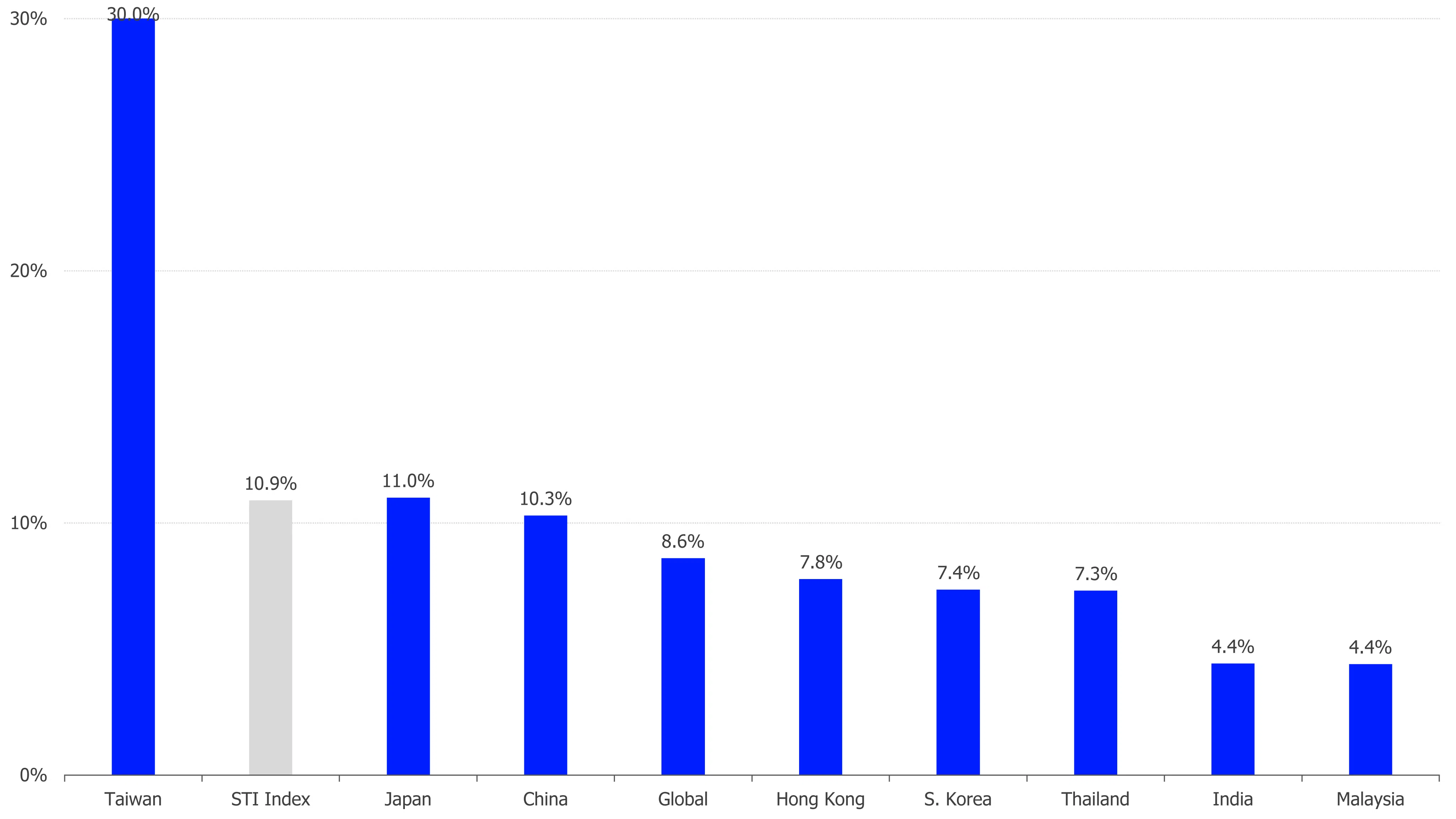
This level of green revenues exposure puts STI ahead of the global average of 8.6%[2]. The Singapore equity market’s green revenues share also exceeds that of China, Hong Kong, South Korea, ASEAN countries Thailand and Malaysia, and India.
Number of STI stocks with green revenues exposure
Singapore has identified the green economy as a key area where it can generate growth and leverage its position as a key Asian hub[3]. This goal is supported both by the Singapore Green Plan 2030[4] and the adoption of the Singapore-Asia Taxonomy for Sustainable Finance[5] in late 2023.
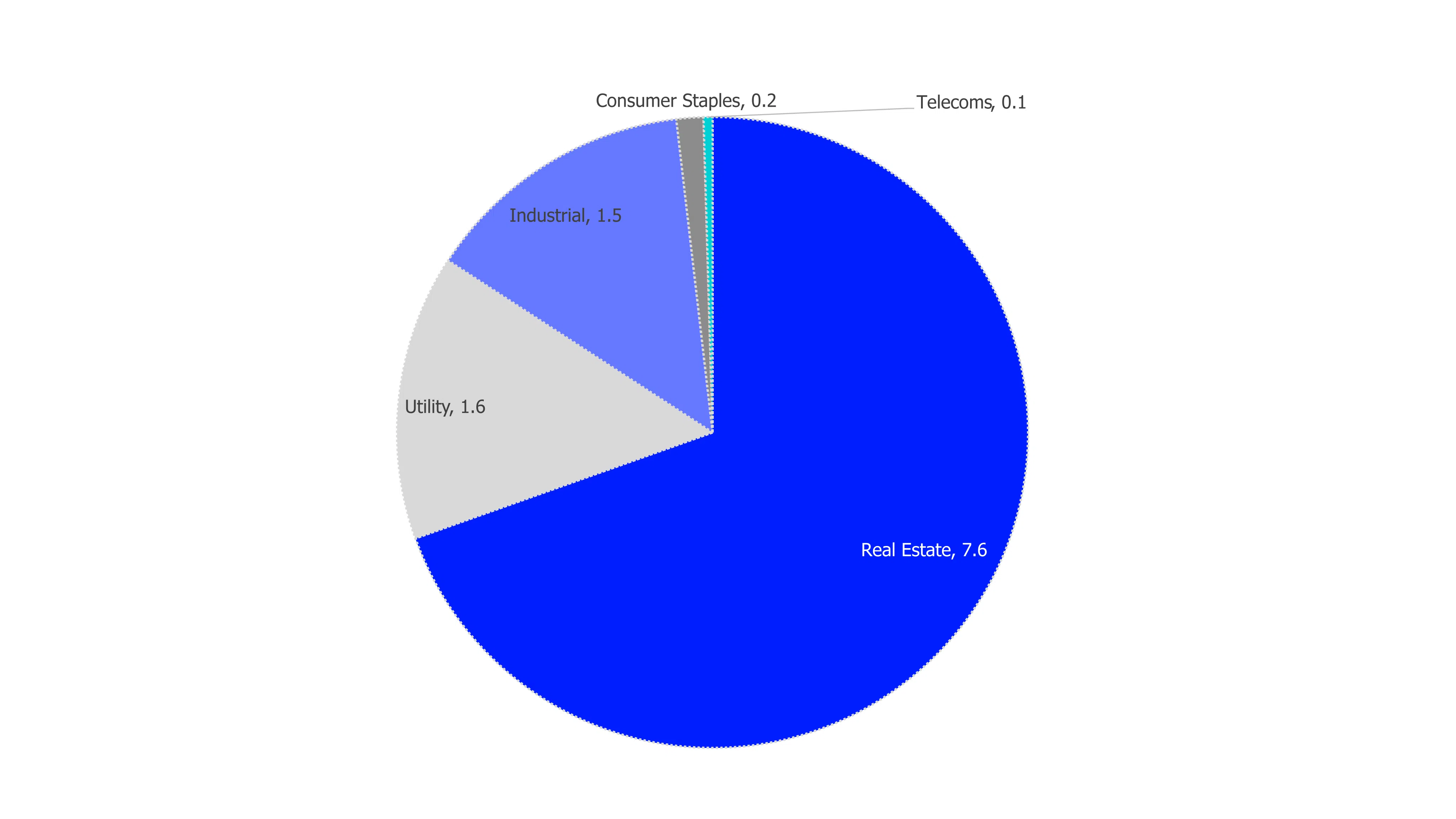
Singapore’s green revenues by Industry Classification Benchmark (ICB) industry
STI weighted average green revenues exposure. split by ICB industry of company
Uniquely, Singapore has a long experience of self-sufficiency in key areas of infrastructure. The energy transition is a key focus for Singapore’s green plans, with utility firms in the STI (such as Keppel Corporation and Sembcorp Industries) both involved in building and operating renewable energy-generating infrastructure.
In addition to transforming Singapore’s energy landscape, these companies are also heavily involved in the energy transition in other Asian countries, where acute environmental pressures (such as urban air pollution) coincide with growing demand for power.
As well as energy, water and waste are also vitally important elements of the urban infrastructure; here again, STI utility and industrial firms are benefiting from the transition to cleaner, more efficient economies. Within the ICB Utilities industry, the water-related sector and sub-sector--encompassing water treatment technologies, desalination and waste water treatment—are always critically important in growing urban economies. Similarly, the ICB Utilities waste management sector involves recycling, waste-to-energy conversion and broader waste management activities.
The green economy in Singapore is also benefiting from the country’s role as a global logistics hub. With sustainability and efficiency initiatives permeating global trade, the development of the green shipping industry[6][7] is a growing opportunity. Shipbuilding and marine engineering companies, such as Yangzijiang Shipbuilding and Seatrium, are involved in the development of fuel-efficient and dual-fuel ships.
Sustainability is also a key trend in the food industry: Singaporean agri-business companies like Wilmar International generate green revenues through their sustainable palm oil and biodiesel businesses.
There is also a crossover between the green and digital economies for Singapore, since the country hosts key global technology companies and is a major data centre hub. Local companies such as Singapore Telecom and Singapore Technologies Engineering are developing technologies to make diverse global industries and processes more sustainable. They are also involved in making the technology industry itself more sustainable, such as by managing the surging energy demand from data centres[8].
However, it is in the ICB Real Estate industry, which represents 14.9% of the STI’s market capitalisation[9], where we find the 70% of the index’s overall green revenues. This is a sharp contrast to the global equity market, where most green revenues are derived from the ICB Industrials, Utilities and Technology industries. These three industries have relatively smaller weightings in the STI, compared with Real Estate or Financials.
The built environment is a key topic for sustainability-focused investors, with buildings representing around 20% of Singapore’s carbon emissions . Addressing those emissions is therefore a key part of achieving Singapore’s environmental goals. Most emissions come from the operation, rather than the building of properties and improving energy efficiency can lead to lower operating costs and a better work environment for occupants.
This, in turn, can lead to cost savings, improved occupancy rates and higher rents. In Singapore, Green Mark-certified buildings are saving tens of millions of Singaporean dollars in energy costs annually, achieving higher rental rates than buildings without a Green Mark, and the highest, Platinum-rated offices achieve the highest occupancy rates[10].
Singapore-listed investment trusts also hold a significant portion of assets in overseas markets (in particular, in other Asian countries), with only 1 of the 11 real estate companies in the STI being solely focused on Singapore. This geographical reach allows them to participate in the growth of the global green building market. As an aside, sustainability-focused investors are increasingly looking for more sustainable real estate indices, such as the FTSE Green EPRA Nareit index range[11].
The Singapore Green Plan 2030 identifies the built environment as a key topic. The Singapore Green Building Masterplan targets 80% of buildings to be green by 2030, 80% of new developments to be super low energy by 2030 and best-in-class green buildings to achieve 80% energy efficiency improvement by 2030.[12]
This initiative is stimulating activity amongst Singapore’s real estate companies, with the widespread adoption of green building standards and the implementation of energy-saving technologies: around 4,000 buildings have already achieved a Green Mark in Singapore. All 11 Real Estate companies in the STI have some degree of green revenues, all based on green building certification and ranging between 10% and 99% of revenues. They cover not just the core real estate activities, such as office and residential, but also alternative areas such as industrial, retail and logistics real estate.
Singapore scores well on climate disclosure
As well as the increased corporate adoption of green activities (such as renewable energy generation or green building certification), a key factor for the sustainable investor is disclosure. It’s disclosure that enables not only the identification of green revenues, but also other key factors such as carbon emissions or transition plans.
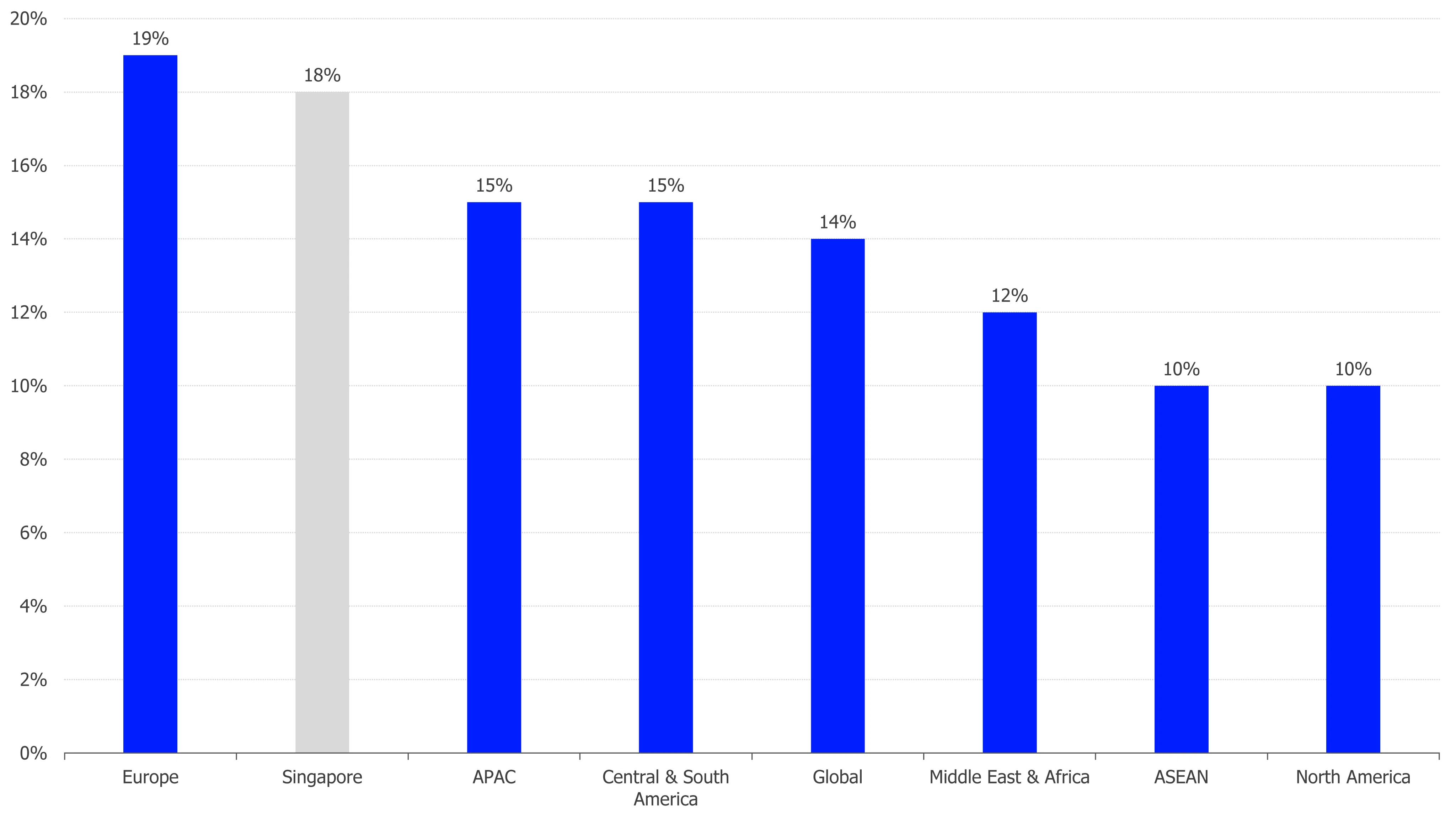
The disclosure of the extent of green building certification is a key element in establishing the STI’s green revenue exposure. Singapore’s average disclosure of International Sustainability Standards Board (ISSB) required climate indicators is currently 18%[13]. This puts the city state above the global and APAC average and higher than countries like Japan and Australia, but slightly behind the European average.
However, the disclosure rate is going to increase significantly since new sustainability disclosure rules[14], incorporating IFRS sustainability disclosure standards, will come into force in 2025 for all Singapore Exchange (SGX) listed companies.
Average disclosure of ISSB climate indicators
Asia’s and Singapore’s crucial role in sustainability
Asia is home for the majority of the world’s population, it generates the lion’s share of global economic growth but also produces most of the world’s carbon emissions. The region will therefore inevitably be at the centre of global developments in sustainability and the energy transition. It is already the largest region in terms of climate finance[15] and clean technology manufacturing[16]. This comes despite the relatively underdeveloped Asian sustainable investment fund industry, particularly when compared to Europe. However, as Asian countries increasingly adopt climate and sustainability targets and seize the opportunities afforded by the growth and global nature of the green economy, the “hub” status of Singapore in the region is likely to give it a competitive advantage.
In conclusion, the deepening global and Asian green transition, the efforts of the government to develop the country as a green hub, the diverse range of industries engaged in green activities and the growing levels of sustainability disclosure all mean that Singapore has a significant opportunity to be a key participant in the future green economy.
[1] Weighted average green revenues, sum of the weight of each constituent multiplied by the percentage of their revenues coming from green products and services. FTSE Russell Green Revenues is a unique data model, enabling users to identify and quantify revenue exposure to the green economy and measure companies’ progress in achieving green standards, based on a transparent and robust methodology
[2] Investing in the green economy 2024: Growing in a fractured landscape | LSEG
[3] How Singapore is accelerating the green transition in south-east Asia (ft.com)
[6] Maritime Singapore Green Initiative | Maritime & Port Authority of Singapore (MPA)
[7] MOT | An Environmentally Sustainable Maritime Singapore
[8] A new era of data centres in Singapore (techwireasia.com)
[9] Data as of December 31, 2024
[10] Singapore Green Building Masterplan – A roadmap to decarbonise the Built Environment. Building and Construction Authority of Singapore.
[11] FTSE EPRA Nareit Green Index Series | LSEG
[12] Green Building Masterplans | Building and Construction Authority (BCA)
[13] State of ISSB Regulations and Disclosures in APAC | LSEG
[15] Global Landscape of Climate Finance 2023 - CPI (climatepolicyinitiative.org)
[16] Advancing Clean Technology Manufacturing – Analysis - IEA
Share with us your feedback on BT's products and services
TRENDING NOW
Stocks to watch: Keppel, Seatrium, OUE Reit, Wilmar and more
Hidden value: Why SGX consumer stocks deserve a closer look
Keppel’s RigCo, Seatrium to complete four offshore rigs in deal worth over S$500 million

Decision fatigue, complexity stop people from investing despite growing retirement needs: BlackRock

