Why thematic investing matters more than ever in a volatile world
It is a disciplined way to identify structural changes in global commerce that cut across sectors, industries and countries
AS MARKETS are jolted by geopolitical headlines and a fast-changing artificial intelligence landscape, investors often shorten their time horizons and grow more defensive.
Yet these are precisely the moments when long-term thinking matters most, because it is the best way to understand the larger forces at work, and the potential regime shifts in leadership and valuations.
Thematic investing is a disciplined way to identify structural changes in global commerce that cut across sectors, industries and countries. We then ask which companies are best positioned to turn those forces into earnings growth, margin expansion and market-share gains.
This approach has delivered results. In our Global Thematic 2026 Outlook, thematic stock categories rose 38 per cent on average in 2025, outperforming the MSCI World and the S&P 500 by 16 and 27 percentage points, respectively.
So how are we thinking about the rest of 2026 and beyond?
Four major themes
Our global thematic framework organises research around four themes: the transition to a multipolar world, AI and technology diffusion, the future of energy, and societal shifts.
Each matters on its own, but the most important opportunities emerge when they reinforce one another, and the biggest risks appear when they collide.
Consider power equipment. These heavy industrial companies were once low-valuation, low-profitability laggards. Now they are becoming strategically important national assets with rapidly improving profitability, while order backlogs extend into the late 2020s.
Demand is being driven by several themes at once: the need for energy security, power for the AI data-centre build-out, and a gradual decarbonisation process that is lifting demand for nuclear and gas-fired equipment.


Investors who still think only in bottom-up terms or narrow sector silos are likely missing the bigger picture. That broader map is especially important in Asia-Pacific.
In our report, Asia’s Competitive Reinvention – The Thematic Opportunity, we argue that the region is not simply being shaped by global themes; it is actively redesigning itself around them.
The competitive spirit and export orientation is being reinvigorated alongside key industrial policy and economic security initiatives. Capital market and corporate governance reforms are being fast-tracked to better attract and allocate capital.
Asia and technology diffusion
If we had to place one theme at the centre of the conversation in Asia today, it would be AI and technology diffusion.
AI models are improving at extraordinary speed. In addition, a key aspect is how long AI can work by itself.
Metr, an independent evaluation firm, now estimates that the leading AI model can independently handle software engineering tasks that would take a human professional about 12 hours. The equivalent capability in early 2025 was around one hour.
We expect further non-linear gains through 2026 as new models trained on roughly 10 times more computing power are released.
That is why the most common question at our flagship Technology, Media & Telecoms Conference in San Francisco in early March was: What will our children do?
AI is broad enough to affect work across professional services, including finance, law, communications and even medicine. Those closest to AI development can already see the direction of travel.
Our work points to a growing labour-market impact. Our analysts expect a net 13 per cent of companies in Asia-Pacific to reduce headcount because of AI deployment.
For corporate AI adopters, we also see a more immediate earnings benefit from cost savings than from revenue expansion. About 90 per cent of companies appear to have more to gain from the former than the latter.
What is harder to judge is the scale of new jobs and new business formation that may emerge from this disruption, as happened in earlier waves of technological change. That may mean entrepreneurialism, adaptability and critical thinking matter more for our children than expertise in any single discipline.
Asia’s AI story must also be viewed through the lens of techno-competition, which brings us to another intersection with our multipolar-world theme.
The US still leads in semiconductors and model innovation. But in Asia’s competitive reinvention, we argued that China has clear strengths in power, data, talent and proactive regulatory support.
China is less focused on competing at the frontier itself. Instead, it is trying to lower the cost of practical AI and speed deployment across the economy through its AI+ Strategy and the 15th Five-Year Plan. Crucially, it is directing AI towards emerging industries, such as robotics and other forms of embodied intelligence.
The key question is whether China can diffuse AI quickly enough to keep strengthening the economics and capabilities of advanced manufacturing, services and digital platforms.
Another major issue is adoption and disruption. Markets are moving from asking “Who has AI exposure?” to asking “Who can prove AI ROI (return on investment)?”
Our fifth regional AI mapping shows that 36 per cent of our Asia coverage is now classified as AI adopters to some degree, while a further 20 per cent are identified as enablers, or both.
But AI deployment will produce durable stock outperformance only when companies have the pricing power to retain the gains. This is a trend we have noted over the past two years, and it will continue to drive dispersion.
Singapore’s AI relevance
For Singapore readers, this is especially relevant. In our Asia work, we describe Singapore as repositioning itself as a “hub of hubs”, while the Monetary Authority of Singapore is leading an equity-market reform push aimed at improving liquidity and valuations so that the public market better matches the city-state’s broader tech and capital-markets ecosystem.
That matters, because Singapore’s AI relevance is not limited to its role as a financial centre. It is also evident at company level. Our latest Asia AI Adoption Leaders list includes Singtel , ST Engineering and Grab.
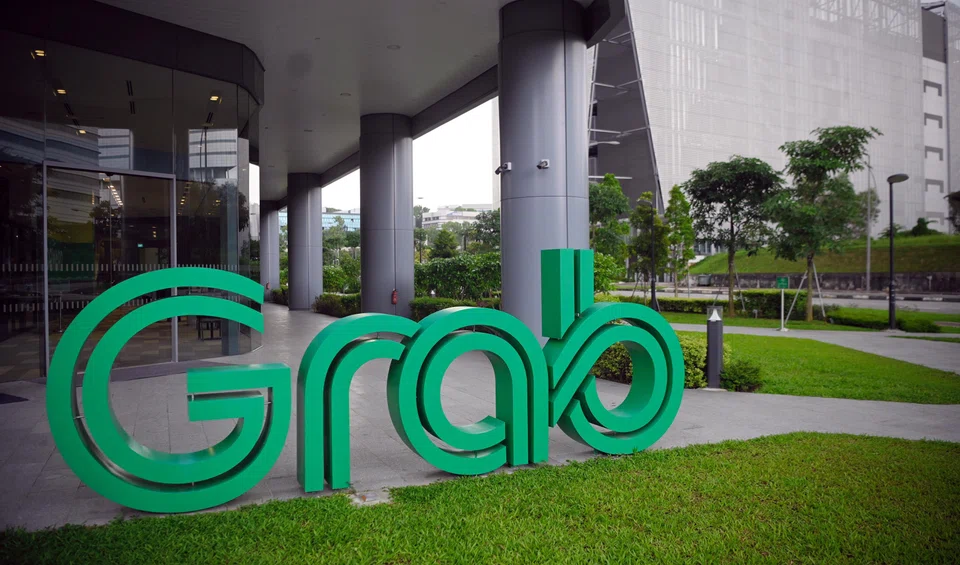
Grab is a particularly clear example of AI diffusion in practice. Our research notes that it already has more than 1,000 AI models embedded across its platform, supporting new product launches and more efficient growth. In miniature, that is the regional AI story – not just frontier technology, but also commercial deployment.
Our conclusion is simple. Thematic investing is not a luxury for calm markets or patient investors. It is an essential framework when volatility is high and prospects are being repriced quickly.
In Asia, that framework is becoming more powerful because the region is not merely participating in global disruption; it is reshaping itself around it.
Within that transformation, AI and technology diffusion stands out as the theme to watch, and the winners in this cycle will be not only the companies building intelligence, but also the companies and investors that learn fastest how to apply it.
The writer is Asia equity and thematic strategist, Morgan Stanley
Decoding Asia newsletter: your guide to navigating Asia in a new global order. Sign up here to get Decoding Asia newsletter. Delivered to your inbox. Free.
Share with us your feedback on BT's products and services