

Women investors: A force to drive sustainable investments
Patricia Quek of UBS Wealth Management speaks on the efforts taken to nurture this group of clientele
 Add BT as a preferred source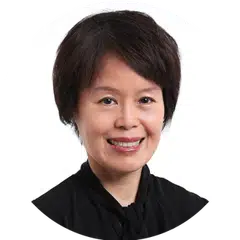
Genevieve Cua
DeeperDive is a beta AI feature. Refer to full articles for the facts.
WOMEN traditionally take a back seat to their spouses when it comes to investment decisions. But this is rapidly changing – and that's a good thing.
For wealth managers, women are emerging as a potentially strong client base with distinct investor characteristics that merit a targeted approach. UBS estimates wealth of women in Asia ex-Japan will jump to US$7.3 trillion by 2025, an increase of about 50 per cent from US$4.8 trillion in 2020. According to a recent UBS and PwC Billionaires Report (2020), Asia-Pacific female billionaires grew by 20 per cent in number, of whom 60 per cent were self-made.
We speak to Patricia Quek, head of UBS Wealth Management Singapore, on the efforts taken to nurture female clientele.
Why is it important to specifically recognise women’s needs and aspirations in wealth management?
Yes, we've had a focus on women for various reasons. First is something we can all identify with, which is that women in general live longer than men. Second, at some point, women will need to take care of their financial assets or wealth all by themselves. UBS' Own Your Wealth report found that over 80 per cent of women are highly involved in their short-term finances like budgeting. About 60 per cent of women defer long-term financial decisions to their spouses.
We think there is a degree of urgency in helping to enhance women's financial knowledge so we can equip them to take care of themselves and to make financial decisions.
Navigate Asia in
a new global order
Get the insights delivered to your inbox.
According to BCG, female investors controlled 33 per cent of total global personal investible wealth in 2020, up from 31 per cent in 2016. This share is expected to rise to 35 per cent by 2025. In fact, between 2021 and 2025, BCG expects women's investable wealth to grow faster than men's: The compound annual growth rate for women's wealth is 6 per cent, versus 4.2 per cent for men. BCG also found that for every US$1 of investment raised, women-owned start-ups generated US$0.78 in revenue, compared to US$0.31 in men-owned start-ups.
What major gender differences do you observe between men and women as investors, and how might this impact how you advise them in wealth planning?
Women want to be served in a way that focuses on their aspirations. They don't want to just invest because the performance is good. Of course, performance matters, but for women there is more. They want to know how their investment helps to develop communities, or provide for children, for example.
Women's risk appetite is not necessarily lower, but they tend to do their homework a lot more, and so they make more deliberate investment decisions. And they do have higher returns than men. So while they are not necessarily risk averse, they are averse to what they do not know. When they do understand, they take very assertive investment decisions. I had a conversation with a male client. He likes to go in and out of markets. Last year, his return was 4 per cent. His daughter also invests, but does not trade so frequently; she has a sustainable investment portfolio. Her return last year was 8 per cent.
We find that women want advice, especially from an adviser they trust, and are more than happy to pay for it. In our survey, older, more affluent women are twice more likely to pay a fee of 1 per cent or more for advice, compared to men. Sometimes, women may not be happy with how some advisers speak to them. In a spousal situation, for example, we have to be mindful, because women want to be treated independently from their spouses and to be taken seriously.
How does your approach towards advising women cater for their evolving life stages?
Women live longer and tend to be quite disciplined about the way they bucket their wealth. We advocate 3 key strategies – liquidity, longevity and legacy. Liquidity takes care of a family's cash-flow or short-term needs. This includes income from employment and/or a pension. The assets in this strategy must be easily cashed-out, with high price stability. The greater the uncertainty of your income or the risk of unforeseen expenses, the more you should set aside in your liquidity strategy.
Longevity is the second strategy, which helps to meet your goals over your lifetime, by ensuring you are invested in a way that supports a high probability of meeting these objectives. Typical goals may include securing an early retirement or amassing funds to start new business ventures. Non-bankable assets can be incorporated into this strategy, if they contribute to achieving your goals.
The third is the legacy strategy, which helps ensure that the wealth lasts for generations and is allocated to serve causes that matter to you. The key to this strategy is to maximise the value of transfers to future generations, and at the same time create a positive impact for society along the way. Because of the way it is structured, this strategy enables you to invest in a riskier portfolio with a high proportion of illiquid assets.
You have said that women tend to invest with purpose in mind. How does that help in today’s volatile environment?
Our solution shelf applies for both men and women. But men tend to say – I want to invest in this or that because I will make money on it. Women want to invest in line with their values. Women are very well-positioned to drive growth in sustainable investments, because this is something they identify with. The investment may relate to climate change, children's needs or gender-lens investments.
We advocate a few key principles in investments – to be disciplined and have a strategic asset allocation. There is a benefit when you find investments close to your heart – which means the investment is aligned with your goals and values and objectives. When there is volatility, you may come back to it and consider – why did I invest in this? You're more likely to stick with an investment when you have conviction about it.
“"Women want to be served in a way that focuses on their aspirations. They don't want to just invest because the performance is good."”
Patricia Quek
Copyright SPH Media. All rights reserved.
TRENDING NOW

StarHub hands Ensign InfoSecurity control back to Temasek in S$115 million deal, books S$200 million gain

Singaporeans can now buy record amount of yen per Singdollar

Air India asks Tata, Singapore Airlines for funds after US$2.4 billion loss

Keppel DC Reit posts 13.2% higher Q1 DPU of S$0.02833 on strong portfolio performance

