World’s top money managers favour emerging markets, Citi says
The shift is a consequence of policy uncertainty and blowout fiscal deficit in the US
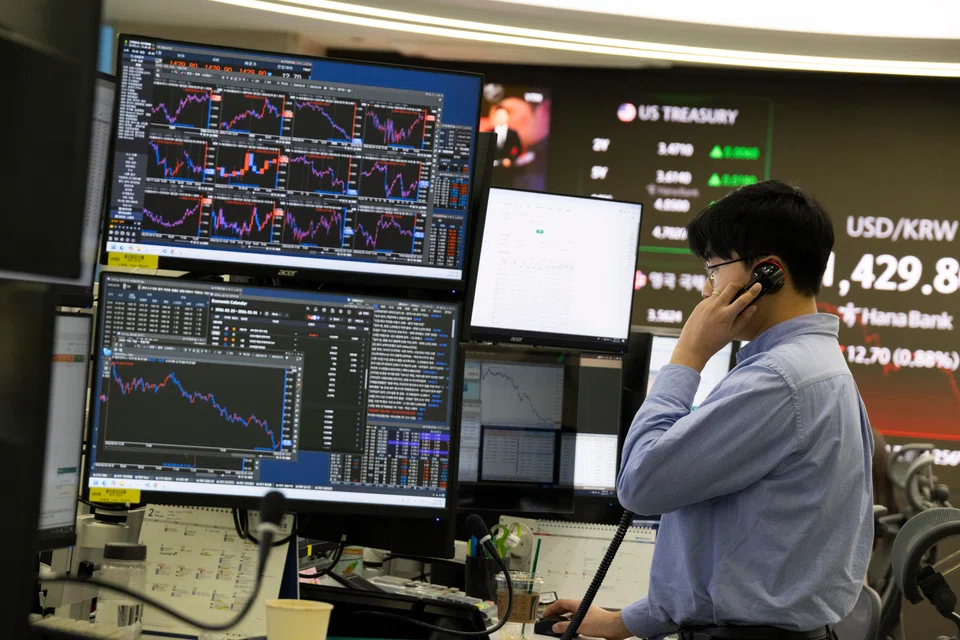
[SINGAPORE] The world’s largest asset managers who collectively oversee more than US$20 trillion of assets are bullish across emerging-market equities, currencies, domestic bonds and credit.
This is according to a report from Citigroup which reviewed the funds’ published outlooks and found that money managers had added to long positions in equities across Asia, Latin America, as well as Europe, the Middle East and Africa. They also favour emerging currencies against the US dollar.
Investors’ bullishness remained on full display on Thursday (Feb 26), with MSCI’s main emerging equity index rising to a fresh record high, bringing year-to-date gains to 15 per cent. A similar gauge for emerging-market currencies advanced for a fifth straight day, hitting a new all-time high.
The shift is a consequence of policy uncertainty and blowout fiscal deficit in the US, which has led investors to try and diversify exposure away from the US dollar. But there are also concerns over spending increases in Japan and Germany, lifting bond yields across many developed nations.
Wall Street was also rattled this week by renewed concerns around how artificial intelligence might disrupt swathes of the economy, yet most tech-heavy Asian bourses shrugged off the wobble, as their companies make the hardware used for building AI networks. On Thursday, South Korean stocks added another 3.8 per cent, having already leapfrogged French and German markets to become the ninth largest in size globally.
On bonds, Citi said fund managers have emerging debt for their top duration call, in contrast with short positions in US Treasuries and core European sovereign debt. Emerging debt carries the biggest credit overweight too, while US investment-grade bonds remain a popular underweight, the bank said.
A Bloomberg gauge of EM local currency government bonds has returned 2.2 per cent so far in 2026, following last year’s 8.5 per cent gain which was the best since 2017. A similar index tracking sovereign US dollar bonds is up 1.7 per cent in 2026, after a 13 per cent increase last year.
While fund managers have flocked to emerging debt for the higher yields on offer, many also point to policymaking improvements, in particular on controlling inflation and debt levels. South Africa’s budget, for instance, showed debt and debt-service costs peaking this year, pushing yields on its local-currency securities to decade lows. The rand is trading close to three-year highs to the US dollar.
Bond investors are giving the benefit of the doubt even to countries with signs of fiscal slippage. On Thursday they lent US$4.5 billion to Indonesia, enabling the nation to pull off its biggest global bond sale since at least 2017.
SEE ALSO




But for all the rallies of recent months, investors say there is room for more, pointing out that emerging assets still are cheaply valued relative to developed counterparts, and global funds’ allocations to the sector remain low.
“Investors haven’t missed the move yet,” said Jean-Louis Nakamura, managing director at Vontobel Asset Management in Zurich. “Even a modest normalisation in global allocations could drive substantial inflows.”
Meanwhile, many emerging economies in Africa and Latin America are also getting a boost from the commodity bullrun that’s lifted industrial as well as precious metals to record highs.
Citi said fund managers had added positions in precious metals during the recent rally, citing strong central bank demand and the weaker US dollar outlook. Gold in particular is popular as a source of stability, Citi said.
“Overall, EM assets and gold stand out as the most popular consensus trades,” the bank added. BLOOMBERG
Decoding Asia newsletter: your guide to navigating Asia in a new global order. Sign up here to get Decoding Asia newsletter. Delivered to your inbox. Free.
Share with us your feedback on BT's products and services