Weaning ourselves from love for property
Property is a lumpy, illiquid investment and the cost of ownership is rising. For seniors who are asset rich and cash poor, there are options.

IT IS often said that Singaporeans have an enduring love for property. Some regard their home as an asset that they could sell later to realise funds for retirement. Others may treat it as a store of value for their children and future generations.
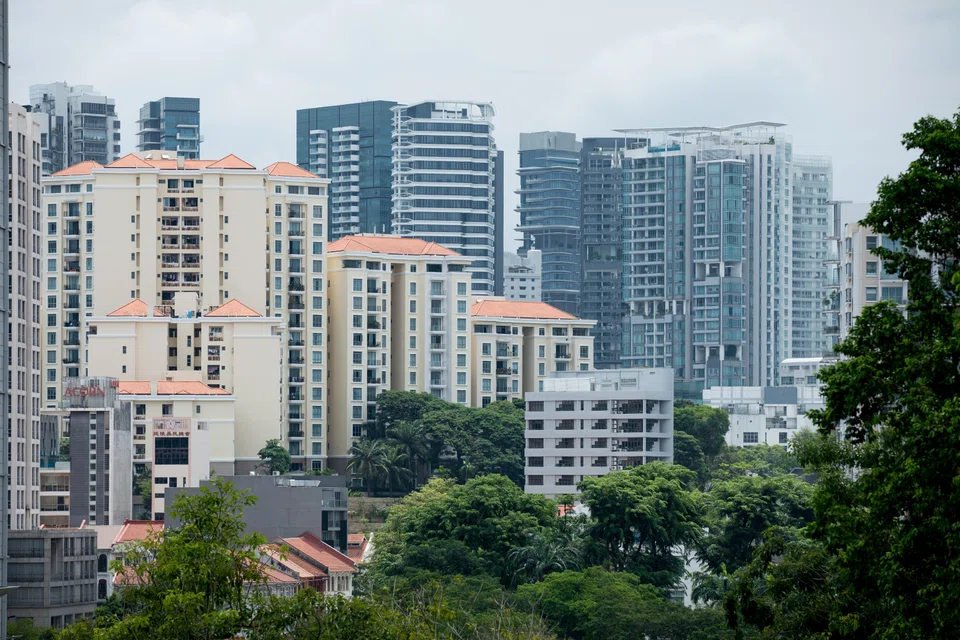
Those who purchased property decades ago and had the resources to hold on to it must feel fortunate. A rough calculation based on the URA’s non-landed residential property price index shows that prices doubled between 2000 and end-2023. Even a shorter holding period of five years from 2018 to end-2023 could fetch handsome gains of over 30 per cent.
But the big question is whether such robust returns are behind us or can be repeated.
Property market cycles are influenced by a wide range of macro factors from economic growth to interest rates and inflation, and also domestic supply and demand conditions. This is the normal state of things.
Arguably, the spanner in the works is the government’s approach to taxing wealth, as it seeks to narrow the wealth gap and nurture an inclusive society. Tax collections are channelled into infrastructure and services that benefit all, and make Singapore an attractive home for businesses, talents and families.
Since Singapore does not have an estate or inheritance tax, the government has taken the route of taxing large-ticket purchases such as property and luxury cars as a form of wealth tax.
A direct tax on wealth risks capital flight. Property, however, is immovable. In Singapore, rightly or wrongly, your address reflects a certain socio-economic status. Private property is still an aspirational asset for many.
In a family gathering many years ago in Manila, where my family still lives, my non-Singaporean brother-in-law declared that he did not believe Singapore property was a good investment. His reason was that the government wields a heavy hand in the market, not only in terms of releasing land for development, but also in its ability to vary the stakes through additional transaction charges and changes to bank financing limits.
He was right as the additional buyers stamp duty (ABSD) for property purchases by foreigners has been raised progressively from 10 per cent in 2011 to a staggering 60 per cent by 2023. There is also a sellers’ stamp duty (SSD), which reduces with the holding period.
He is a savvy businessman, and the steep rise in the ABSD would have dramatically altered the investment proposition. He could invest elsewhere in the world without such a high upfront cost, plus an exit cost in the SSD.
For Singaporeans, the ABSD does not apply for first homes, but will ratchet up on additional properties.
Higher property taxes
The latest developments in the form of higher property taxes, however, have hit homeowners where it hurts. Owner-occupied property tax rates were raised in two stages in 2023 and 2024, following the 2022 Budget.
This has caused consternation in some circles. The property tax is calculated based on the annual value of homes, which is derived from market rentals of similar or comparable properties. It is charged on a tiered basis. The higher the value of the home, the higher the tax rate.
Some owners, including those who own investment properties, must feel as if the rug was yanked from under their feet. Just as they celebrate a robust market with lucrative prices and rentals, a hefty tax bill comes due – on top of higher interest expenses if they have mortgages to service.
I would argue that unless you count yourself among the ultra-wealthy, it is prudent to begin to wean oneself from the attachment to property. This is sensible from the financial planning angle: Property is a lumpy, at-times illiquid asset and takes up an outsized proportion of overall assets. Excessive use of CPF funds may also compromise retirement adequacy.
It is also sensible to face this head on: Higher property taxes are unlikely to be rolled back. This is because the objective of such a tax is to reduce wealth inequity, which is growing and could have social, economic, and even political implications if left unaddressed. According to Credit Suisse’s global 2022 wealth report, the Gini coefficient for wealth in Singapore is 78.8, higher than Japan (64.7), South Korea (68.2) and Taiwan (70.7).
In terms of the share of wealth, the top 1 per cent of wealth owners’ share was 18.7 per cent in Japan; 24.1 per cent in South Korea; and 26.7 per cent in Taiwan. The report reasons that wealth inequality in the three countries was lower because of a more equal distribution of income, and in South Korea and Japan, relatively heavy inheritance taxes.
The top 1 per cent’s share of wealth in Singapore was the highest at 34.5 per cent.
Singapore has a relatively straightforward tax system where higher income earners pay more tax. There is no tax on capital gains. There is also no tax on wealth or capital itself.
In a column published in this paper recently, Chris Woo, PwC Singapore’s Asia-Pacific and Singapore tax leader, argued that tax collections such as GST are necessary to finance things such as infrastructure, education and health services which help drive economic growth and attract investments. Ultimately as Singapore’s reputation rises as one of the world’s most livable cities, property prices benefit.
“If we were to replace the revenue generated through property taxes with higher corporate and individual tax rates, this could have a negative impact on Singapore’s attractiveness – and, perhaps ultimately, the capital appreciation of our properties,” he wrote.
In any case, as Woo’s column reasoned, the increase in property tax payable is a fraction of the capital appreciation that an owner of a landed property would likely have seen over the course of 2023. An owner who decides to sell would likely reap a pretty profit, and there is no tax on capital gains.
Options for the asset rich, cash poor
But then there is the conundrum of those who are asset rich and cash poor. Retirees may ill afford higher property taxes, even as they live in million-dollar homes. What are they to do?
A reverse mortgage is an option, but this has not been popular. One reason may be the valuation risk in a typical scheme. That is, if the property value falls below the loan quantum, a borrower may be forced to sell their home prematurely.
In 2021, DBS rolled out the Home Equity Income Loan which helps seniors unlock some of the equity in their private properties, to fund premiums for CPF Life, the annuity scheme under the CPF, which pays an income stream for life.
CPF said the combination of the scheme and CPF Life makes an attractive reverse mortgage product. “We look forward to seeing other banks launch similar loans to complement the housing monetisation options offered by the government to HDB flat owners, so that more CPF members can enjoy the benefits of CPF Life and have a secure retirement.”
Selling your home to “rightsize” for retirement adequacy is also feasible.
Two factors work in sellers’ favour at the moment. One, property prices remain resilient, raising the chances of a successful sale at or near sellers’ asking price. Two, with the remaining funds after purchasing a new home, seniors can invest in a fixed income portfolio of low to moderate risk to give them passive income.
In today’s environment, you can invest in high-quality bonds at attractive yields. This is a far cry from the years after the 2008 global financial crisis when yields and rates were very low, and investors were forced to take higher risk for income.
For those looking for a new home, a resale HDB flat is an option. Seniors who have sold private property and wish to buy a resale unit – four-room or smaller – are exempt from the 15-month waiting period.
What then of the desire to leave property for your children? In my book, it is more essential to invest in good education and instil a strong work ethic in them. These give young people a good headstart in a career and wealth building, without having to strain parents’ resources.
TRENDING NOW
Grab CEO’s wife Chloe Tong on life with Anthony Tan and finding her purpose
Jacqueline Loh to step down as MAS deputy MD in senior leadership reshuffle
Why 1 in 2 young Singaporeans who said ‘no kids’ now say ‘yes please’: new study
Private home prices accelerate with 1.4% rise while HDB resale values dip further in Q3: flash data