INVESTING FOR IMPACT

What it takes to ensure a just transition towards net zero

Financial institutions play a key role in the support of social transitions in communities that need it most
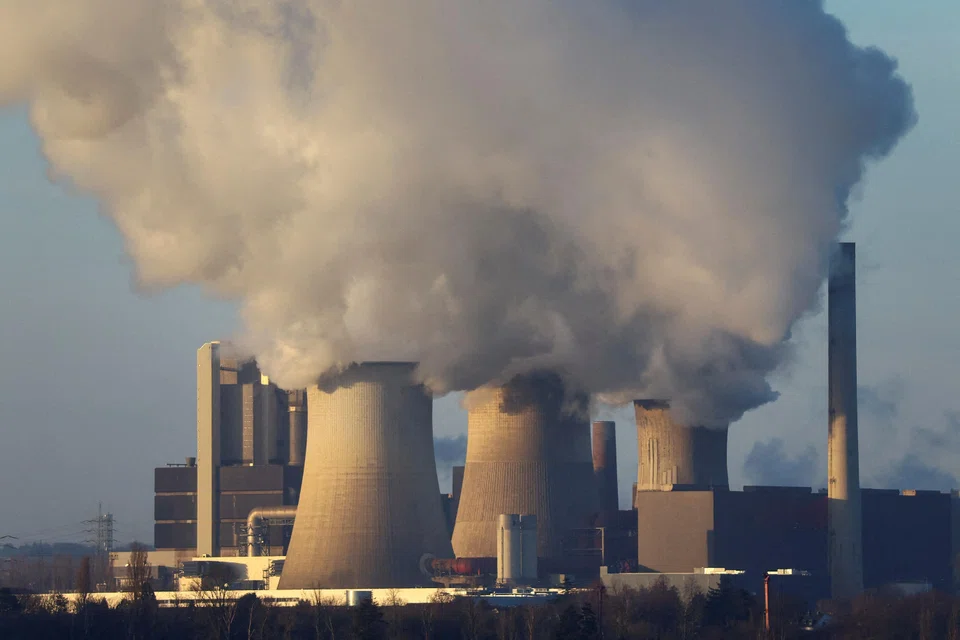

    • A coal power plant in Germany. A just transition towards net zero requires that legacy activities are responsibly phased out, and affected communities are consulted and supported.
    • A coal power plant in Germany. A just transition towards net zero requires that legacy activities are responsibly phased out, and affected communities are consulted and supported. PHOTO: REUTERS
    Jenn-Hui Tan
    Published Mon, Jan 29, 2024 · 06:06 PM

    EVIDENCE shows that the shift to a resilient, low-carbon economy will boost prosperity and be a net driver of job creation. The latest report from the New Climate Economy concluded that ambitious climate action would result in a net employment gain of 37 million jobs across the global economy by 2030.

    However, what is becoming apparent is that these advantages will not be equally distributed.

    As nations around the world aim to collectively decarbonise key sectors of the economy, it is important not to forget the social implications of such a transition, and the impact it will have on labour markets and workforces.

    If we want to successfully move to a more sustainable economy as a collective society, ensuring a just transition is essential but will not be easy.

    While most would agree that our collective efforts to decarbonise should not leave behind those whose livelihoods are dependent on fossil fuels, it is not easy to tackle an issue that is still not widely understood or fully appreciated.

    In fact, a recent Fidelity International survey found that only 30 per cent of Asian investors are familiar with the concept of a just transition.

    Breaking it down

    In essence, a just transition seeks to ensure that the benefits of the shift from a high to a low-carbon economy are shared widely, and that countries which stand to lose the most economically are properly supported.

    It also considers the kind of support impacted industries need and acknowledges that while there are economic opportunities in new fields, other legacy activities will need to be responsibly phased out.

    Beyond that, a just transition is also about investing in communities reliant on fossil fuel activities and ensuring that they are actively consulted and supported, as well as providing economic support, training and employment opportunities to affected workers.

    And these efforts should not be an afterthought, but should instead be embedded in the entire process of moving towards net zero. The fact is, allowing inequities to persist will likely impede climate action. Moreover, even if we were able to resolve climate change while allowing inequities to persist, we would just be trading an environmental catastrophe for a social one.

    Taking action

    Financial institutions play an essential role in supporting social transitions in the communities that need it the most. This starts with three steps: education, engagement and active stewardship.

    The concept of a just transition is still nascent, and there is a need to promote further awareness. We can start this via communications with clients, the public and industry associations through groups such as the Glasgow Financial Alliance for Net Zero and the Asia Transition Platform (run by Asia Research and Engagement).

    The more people hear about this and understand the importance, the better our chances as a society of achieving a just transition.

    Beyond that, as asset managers and investors, it is important that we help investors and investee companies understand the many complexities of this theme. We have the opportunity to actively engage management teams and help companies understand the impact of their decisions on employees and local communities.

    As a firm, we aim to phase out thermal coal from our investment portfolios by 2030 in OECD (Organisation for Economic Co-operation and Development) countries and in the rest of the world by 2040. In 2022, we began engaging with firms which were more advanced in their net-zero journey. We explore their practices – specifically, how they were enabling a just transition by retraining their workforces as they phase out coal.

    This year, we aim to reach out to our top 70 per cent emitters across high-impact sectors and engage with them on their transition pathways. The objectives include support for the adoption of clean alternatives through existing technologies such as wind and solar, and emerging technologies such as hydrogen and batteries.

    We are also a founding participant of the Just Transition Finance Challenge, which aims to mobilise more public and private capital into investments that support a just transition, through development of a voluntary product label.

    However, this is just the start of a long journey that will need the collective efforts of industries and governments. Beyond corporate action, a founding framework on how to consider a just transition in a consistent and substantive way is needed, and policies and regulations are required to help shape these incentives.

    Put simply, a just transition means no one is left behind in the move towards a more sustainable economy. In reality, this encompasses a tangle of issues that will have many ramifications on climate, communities, labour markets and divergences between developed and developing countries.

    The measurement and implementation of a just transition is no simple task. But one thing is clear: The societal impact of transitioning to a sustainable economy has to be a central consideration. There is a lot more work to be done, and it has to start now.

    The writer is chief sustainability officer, Fidelity International