Where clarity meets legacy: How Standard Chartered guides the next generation of wealth
The bank’s ‘Today, Tomorrow, Forever’ framework helps families organise and navigate their wealth across three interconnected time horizons

[SINGAPORE] At Standard Chartered, wealth advisers are finding that families across the globe are no longer seeking just products or investment ideas – they also want a framework that brings order, clarity and purpose to increasingly complex financial lives.
To meet this shift, the bank has centred its wealth advisory around “Today, Tomorrow, Forever”, a planning philosophy designed to help families make sense of competing priorities across generations, while giving them confidence that their wealth is built on purpose as much as performance.
The change in client expectations reflects the broader transformation under way in global wealth, as founders, family businesses and globally exposed next-generation heirs now manage more complex financial lives than ever before.
Many must balance liquidity, growth ambitions and legacy considerations simultaneously – a task that grows harder as wealth becomes more global, markets more volatile and family structures more multigenerational.
This transition is also playing out against powerful demographic forces.
The Capgemini Research Institute’s 2025 World Wealth Report points to a period of unprecedented change for high-net-worth families, with next-generation heirs expected to inherit a major share of the US$83.5 trillion wealth transfer unfolding through 2048.
Asia is at the forefront of this shift. The region’s high-net-worth wealth grew 4.8 per cent in 2024 – second only to North America’s – reflecting both its economic momentum and the rising influence of Asian families in the global wealth landscape.
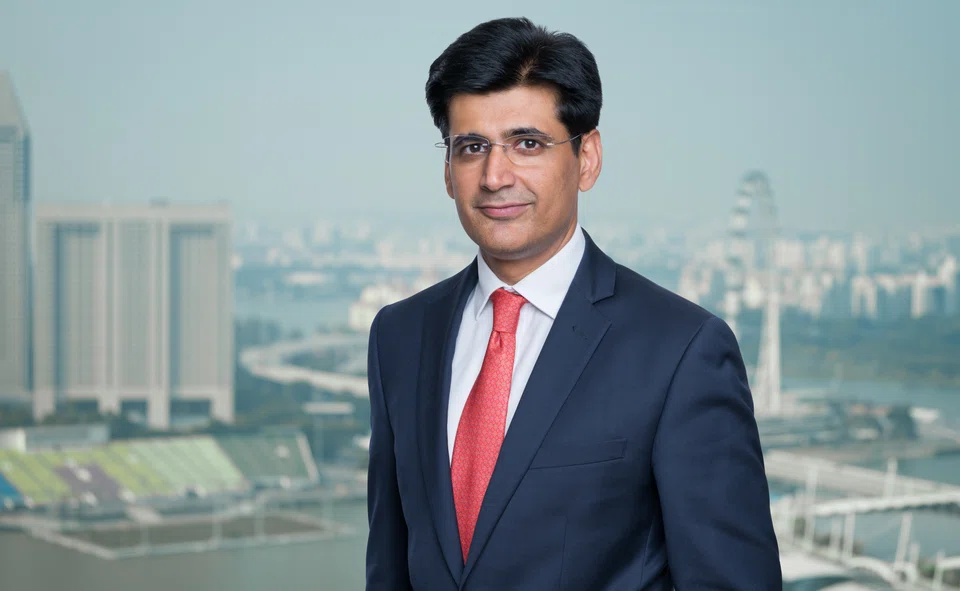
Sumeet Bhambri, global head of advisory and managed investment, wealth solutions, at Standard Chartered, has observed these dynamics first-hand.
“What’s unique about Asia is that much of the wealth is first-generation, meaning families are not just passing down assets, but also values, entrepreneurial mindsets and global ambitions,” he tells The Business Times.
“We are seeing Asian investors move from being capital takers to capital allocators on a global stage,” he adds.
Between 2023 and 2030, wealthy families in the Asia-Pacific are set to pass down an estimated US$5.8 trillion in assets, a McKinsey analysis released in 2024 found.
Yet, the 2025 edition of EY’s Global Wealth Research Report showed that nearly half of wealthy individuals do not feel adequately prepared for wealth transfer, even though most consider it one of their highest financial priorities.
At the same time, inheritance is no longer a straightforward parent-to-child transition. EY found that wealth today often moves “T-shaped” – laterally across spouses, partners and siblings, as well as vertically across generations. These intra-generational transfers can shift financial responsibilities overnight, a reality that calls for a holistic and flexible advisory model.
Therefore, as families prepare for this transition, they increasingly seek advisers who can offer structure, clarity and long-term perspective.
Capgemini’s report also noted that next-gen clients favour advisers who provide global diversification, digital access and personalised guidance – qualities that have long shaped Standard Chartered’s wealth proposition.
Simple framework, complex world
One example is the bank’s “Today, Tomorrow, Forever” framework, which helps families organise and navigate their wealth across three interconnected time horizons.
“Today” focuses on immediate stability; “Tomorrow” on long-term growth and opportunity; and “Forever” on continuity and the preservation of values across generations.
Though simple in design, the framework enables families to prioritise decisions, identify trade-offs and create sequencing that aligns with their goals.
Its value becomes clearer when applied to real-life scenarios.
A young family preparing for a child’s overseas education while building a business might maintain emergency liquidity in “Today”, invest diversified growth assets through “Tomorrow” to fund education and expansion, and use “Forever” to set up long-term structures such as trusts or insurance solutions.
For young entrepreneurs, particularly those who have recently experienced significant liquidity events, the framework helps manage cash flow while carving out room for philanthropy or impact-led initiatives that reflect personal values.
Underpinning the framework is Standard Chartered’s investment philosophy for wealth planning, which pairs a resilient foundation with selective opportunistic exposure. Bhambri notes that the foundation portion must be diversified, geographically balanced and built to withstand market drawdowns.
“It is the part of the portfolio one should be comfortable adding to – especially during periods of market volatility – because it is designed to compound steadily over time,” he says.
The opportunistic allocation, typically sized at 10 to 30 per cent, enables participation in longer-term themes or mispriced opportunities without undermining stability.
Preparing the next generation
Yet, even the most robust investment strategy cannot replace the deeper work of preparing next-generation heirs.
As Bhambri puts it: “Succession is as much about values as it is about assets.”
Families that focus solely on structures may overlook the importance of shared purpose and open communication. Standard Chartered often acts as a facilitator in these discussions, helping families build cohesion and align expectations ahead of transition.
Client expectations around advisory delivery are also evolving.
Next-generation decision-makers want immediacy, transparency and seamless digital experiences, while still depending on experienced judgment for inflection-point decisions.
Standard Chartered’s hybrid advisory model reflects this shift, pairing digital access and real-time insights with face-to-face counsel during pivotal moments.
“The agility lies in combining (the) responsiveness of technology with the judgment of human advisers,” Bhambri says. “That balance is what builds both trust and stickiness.”
Decoding Asia newsletter: your guide to navigating Asia in a new global order. Sign up here to get Decoding Asia newsletter. Delivered to your inbox. Free.
Copyright SPH Media. All rights reserved.