
Whisky fund uncorks US$50 million play on casks after scams rattle market

The Platinum Whisky Investment Fund II draws lessons from its first iteration, will have a more active foreign exchange hedging strategy

Summarise
Renald Yeo
Published Mon, Apr 20, 2026 · 07:00 AM
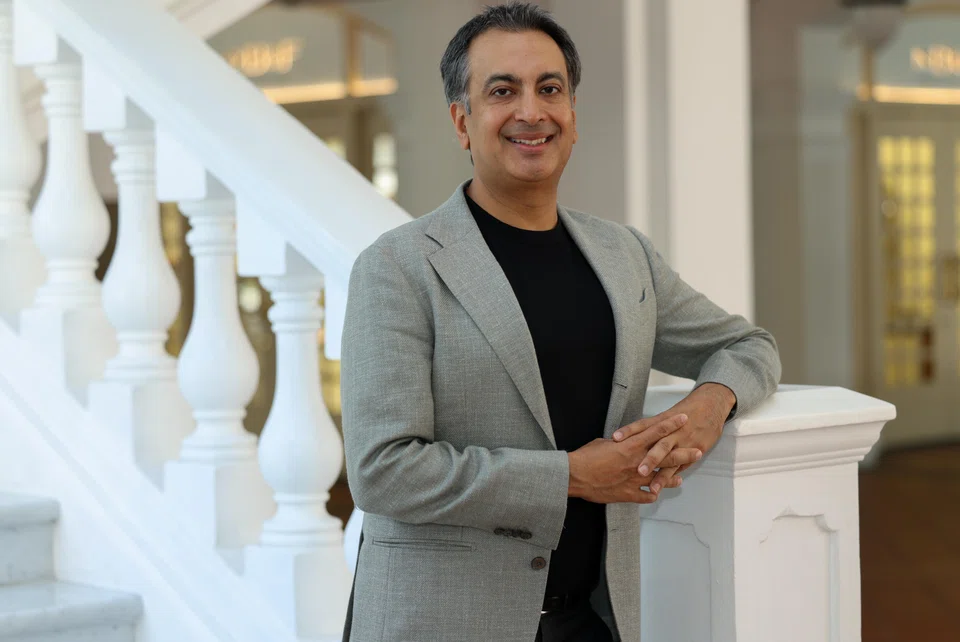
    • Rickesh Kishnani, co-founder and chairman of Rare Whisky Holdings, expects the first fundraising round to close by September.
    • Rickesh Kishnani, co-founder and chairman of Rare Whisky Holdings, expects the first fundraising round to close by September. PHOTO: TAY CHU YI, BT

    [SINGAPORE] A new whisky investment fund is seeking to tap demand for alternative assets with a regulated structure and a revised strategy, as investors look for safer ways into an asset class hit by fraud cases and falling prices in recent years.

    The Platinum Whisky Investment Fund II (PWIF II), launched on Monday (Apr 20), aims to raise up to US$50 million from professional investors. It has a five-year investment horizon, with the option of two one-year extensions under a “5+1+1” structure.

    The first fundraising round is expected to close by September, said Rickesh Kishnani, co-founder and chairman of Rare Whisky Holdings, in a pre-launch interview with The Business Times.

    The fund is managed by AOP Capital, an investment firm licensed by the Securities and Futures Commission of Hong Kong. AOP Capital has in turn appointed Rare Whisky Holdings as a non-discretionary adviser.

    The fund’s launch comes amid high-profile fraud cases in the whisky investment space, Kishnani acknowledged, including a 2025 case in the UK where hundreds of people were conned out of millions of pounds in a whisky barrel investment scam.

    “This time, it’s a fully regulated fund; last time (in 2014), it was not regulated,” he stressed, noting that provenance and pricing remain key risks in the asset class.

    “We’ve partnered with AOP Capital in Hong Kong to deliver the right licence and framework, to be able to have a regulated fund that helps to give investors a lot more confidence that everything that we’re doing within the fund will be done properly.”

    Kishnani declined to disclose the fund’s target internal rate of return, citing rules imposed by the regulator.

    Lessons from Fund I

    Past media reports indicated that the first iteration of the fund – PWIF I – was launched in 2014 with US$12 million, and exited in 2021 at US$26 million. It delivered a gross annualised return of 17 per cent.

    It mainly bought and sold more than 15,000 bottles of whisky from “silent stills” – distilleries that have closed and no longer produce whisky. Scarcity tends to lift the value of remaining bottles over time.

    It also held some casks, though these were not the core focus.

    PWIF I’s strategy was to buy whisky, hold it as values appreciated, and sell the bottles near the fund’s planned exit date to generate returns.

    But Kishnani said several lessons from that experience are shaping PWIF II.

    One was foreign exchange risk. Britain’s exit from the EU hit the pound sharply; as PWIF I was denominated in US dollars but largely bought and sold whisky in pounds, returns were affected when bottles were sold.

    He recalled: “When Brexit happened and the pound devalued – I think 20-plus per cent, relatively quickly – we actually had quite a large loss. One of the big learnings going into PWIF II is to have a more active hedging strategy, from a foreign exchange point of view.”

    Another lesson was that casks outperformed bottles. This is as whisky continues ageing while in casks, unlike bottles. As older whisky generally commands higher prices, returns from selling casks were stronger than those from bottles.

    The new fund will focus mainly on purchasing three categories of casks: whisky aged zero to three years, typically priced at £1,500 (S$2,574) to £4,000 per cask; a mid-tier range of eight to 18 years, priced at £10,000 to £40,000; and premium casks aged 25 years or more, which can fetch upwards of £100,000 each.

    The casks will mainly be sourced from established single malt Scotch whisky producers, he said, naming brands such as The Macallan, Highland Park and Laphroaig.

    “It’ll be from well-known brands,” he said. “We’re not dealing with very small, new distilleries – that’s a bit too speculative.”

    Asked why established producers would sell casks rather than hold them for potentially higher future profits, Kishnani said cash flow is “always a concern” for distillers; and cask sales – including younger stock – are a common way to fund operations.

    Because PWIF II will buy in bulk, it should also receive discounts from distillers, he added.

    A third lesson was the need for more active portfolio management. Unlike the first fund’s largely buy-and-hold strategy, PWIF II may sell casks earlier – as soon as 12 to 18 months after purchase – if attractive returns are available. Bulk discounts should also support resale opportunities, Kishnani said.

    He added that oversupply in the whisky market, which has sharply depressed prices in recent years, is now stabilising.

    He pointed to the firm’s research that show Scottish distilleries producing on fewer days, while auction markets have started to recover from low levels. This supports the view that the market may be near the “bottom”, and that now could be an attractive time to buy casks.

    PWIF II is targeting high-net-worth individuals and family offices in Hong Kong, Singapore and elsewhere in South-east Asia, broadly similar to the investor profile of the first fund.

    Kishnani does not expect significant institutional demand, given the relatively modest fundraising size.

    When asked about portfolio allocation, he said whisky and other alternative assets should make up only a small share of an investor’s holdings, at around 5 to 8 per cent overall.

    Beyond diversification, “our pitch here is around stability – we have a physical asset that is very unlikely to go down in appreciation, given it’s going up in age”, he added.



