

Bank of Singapore steps up FIM push as Asia’s wealthy go global
The private bank is investing in specialist capabilities and technology as financial intermediaries broaden their role beyond investment management
AS ASIA’s wealthy families become more international and their financial needs more complex, the advisers who manage their fortunes are having to evolve with them.
That shift is creating fresh opportunities for Bank of Singapore (BOS), where assets under management from financial intermediary, or FIM, clients grew by more than 30 per cent in 2025.
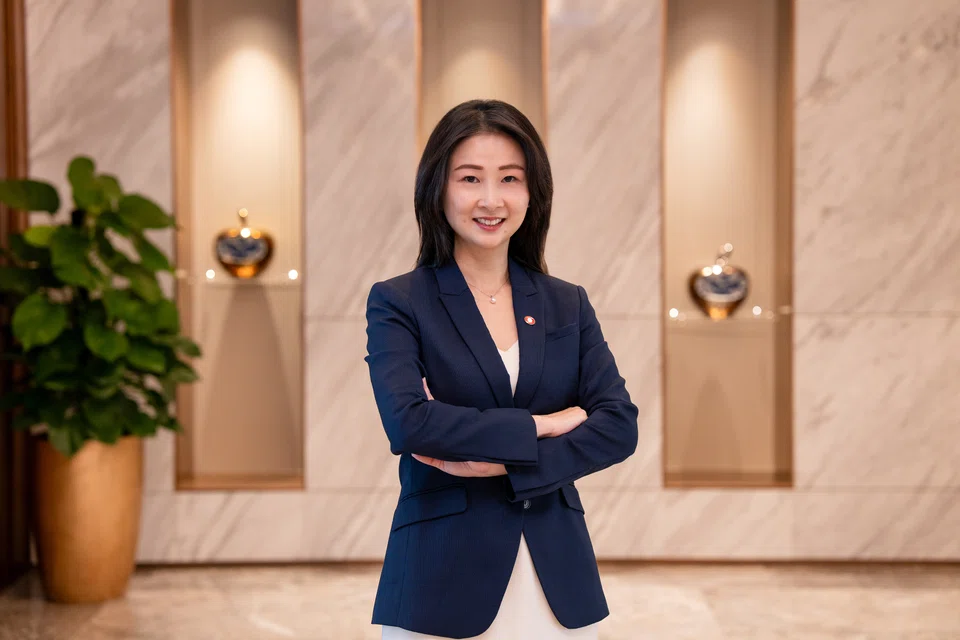
The growth was driven by new FIM relationships as well as the expansion of existing partnerships, which generated strong net new money inflows, says Annabelle Chow, head of financial intermediaries at BOS and the bank’s global segment lead for FIMs.
Growth was also diversified across markets and client segments.
FIMs, also known as independent asset managers, advise wealthy individuals and families while typically working with multiple banks and investment providers. The model gives clients access to independent, personalised advice while allowing their advisers to tap the custody, investment products, financing and other capabilities of private banks.
They serve high-net-worth individuals, family offices and institutional investors, and are gaining traction in Asia as clients increasingly seek autonomy, transparency and tailored advice.
But their role is also becoming substantially broader.
Investment management remains at its core, but clients increasingly expect their advisers to help with areas ranging from alternative investments to succession planning and family office services, Chow says.
“As wealth becomes more complex and international, FIMs increasingly need to help clients navigate both financial and intergenerational decisions,” she says.
For BOS, that is changing the relationship between private banks and independent wealth managers.
“Increasingly, clients are not choosing between independent advisers and private banks. They want both: trusted, objective advice from a FIM, backed by the capabilities, stability and global reach of a leading private bank, which Bank of Singapore provides,” Chow says.
Following wealth across borders
The shift comes as Asia continues to generate new pools of entrepreneurial wealth while capital moves more readily across borders.
Chow sees three structural trends underpinning the growth of the FIM industry: continued wealth creation and cross-border capital flows in Asia; rising demand for independent advice and open architecture; and increasingly sophisticated client needs.
As those needs extend beyond conventional capital-markets investing, FIMs are increasingly expected to offer access to alternative investments, financing, wealth structuring and family office services – capabilities that may not make sense for every independent manager to build in-house.
The internationalisation of Asian wealth is adding another layer of complexity.
Chow likens the trend to the way European private wealth has long been managed across multiple jurisdictions, with families spreading their businesses, investments and even family members across countries.
Asian families are increasingly following a similar path as their commercial interests and lifestyles become more global, requiring their advisers to operate across multiple markets, regulatory regimes and financial centres.
BOS is seeing particularly strong momentum along the Asia-Europe corridor, as Asian entrepreneurs and families increase their investments, business activities and presence in Europe.
The Asia-Middle East corridor is also growing rapidly on the back of stronger business links and the Gulf’s emergence as a major wealth hub, while intra-Asia activity remains robust.
That expansion is reflected in a BOS survey of 90 senior leaders and client-facing professionals from FIMs across Singapore, Greater China and Dubai, conducted between November 2025 and January 2026.
Slightly more than half say they plan to explore new markets and form strategic partnerships in 2026, as their clients increasingly look to hold assets across multiple jurisdictions and tap financial hubs such as Dubai.
Serving an FIM, however, requires a different approach from serving a wealthy individual directly.
While a private bank may primarily provide an individual client with investment advice, portfolio management and wealth solutions, its relationship with a FIM involves supporting an entire advisory business.
BOS works with intermediaries by providing access to its investment expertise, product platform and broader private-banking capabilities, while also helping them strengthen their operating models and expand the range of services they can offer.
“With clients we help manage wealth. With FIMs, we help them manage wealth for their clients while building stronger businesses,” Chow says.
BOS has built dedicated teams in Singapore, Hong Kong and Dubai focused specifically on financial intermediaries, rather than treating the segment solely as another distribution channel.
That specialisation is intended to allow BOS to combine its wealth-management expertise with the broader connectivity and capabilities of OCBC as FIM businesses expand.
Technology is becoming an increasingly important part of the equation, particularly as intermediaries seek to scale without adding the same amount of operational complexity or headcount.
Customer experience and engagement is the top business priority for 63 per cent of respondents in BOS’ survey. Another 46 per cent identify accelerating the adoption of artificial intelligence, digital transformation and automation as a key focus.
BOS is investing in its BOS IX integrated FIM platform, alongside application programming interface connectivity, digital account opening, portfolio-management tools and data integration.
It is also applying AI to processes that can be particularly cumbersome for wealth managers. Its proprietary Source of Wealth Assistant, or SOWA, has cut source-of-wealth due diligence from around 10 days to about one hour, BOS says.
BOS has also launched HELIOS, an AI-powered onboarding platform that can reduce onboarding timelines for wealthy clients to about 15 business days once complete documentation has been received.
Depending on the client profile, straightforward cases could be onboarded within a day.
For Chow, such technology is intended to work alongside – rather than replace – the relationship between advisers and their clients.
“The best technology is one that empowers our RMs and FIMs to be more effective,” she says.
A broader definition of advice
The need for that combination of technology and human advice is likely to grow as a younger generation of wealth owners comes to the fore.
Many are more internationally connected and digitally fluent, but they are also more involved in determining the purpose and long-term stewardship of their wealth, Chow says.
As a result, conversations that may once have centred predominantly on portfolio performance are expanding into entrepreneurship, family governance, succession planning, philanthropy and long-term wealth preservation.
They also want faster access to information, greater transparency and more personalised engagement.
That is pushing FIMs to evolve from portfolio managers into more holistic wealth advisers, while increasing the need for access to specialist expertise and solutions across multiple jurisdictions.
BOS sees its open-architecture platform, alternative-investment capabilities, wealth-planning expertise and family office advisory services as ways for intermediaries to meet those demands without having to build every capability themselves.
The industry itself is also likely to continue changing.
Over the next three to five years, Chow expects FIMs to become more institutionalised, technology-enabled and interconnected, supported by Asia’s longer-term wealth creation story.
At the same time, rising regulatory obligations, technology costs and competition for talent could put greater pressure on operators, potentially accelerating consolidation as firms seek scale and greater operating efficiency.
AI, meanwhile, is likely to play a bigger role in improving productivity, risk management and decision-making rather than replacing advisers altogether.
For BOS, the opportunity is therefore about more than supplying investment products to intermediaries.
“What differentiates us is our long-term commitment to this segment,” Chow says. “I don’t measure success by the number of products we provide, but by the growth and resilience of the FIMs we support. Their success is our success too.”

Share with us your feedback on BT's products and services
TRENDING NOW

Malaysian king buys stake in Singapore-listed mining firm expanding into rare earths

Grab CEO’s wife Chloe Tong on life with Anthony Tan and finding her purpose

Once staunchly pro-China, Malaysian Chinese businesses are now distancing themselves from Beijing

Longer wait times expected as S’pore healthcare institutions report system disruptions

