

Why investors are rediscovering Japan
Global investors who remain under-allocated in Japanese stocks risk missing out on the quiet but steady transformation that’s unfolding in the country amid striking improvements in earnings yields and capital returns
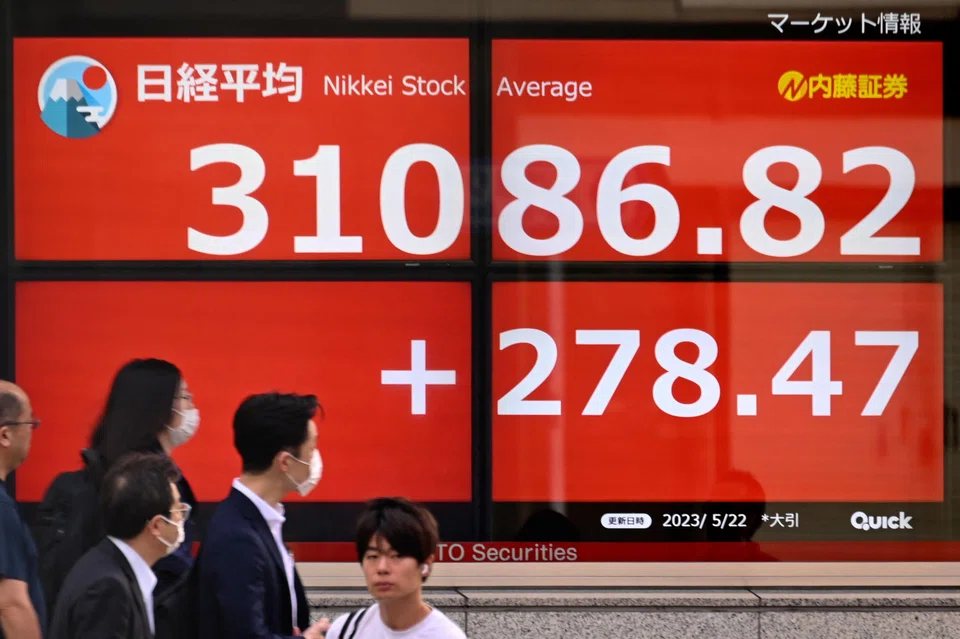
WHAT is it about Japanese stocks that has “confounded” Warren Buffett, ultimately convincing him to make Japan his second-biggest equity allocation globally, after the US?
The answer is no secret, but still may come as a surprise to many. In short, Japan has – steadily and quietly – spent the past few years transforming itself into one of the most attractive markets anywhere in terms of improving earnings yields and capital returns. Just don’t tell that to global investors (or even local investors), most of whom remain chronically under-allocated to Japanese stocks.
After all, Japan is already the second-biggest country weight in most global equity benchmarks. As investors realise what’s on offer, we think there are several reasons why that gap in allocations may be set to narrow. A major shift has played out in Japan over the past decade, and the drivers for it are many: regulatory reforms, corporate innovation, a stronger economy, and a bigger focus on capital efficiency. But it all adds up to a better landscape for investors.
Follow the money
Consider shareholder returns. In a recent interview with CNBC, Buffett said that what drew him to put billions of dollars to work in Japanese stocks was the fact he could invest at double-digit earnings yields and still hope to see his dividend payments grow substantially over time. “It’s turned out to be better than I thought it would be,” he said.
It’s not difficult to see how Japan might surprise on the upside. Japanese companies have acquired huge cash piles over the years and sat on them, and have come under criticism for inefficient capital allocation as a result. But that characterisation of Japan Inc looks increasingly outdated: In recent years, Japanese companies have been returning more capital to shareholders than ever. In the fiscal year just ended, Topix companies carried out record levels of share buybacks, while at the same time paying out the biggest amount of total dividends to date.
At the same time, shares in Japanese companies continue to look attractively priced on a relative valuation basis, especially when compared with valuations on US equity benchmarks, for example.
A new era of reform?
Those changes are being driven in part by top-down regulatory overhauls intended to boost capital efficiency in Japan’s stock market.
The Tokyo Stock Exchange (TSE) last year restructured the market into three segments, with higher governance standards for the newly formed Prime segment, where nearly half of TSE stocks are currently traded. For example, one new push with direct implications for shareholder returns is that Prime segment companies are being subjected to more scrutiny over their capital efficiency, especially at firms that are trading below book value.
While these measures are encouraging, we think it’s even more important to introduce incentives for companies to pursue sustainable growth. More can and will be done, but the progress that’s been made on the regulatory reform front is already delivering tangible results for Japan’s markets and investors.
That includes further measures improving governance – such as bringing down cross-shareholdings, whereby the boards of cross-held companies seek to maximise their control by leveraging their combined voting power to support each other.
While cross-shareholdings are on the wane, it’s still true today that the longer a company’s tenure as a member of the Topix, the more likely it is to have more of its equity tied up in such structures. Removing cross-shareholdings can only help to improve the overall competitiveness of Japanese corporates, paving the way for more mergers and acquisitions, facilitating consolidation within certain sectors, and promoting better returns on capital across the market.
Macro challenges, innovative solutions
This year, neighbouring China’s massive population declined for the first time in half a century, the clearest evidence yet that the world’s second-largest economy is following Japan (the third-largest) down a demographic path that leads to a rapidly ageing society and shrinking workforce. But the lessons from Japan in terms of economic output or corporate performance are that growth and innovation can not only be sustained but accelerate against such a backdrop.
Indeed, Japan has long since shaken off the drag from the “lost decades” that held its economy hostage in a deflationary spiral through most of the 1990s and 2000s. A turning point came in 2012 with the launch of then-Prime Minister Shinzo Abe’s package of economic and financial market reforms, known as “Abenomics”.
The decade since has been better characterised by steady and stable growth, whether that’s measured by overall output, capital expenditure or total wages. As a result, Japan Inc’s earnings have outgrown the developed world, with expanding margins a significant driver of this. While a weaker currency has also been a factor in this relative outperformance, business reform and cost-cutting have also clearly contributed.
Japan is one place where a little inflation is generally welcomed. While some worry about the prospect of inflation running away, the moderate price increases Japan is seeing so far act as an anti-deflationary buffer. It can also serve as a cyclical boon to the economy, as companies start to increase wages at meaningful levels that policymakers hope will stimulate more consumer spending as a result.
Many of those companies are globally competitive industry leaders and innovators, which have the pricing power to absorb those cost increases and still grow profits. Those include software and IT services firms that are helping Japanese companies to overcome labour shortages and raise productivity, while made-in-Japan and designed-in-Japan factory automation solutions are being exported globally.
Healthcare innovators add to the dynamism, while growth in dividends continues to gain momentum across many Japanese corporates.
Despite the improved outlook of recent years, investors – both foreign and local – haven’t kept pace in terms of their allocations. Global active funds remain net underweight Japan (although less underweight than they were, say, two to three years ago when Covid broke out). And Japanese households too are relatively underweight equities when it comes to their mix of financial assets, as compared against their counterparts in the US or Europe.
These structural underweights suggest there is ample room for inflows to Japan’s markets. If the corporate sector, guided by even more shareholder-friendly policymaking, can continue to build on its success in recent years in boosting returns, Warren Buffett won’t be the only one buying.
The writers are from Fidelity International. Miyuki Kashima is head of investments, Japan and Dale Nicholls, portfolio manager.
TRENDING NOW

World’s largest offshore wind platform by Seatrium consortium on track to be completed by 2028

Is stamp collecting enjoying an analogue revival or are its best days over?

GovTech retrenches another 38 staff in second round of layoffs

MBS adjusted property Ebitda falls 20.6% in Q3 with fewer high-roller visits, weaker hold

