

World’s most fervent day traders in South Korea to get risky new tools
Single-stock leveraged ETFs are set to launch in the country
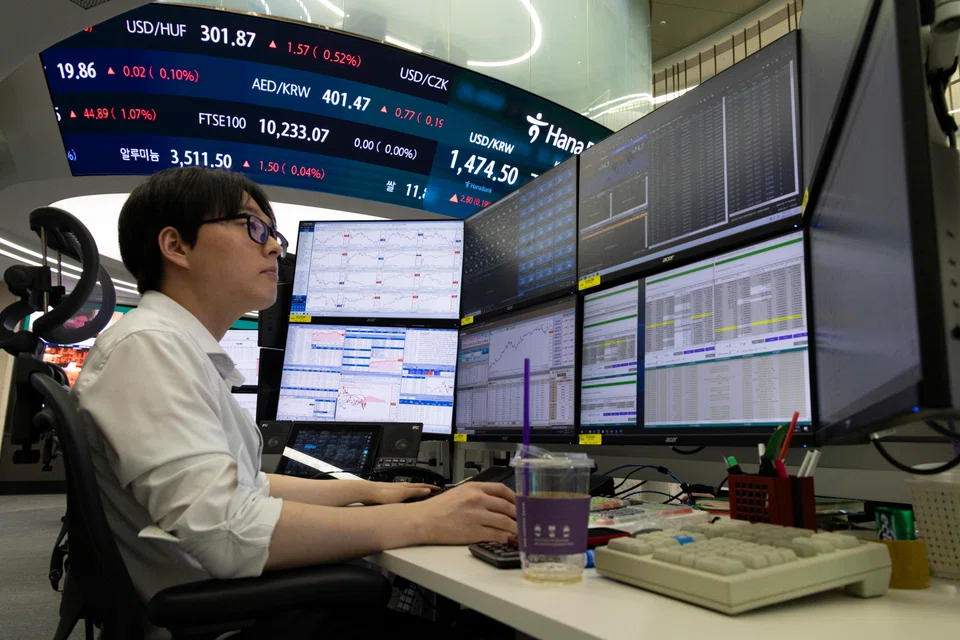
THE world’s best-performing yet most volatile market is set to debut its first ever single-stock leveraged exchange-traded funds (ETFs) this week – tools that have the potential to amplify gains and losses.
Linked to chipmakers Samsung Electronics and SK Hynix, the products will seek to deliver twice the daily moves of the two stocks, both central to the global artificial intelligence trade.
Analysts expect the ETFs to draw strong demand from the nation’s more than 14 million retail investors. Such enthusiasm, however, risks exacerbating volatility at a time when 5 per cent intraday swings in the Kospi have become increasingly common.
“The ETFs will intensify the existing problem – the concentration risk,” said Jung In-yun, chief executive officer at Fibonacci Asset Management Global in Singapore.
“This poses a structural problem for longer-term investors as the volatility of the index will remain elevated, making it difficult to navigate the Korean market.”
Leveraged exchange-traded products offer investors a chance to make outsized gains on indices, stocks, bonds or commodities by using derivatives and swap contracts to bet on the underlying assets.
They can also exacerbate swings in heavily traded names, as issuers often need to rapidly buy or sell assets to keep the funds aligned with their promised leverage ratios.
Korean investors have shown a voracious appetite for such products in recent years, seeking to capitalise on the global AI boom that also propelled the Kospi.
The benchmark has more than trebled since the end of 2024, fuelled by a surge in chipmakers and the nation’s push to improve shareholder returns.


Leveraged ETFs tied to the Kospi, as well as Hong Kong-listed ETFs linked to Korean chipmakers, have already proven wildly popular among Korean day traders. They have also poured money into US-listed leveraged semiconductor funds.
That, in fact, is a key driver behind the launch of single-stock leveraged ETFs in the nation. Regulators, who had hitherto barred such products over concerns about their high-risk nature, are now seeking to lure back retail flows that have migrated overseas.
At about US$1.3 billion, year-to-date inflows into a Hong Kong-listed two-times leveraged product tied to Samsung’s shares have exceeded those for similar products tracking US tech heavyweights such as Tesla and Microsoft.
The same goes for the CSOP SK Hynix Daily 2x Leveraged ETF, which has lured roughly the same amount and is the world’s biggest single-stock leveraged product.
That said, rebalancing flows tied to such products have already been blamed for intensifying volatility during recent bouts of sharp swings. They made up as much as 60 per cent of SK Hynix’s trading volumes in the final hour of trading on Mar 3, when the stock plunged more than 10 per cent, according to a UBS trading desk note seen later by Bloomberg.
Then, on May 15, some 17 per cent of SK Hynix’s daily trading volume and 10 per cent of that for Samsung likely came from the rebalancing, according to Barclays. The Kospi plunged as much as 7.6 per cent that day.
Aware of such risks, the Financial Supervisory Service cautioned against retail investor losses should the new products amplify volatillity. Traders also worry that the ETFs could further deepen the US$4.5 trillion market’s reliance on the two heavyweight stocks that command an almost 50 per cent weightage in the Kospi.
Chan H Lee, a managing partner at hedge fund Petra Capital Management in Seoul, said: “While the current enthusiasm surrounding AI-related semiconductor stocks is supported by strong fundamentals and earnings momentum in the memory industry, the increasing use of leveraged products and the growing concentration of market leadership may contribute to higher short-term volatility.”
Despite the heightened risks for retail investors and the fresh challenges for regulators, demand is expected to be strong in a market gripped by an intense frenzy around AI-linked stocks.
Net inflows into 14 leveraged ETFs betting on Samsung or SK Hynix that are expected to debut in late May are estimated to reach as much as 5.3 trillion won (S$4.5 billion), said Yoon Jae-hong, an analyst at Mirae Asset Securitie.
During the first two months of this year, the number of investors who completed the mandatory online training prior to investing in leveraged products reached 300,000, he said, surpassing the tally for all of 2025.
Yun of Fibonacci Asset said that in the short term, this “probably boosts trading volume and pushes AI momentum even harder”.
“But it also makes Kospi more twitchy,” he added. “The AI trade is basically the main retail obsession right now, and most of the liquidity is already crowded into these names.” BLOOMBERG
Decoding Asia newsletter: your guide to navigating Asia in a new global order. Sign up here to get Decoding Asia newsletter. Delivered to your inbox. Free.
Share with us your feedback on BT's products and services
TRENDING NOW

Once staunchly pro-China, Malaysian Chinese businesses are now distancing themselves from Beijing

New launch or resale unit? Here’s a guide for homebuyers
The lesser-known prospects in the Asian chipmaking supply chain

Cliff Tan has 7 million followers and a 4-month waitlist. Why won’t he expand his business?

