World’s next inflation surprise is looming in China
China’s growth prospects are improving, but there are implications for inflation and commodity prices
CHINA’S reopening is set to provide a welcome boost to global growth, offsetting weakness in Europe and a looming recession in the US. But unlike in 2009, when China’s four-trillion-yuan (S$778.3 billion) stimulus helped kickstart a recovery from the Lehman slump, there is a catch in 2023 – a boost to inflation at exactly the moment the US Federal Reserve and other central banks race to bring it back under control.
That is why Kristalina Georgieva, head of the International Monetary Fund, said this month that China’s pivot from zero-Covid is probably the single most important factor for global growth in 2023. But she cautioned on what it might mean for inflation.
“What if the good news of China growing faster translates into oil and gas prices jumping up, putting pressure on inflation?” she said at the World Economic Forum in Davos.
Bloomberg Economics forecasts an acceleration in China’s gross domestic product from 3 per cent in 2022 to 5.8 per cent in 2023. Modelling the relation between China’s growth, energy prices and global inflation suggests that could lift consumer prices by close to a full percentage point in the final quarter of 2023. If China outperforms, with growth surging to 6.7 per cent, the boost would be closer to two percentage points.
Against a backdrop of consumer price inflation that recently touched 9.1 per cent in the US and 10.6 per cent in the euro area, that might not seem like much.
In the context of central banks laser-focused on getting price gains back to their 2 per cent target, it matters a lot. If China’s rebound keeps US inflation stuck around 5 per cent in the second quarter – which our model suggests is possible – that might frustrate expectations for the Fed to halt hikes at its May meeting.
For the rest of the world, the difference between China in a lockdown slump and China in a reopening boom is an additional US$500 billion in demand – the equivalent of adding the spending power of another Nigeria to the global economy.
Already, anticipation of that extra demand is lifting commodity markets, while service industries and retail prepare for the return of Chinese consumers.
Copper prices have raced above US$9,000 a tonne, and Chinese oil consumption is forecast to hit a record this year. Air New Zealand is adding flights to Shanghai. Shares in luxury retailer LVMH Moet Hennessy Louis Vuitton have rallied, and Swatch Group said it could hit record sales as China rebounds.

China’s reopening is even tipped to shorten the UK’s recession as high-spending tourists return.
For sure, China’s rebound will not be linear. The sudden exit from zero-Covid in the final weeks of 2022 triggered an immediate slump in activity. Lack of transparency over infection and fatality rates adds uncertainty to public health costs and the economic outlook.
Neither is it clear that China has the pent-up demand seen in other major economies, given Beijing’s relatively restrained stimulus through the pandemic.
Other variables such as price caps on Russian oil to weather in Europe, Organization of the Petroleum Exporting Countries supply decisions and goods inventory at retailers could all offset or exacerbate the impact of China’s reopening on global prices.
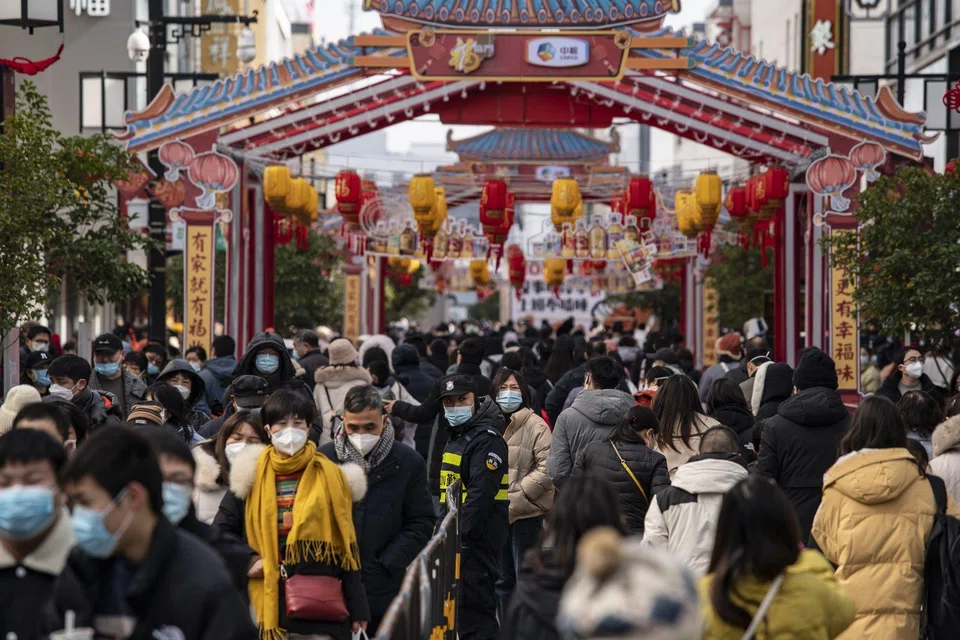
Yet high-frequency data shows China’s slump already coming to an end and the Covid wave easing. The number of patients in hospital emergency rooms is down. Metros in major cities are filling up.
And early signs from the Chinese New Year holiday show travel and box-office spending significantly stronger than a year ago. On the first four days of the festivities there were some 95.9 million trips by planes, trains and automobiles.
Another wave of Covid – the consequence of holiday travel and celebrations – appears inevitable. By the end of the first quarter, though, with rising vaccination rates and natural immunity, China’s 1.4-billion population is expected to have built up their resilience and adjusted to living with the virus. Pandemic lockdowns and infection-dodging caution will no longer be a constraint on the economy.
Pro-growth policies for the all-important property and technology sectors add to the reasons for optimism.
Since August 2020, when controls on property developers showed Beijing getting serious about squeezing the air out of the housing bubble, real estate has turned from the biggest contributor to China’s growth to a significant drag. In 2022, real estate sales fell 24 per cent, investment shrank 10 per cent and prices stagnated.
Now, with Beijing again focused on restoring growth, the financing taps for developers and homebuyers have been turned back on. Though the longer-term outlook for China’s overbuilt and overleveraged property sector remains bleak, at least for 2023 the prospects are a little brighter. Bloomberg Economics projects a 3 per cent drop in investment – a much smaller drag on the economy than in 2022.
Embattled entrepreneurs are also breathing a sigh of relief. Since November 2020, when the initial public offering of fintech giant Ant Group was cancelled, China’s flagship tech firms have been slammed with massive fines and stringent regulations. That crackdown has come at a price as confidence slumped. In October 2022, the Nasdaq Golden Dragon Index was down almost 80 per cent from its peak.
As with property, though, Beijing has decided the short-term imperative of restoring growth trumps the longer-term objective of curbing the power of giant corporations.
“If wealth doesn’t grow, common prosperity will become a river without source or a tree without roots,” said Vice-Premier Liu He, using his appearance at Davos to pledge renewed support for entrepreneurs. Reflecting the shift, tech stocks have regained some lost ground.
Those shifts are why China’s growth prospects are suddenly looking up, and why policymakers are asking what it means for inflation.
Bank of Korea governor Rhee Chang-yong said on Jan 13 that China’s reopening could push up oil prices. Fed vice-chair Lael Brainard used a Jan 19 speech to flag uncertainty about the implications for inflation, especially in commodities. European Central Bank (ECB) president Christine Lagarde echoed those concerns at Davos.
Price pressures from China will likely transmit through two channels.
First, there is the risk of a negative supply shock as the initial wave of Covid infections trigger a flurry of absenteeism and factories struggle to maintain operations. The purchasing managers’ index – a monthly survey of China’s manufacturing – shows that at the end of 2022 delivery times blew out. The risk here is a repeat, albeit on a significantly smaller scale, of the supply snarls that drove the first surge of pandemic inflation.
The second channel will be a positive demand shock as normal life resumes and purchases are amped up. China’s oil imports flatlined over the pandemic. Hopes for stronger demand as highways, train stations and airport terminals fill up have already helped lift oil prices from a trough of US$76 a barrel in early December to around US$86 in late January. Goldman Sachs’ veteran commodity analyst Jeff Currie said they could go all the way to US$105 or higher. Taken together, those shocks could add close to one percentage point to global inflation at the end of 2023, relative to a scenario where China stayed locked down.
For the US, euro area and UK, Bloomberg Economics analysis points to a boost of around 0.7 percentage point – smaller than the global impact but still enough to keep the Fed, ECB and Bank of England in tightening mode for longer than the market expected. Uncertainties on both the trajectory for China’s recovery and other forces moving global prices remain significant. But the direction of travel is clear.
Back in the dark days of the 2008 global financial crisis, China’s stimulus was an unalloyed positive for the rest of the world. In 2023, China’s reopening promises to be a mixed blessing. BLOOMBERG
Decoding Asia newsletter: your guide to navigating Asia in a new global order. Sign up here to get Decoding Asia newsletter. Delivered to your inbox. Free.
Share with us your feedback on BT's products and services