

53% of Singapore workers plan job switch if raises, bonuses don’t meet expectations: Randstad survey
Less than one third are confident about getting a promotion and raise

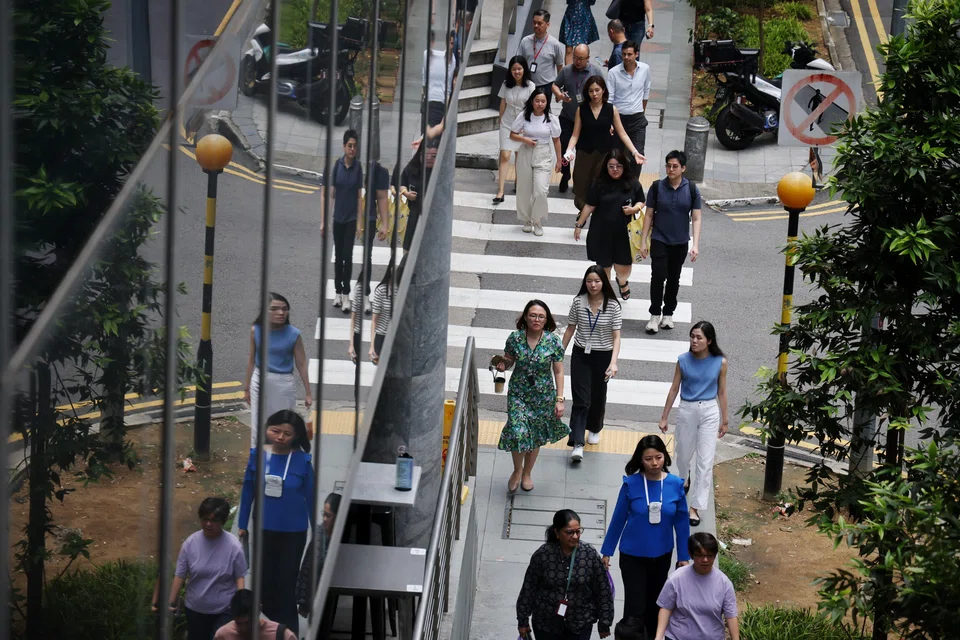
[SINGAPORE] Most Singapore employees (53 per cent) plan to leave their jobs if they are not satisfied with their salary increments or bonuses, a Randstad Singapore study has found.
Despite this, only 28 per cent are confident about securing a promotion and raise, as employees’ annual salary increment expectations remain modest amid economic uncertainty.
These were the findings of Randstad Singapore’s 2026 Job Market Outlook and Salary Guide, which surveyed 500 respondents in the Republic to assess workers’ employment expectations and attitudes.
Some 64 per cent of workers surveyed expect salary increments of less than 5 per cent, and 15 per cent anticipate a wage freeze, the study found.
As firms remain focused on cost optimisation, productivity and efficiency in 2026, salary benchmarks will vary by industry and depend on demand and supply for sought-after skills, said David Blasco, country director at Randstad Singapore.
“In some sectors with urgent skills shortages, companies may offer higher salary packages, yet talent mobility remains constrained,” he said.
Engineering, financial services and life sciences sectors have shown resilience, with demand for “high-value roles”, the study said. These include roles across robotic and automation engineering, green financing and sustainable investing and bio-manufacturing.
Tight labour market
Employers face a tight labour market, with job vacancies outnumbering unemployed persons as at June, said Randstad Singapore.
Around two thirds (64 per cent) of workers are on the lookout for new roles, but only 22 per cent of those surveyed are actively job hunting.


Meanwhile, 41 per cent are passive jobseekers, open to new opportunities but not actively searching for them.
These passive jobseekers typically deliver immediate impact, performance and higher retention – even if they are harder to source, the study noted.
“Since they are currently employed and not desperate for a pay cheque, their decision to switch jobs is calculated and career-driven, which can often result in higher retention rates,” it said.
“Additionally, without the pressure to ‘sell’ themselves, passive talent tends to be more transparent about their capabilities and expectations.”
What matters to jobseekers
Some 43 per cent of respondents have expressed openness to lateral moves when seeking new jobs, while 19 per cent are willing to take on contract positions, Randstad Singapore found.
Only 10 per cent of those surveyed are willing to accept a new role with a lower rank or smaller salary.
Beyond salary, workers now evaluate firms based on holistic benefits and workplace culture.
While performance bonus ranked top as the most-valued benefit, time-related benefits such as flexible hours and location also ranked high – reflecting that the resource of time is currency for Singapore workers.
Manageable workloads and reasonable total working hours are core to employees’ perceptions of work-life balance, the study said.
“Organisations that consistently expect after-hours availability, regardless of work or employee engagement, may risk alienating a portion of their talent pool who greatly value personal time and space,” it added.
Skills and expectations gap
Singapore workers are generally concerned about a skills mismatch when seeking job opportunities, the study said.
Forty per cent of respondents have expressed that the skills required in job advertisements were unrealistic, and only 25 per cent think otherwise.
“This perception gap indicates that employers are setting overly ambitious requirements, jobseekers lack awareness of evolving skills demands, or both, which have created friction in the hiring process,” Randstad Singapore said.
“Organisations that offer clear skills development pathways and realistic job requirements may gain a competitive advantage in attracting talent.”
Notably, the bar has been raised for entry-level roles, which are shifting away from routine administrative tasks towards higher-value, technical jobs, the study said.
Hiring expectations for fresh graduates have been raised, with employers now seeking strong digital skills and adaptability for improved productivity and innovation, the study said.
It added that many mature workers fear being phased out before they hit the retirement age as firms increasingly merge or cut roles, with such employees under pressure to upskill and stay relevant.
Decoding Asia newsletter: your guide to navigating Asia in a new global order. Sign up here to get Decoding Asia newsletter. Delivered to your inbox. Free.
Copyright SPH Media. All rights reserved.
TRENDING NOW

Government to bring forward raising of retirement age, give employers more financial support to create flexi-load jobs

If Europe goes to war, the fallout will be felt in East Asia

Indonesia stocks suffer worst plunge in nearly 30 years as MSCI proposes standalone status

Vietnam’s northern provinces, not Hanoi or Ho Chi Minh City, are powering near 10% GDP growth

