
Business makes the case for a post-Trump reset
 Add BT as a preferred source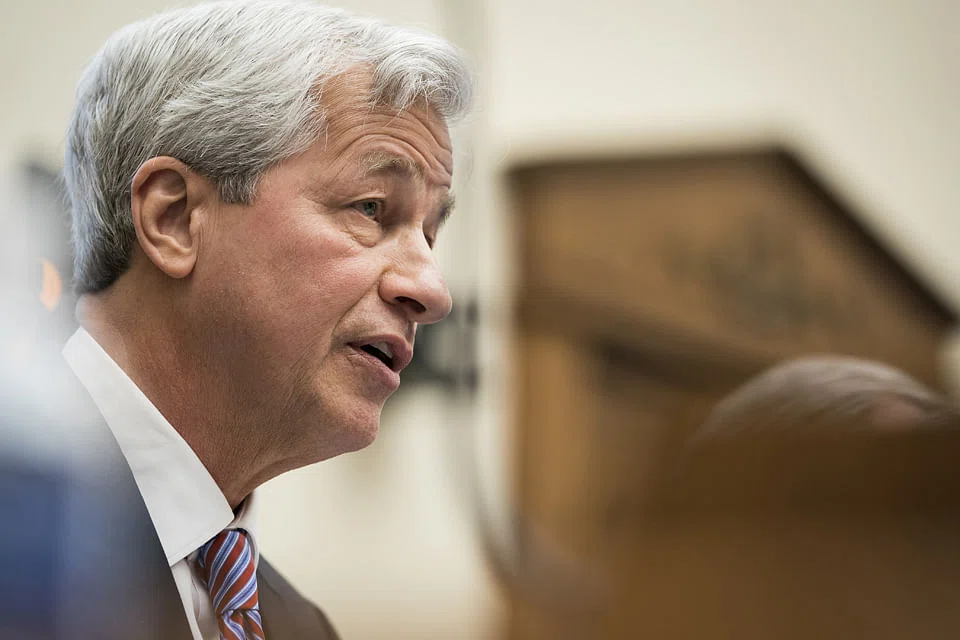
A PROVOCATIVE memo that was circulated among policymakers on both sides of the aisle and the Biden transition team ahead of his inauguration states: "Business leaders must realise that they not only have a moral obligation, but also a commercial stake in advocating for a fairer, more equitable system. Unless and until the core problem of inequality is addressed, all other overarching objectives and desires will remain elusive." Those sentences are even more notable for who wrote it.
The memo comes from an under-the-radar group of global bold-faced names that act as a private advisory committee to JPMorgan Chase. They include Tony Blair, the former British prime minister; Condoleezza Rice and Henry Kissinger, two former secretaries of state; Robert Gates, the former secretary of defence; Alex Gorsky, chief executive of Johnson & Johnson; Bernard Arnault, chairman of LVMH; and Joseph C. Tsai, executive vice-chairman of Alibaba, among others.
The group, whose members could be considered part of the globalist establishment that fell out of favour during the Trump years, typically meets once a year in a far-flung location with JPMorgan's chief, Jamie Dimon.
Their discussions are usually kept private. But given the precarious state of the world during a pandemic and change in leadership in Washington, the group put its views on paper in hopes of persuading policymakers to address what it sees as the most pressing priorities.
The resulting document is a manifesto of sorts calling for a reset, a return to the pre-Trump days. It seeks to turn back the clock to a time when being called a globalist wasn't an epithet, but acknowledges the failures of globalism and seeks to correct them.
Without saying it in so many words, the group argues that engaging in policy and commerce with other countries isn't a sign of weakness or against the interests of the country. In many ways, it is actually "America First". "The purpose of cooperation is not to put someone else's interest before those of your own country," Mr Blair told me about the discussions among the group. "Enlightened self-interest is best satisfied by people working together."
Navigate Asia in
a new global order
Get the insights delivered to your inbox.
On this point, Mr Gates, who was secretary of defence under presidents George W. Bush and Barack Obama, added that the government has failed to "bring home to the American people why international cooperation and engagement on the international front and the relationships with our allies - why that all serves America's self-interest".
The Covid-19 pandemic demonstrates the perils of an anti-globalist approach, the group wrote.
Coherent response
"The near-total absence of American leadership, coupled with the nationalist approach of too many countries, have come at the expense of a strategically coherent, international response to the pandemic," the paper contends. Mr Blair said that while everyone involved in the group didn't agree on every point in the document, it reflected the broad consensus.
The memo calls for a return to engaging with China, especially on climate issues and global health, while acknowledging the "significant challenge" the country poses.
"The best outcome for US-China relations is likely managed competition - an accommodation that avoids military conflict while allowing for limited cooperation," it reads. "It is impractical to think that supply chains and manufacturing can be moved simply, affordably or comprehensively out of China." The document also calls for placing renewed importance on the G-7 and G-20 organisations of leading nations. It urges the creation of "trusted supply chains" and places responsibility on the business community to engage with policymakers "from the point of view of the public interest, not simply narrow business interests".
Some will fairly question the group's intentions. After all, a message being delivered by the nation's biggest bank - and a group of chief executives and former senior policymakers - may only encourage the idea that there is a super-secret cabal of puppeteers steering policy. The idea that the Biden administration might take this group's advice might be considered anathema to his supporters on the far left just as much as it is to his opponents on the far right.
But the truth is that the message the group is advancing is common sense. The ideas are novel, but only when set against the past four years of tweet storms from Donald Trump.
Mr Blair said he understood the scepticism of the motives of the global elite.
"Politically, this is my view: You've had genuine grievances, which populism has exploited, but too much of those opposed to populism have simply stood for better management of the status quo," he said.
Mr Dimon said one of the few ways that the status quo, and the inequality it created, can be undone is if his peers start advocating for policies that may be against their own short-term business interests.
"I'd like to criticise business for a second," he said in an interview, describing how he had witnessed some executives lobby for their business or themselves, knowingly at the expense of society.
"I've been to a lot of meetings with presidents and prime ministers and senators and congressmen, and the selfishness and parochialism with the business folks is just absolutely outrageous. The first thing businesses should do is separate their company's interests from what's in the interest of the country."
Private-sector investment
He said that, ultimately, many of the big challenges the country faces during and after the pandemic will require private-sector investment from around the world, and gaining the trust of the public is crucial. "It's unlikely to be fixed without business, particularly when you get around to things like work skills, property and building infrastructure," he said.
Mr Dimon said business needs to be prepared to step up. But after four years in which the world has moved away from the multilateral, global-minded approach that he and others propose, how can they convince the public of the need for a reset?
Mr Blair said there is only one way: "How do you build the support for these types of approaches and policy? And the answer is by showing they're effective." NYTIMES
Decoding Asia newsletter: your guide to navigating Asia in a new global order. Sign up here to get Decoding Asia newsletter. Delivered to your inbox. Free.
Share with us your feedback on BT's products and services

