Flexible work arrangements not only help women, but also Singapore’s economy
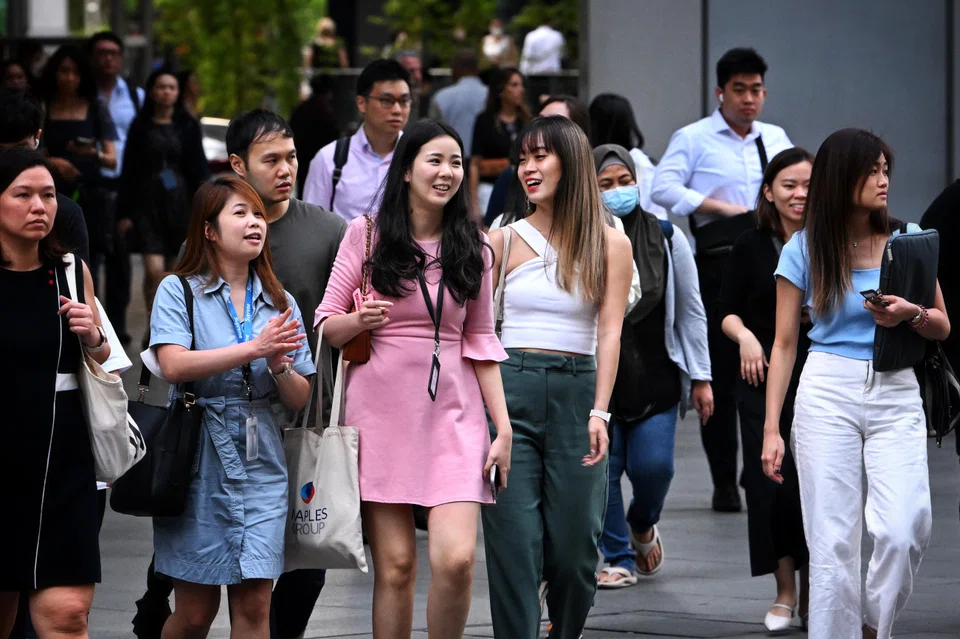
BY 2030, one in four people living in Singapore will be aged 65 and up.
Coupled with the nation’s declining birth rate – it hit an all-time low of 1.05 last year – it is projected that by 2030, each person aged 65 and up will be supported by just two-and-a-half working-age residents. Just three years ago, this ratio stood at 4.3.
This demographic shift has profound implications on our economy, healthcare system and retirement adequacy. In preparation for this “silver tsunami”, a slew of measures and policies have been introduced, the most recent being the retirement needs support given to Singaporeans aged 50 and up through the Majulah Package.
Why does the Majulah Package exclude women who aren’t in the workforce?
I find it troubling, though, that many women in their 50s and early 60s find themselves ineligible to receive the benefits of the Majulah Package.
The Earn and Save Bonus in the package provides lower and middle-income young senior workers with a Central Provident Fund bonus of between S$400 and S$1,000 yearly if they remain in the workforce, whether full or part-time. In other words, only those who are employed are eligible to receive this yearly bonus.
More than 150,000 female young seniors outside the labour force do not qualify for the Earn and Save Bonus. More than half (55 per cent) cited caregiving or housework as main reasons for not working. I feel that complementary measures are needed to help women return to work, if the Majulah Package hopes to make an impact.
More recently, it was announced that the Ministry of Finance will consider making parts of the upcoming Majulah Package available based only on age, without additional criteria such as income, recognising that some of these concerns may be common to all Singaporeans within this age group.
We welcome this potential measure as many young senior women from middle-income families are expected to support their families financially, and will face greater strain if lesser subsidies are extended to them, in turn impacting their retirement adequacy.
Can we make flexible work arrangements to encourage women’s return to work?
To fully reap the benefits of the existing components of the Majulah Package, supporting women in returning to work, remaining and progressing in the workforce is critical and among the objectives of the action plans laid out in our 2022 White Paper on Singapore Women’s Development. One of the plans is the entrenchment of flexible work arrangements (FWAs) as a norm, by introducing a new set of tripartite guidelines on FWAs by 2024.
While these guidelines are not intended to make the provision of FWAs mandatory, they will require employers to consider FWA requests from employees fairly and properly. However, the prerogative to accept or reject requests remains with the employer.
How do we make FWAs a prevalent workplace practice, so women can have equal access to employment opportunities while playing the role of primary caregiver in the family? We must:
- debunk the misconception that FWAs will not work for all businesses,
- equip employers, human resources (HR) and line managers to manage employees on FWAs, and
- change the mindset that FWAs are only for mothers or women.
During the Covid-19 pandemic, employers managed to quickly pivot their employees to work from home (WFH), also implementing other forms of FWAs. Despite the positive experience of hybrid work, many workplaces have reduced the frequency of remote work days – with some cutting them off entirely – after the resumption of pre-pandemic activities.
WFH is not the only flexible work arrangement in existence
There also continues to be a misconception that FWA is synonymous with WFH. The lack of knowledge on the types of FWAs (flexi-time, flexi-place, flexi-load) that exist has been one of the reasons many employers remain resistant.
Thankfully, there are progressive employers who recognise the potential of tapping into the talent pool of women returners to solve their manpower crunch. Singapore Council of Women’s Organisations members like Mums@Work and NTUC U Women and Family offer programmes that work with enlightened companies to hire women returning to the workforce.
These are companies that have not only implemented a range of FWAs – from part-time and telecommuting to job-sharing – but are also prepared to embark on job redesign to make their roles suitable for older women as well as those with caregiving needs.
Apart from making FWAs available, employers also need to ensure fair performance management and evaluation of employees on these arrangements. This is essential to prevent employers from penalising or giving poor performance ratings to these employees.
The Tripartite Alliance for Fair and Progressive Employment Practices (Tafep) currently conducts workshops for HR practitioners and company-appointed work-life champions in leading and managing flexible teams. I think it has room to go beyond this, in training supervisors to assess employee performance fairly.
This merits stressing: FWAs do not only benefit mothers or women. Allowing employees to tap FWAs helps fathers and men share the caregiving responsibilities with their wives and female family members.
We can and must normalise the concept of men as caregivers, and break gender stereotypes by providing a conducive and inclusive work environment with family-friendly workplace practices for all caregivers – male or female, young or old. This is crucial to reduce the bias and prejudice women face at the workplace, and guess what? It also contributes to more females returning to the workforce, and strengthens their retirement adequacy.
Improving gender parity at the workplace will definitely help Singapore’s economy remain competitive, despite its ageing and shrinking workforce. As a society, we must continue prioritising education and engagement as critical strategies, to shift mindsets towards building progressive and inclusive workplaces for all.
The writer is CEO of the Singapore Council of Women’s Organisations