Layoffs and AI are changing tech’s once-invincible job market
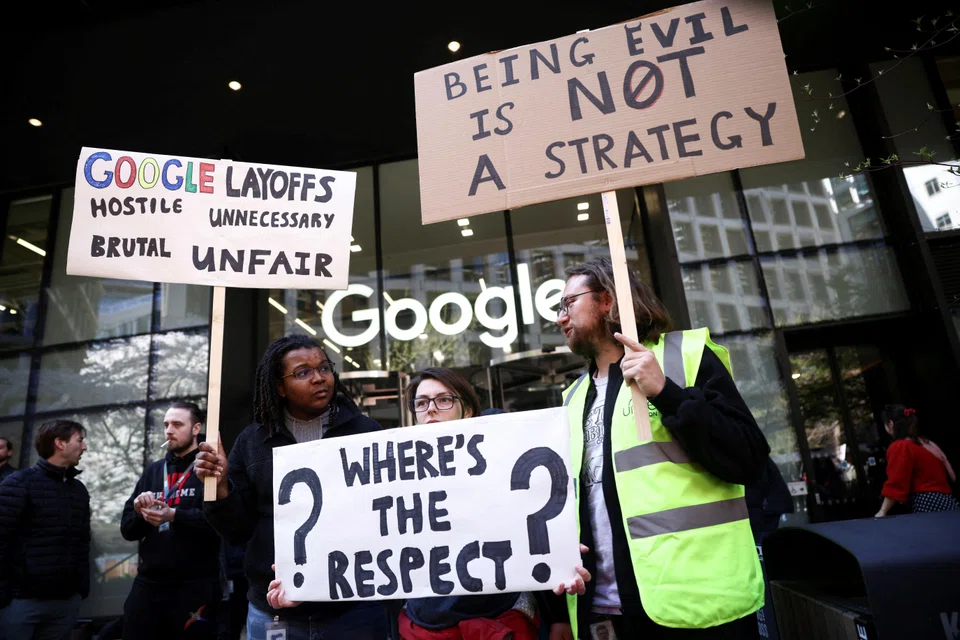
THERE have been many innovations in Silicon Valley over the past decade, but for people who aspire to work in the tech industry, the most transformative may be the assembly line it developed to ingest fresh-faced summer interns and spit out highly paid software engineers.
Tech companies have been so desperate for talent that, instead of hiring only for specific roles, many would make a “return offer” to every intern who met certain levels of proficiency.
Dylan Castillo, 21, knew the drill. He interned at Alphabet, Meta, Figma and Stripe and graduated in May from Cornell University with a computer science degree. In November, Alphabet told him that he qualified for a full-time job.
Then Castillo met the new Big Tech. For several months, Google’s parent company held off on matching him with a team. It gave him a “we’ll get back to you” update in January. Finally, in March, a few weeks after laying off 12,000 employees, the company rescinded his offer.
Castillo wasn’t shocked that the company had reneged on its promise. It was actively cutting jobs, after all. Still, this wasn’t how things were supposed to work. He’d cleared all the proficiency hurdles – he was good enough.
“If you meet that threshold, you should get an offer,” Castillo says. “It was that way before,” he pauses, “whatever this is called.”
A high-paying tech job, no longer to be taken for granted
Whatever you call it, this reversal of the decade-long hiring boom has rolled across sunny Silicon Valley like a cold fog. Job loss has always been part of the tech industry, but it’s generally associated with startups failing and dumping all of their workers, who easily land elsewhere.
This time, workers can no longer bet on being quickly swept up by other startups or trillion-dollar behemoths.
“It used to be if you had a pulse and could do basic coding exercises, you could get a six-figure offer from a bunch of companies,” says one startup executive who spoke on condition of anonymity because of the sensitivity of the topic. “Now people come to me and ask: ‘Are there roles at this company?’ and the company says: ‘We’re not really hiring right now.’ And that’s like, whoa.”



A veritable bloodbath
More than 200,000 tech industry employees have been laid off this year, according to Layoffs.fyi, a website that tracks tech job cuts. More than 80,000 people got canned in January alone.
Less tangible, but clearly present, is an industrywide feeling that setbacks such as widespread layoffs, the collapse of crypto and the Silicon Valley Bank’s failure are deflating Silicon Valley’s golden balloon. Shellshocked tech workers are considering, sometimes for the first time, that the promise of perpetual, lucrative employability may not be as solid as they thought it was.
Castillo immigrated from Venezuela when he was 13 and chose software engineering as a career because it seemed safe – and because he couldn’t afford law school. He thought that he was being conservative by aiming for employment at big tech companies and late-stage private companies.
But now some of his friends who made similar career decisions are facing joblessness.
“People are pretty scared,” he says. He’s taken a job at Figma and plans to start in August.
Some of Castillo’s peers are accepting more than one offer, because they fear that the jobs might not actually materialise. They’re also weighing less-glamorous coding work in nontech sectors such as finance and healthcare, where companies still thirst to hire computer science majors.
“Pay and career advancement are usually poorer in comparison, but you can rely more on those jobs not to be taken away or rescinded,” Castillo adds.
An alternative path
Amid all the uncertainty, one obvious strategy is to lean into the latest object of fascination in Silicon Valley: artificial intelligence (AI). While the tech industry is notoriously faddish, Castillo says that he and his peers see AI as more substantive than some of the sector’s other recent fixations and something that might be worth building a career around.
“We’ve definitely considered focusing on learning AI and machine learning,” he notes, because it seems as if those jobs will be in high demand for longer.
Right now, the average salary for a senior software engineer who specialises in AI or machine learning is 12 per cent higher than the salary of one who doesn’t, says Roger Lee, who runs both layoff tracker Layoffs.fyi and Comprehensive.io, which monitors salaries in the industry. Although pay for tech workers has plateaued or even dipped in the past year, salaries of AI-related roles have risen 4 per cent, Lee says.
In the startup world, where venture funding is largely drying up and many startups are cutting jobs to survive, investors are still salivating over companies offering anything AI-related. This is especially true of generative AI, the term encompassing technology such as OpenAI’s ChatGPT.
At larger companies, workers who attach themselves to AI projects may be the safest, at least in the short term.
As Drew Houston, Dropbox’s chief executive officer, announced that the company was cutting 500 workers, he noted that part of the rationale for the cuts was to make way for AI-related hires: “Our next stage of growth requires a different mix of skill sets, particularly in AI and early-stage product development.”
When Mark Zuckerberg laid out plans in March to eliminate 10,000 jobs at Meta Platforms, he said that one company focus was “building AI tools to help engineers write better code faster, enabling us to automate workloads over time”.
A convenient scapegoat?
Right now, AI may actually be serving as a face-saving explanation for executives who want to avoid admitting that job cuts are a result of overhiring during the pandemic boom.
There’s no evidence that AI has already begun to displace significant numbers of technology jobs. Still, it’s easy for an engineer to watch ChatGPT spit out code – and correct its own programming errors – and imagine how a team of five programmers could be replaced by two humans and some advanced AI tools.
The AI frenzy is another factor scrambling the way things work in Silicon Valley.
Julie Lein, a co-founder of the Urban Innovation Fund, says that the change to a more restrained atmosphere happened so quickly that it hasn’t registered with everyone. “It’s whiplash,” she adds.
A founder will propose at a board meeting a plan to spend aggressively on marketing and be greeted with unfamiliar resistance.
“Everyone’s like: ‘What? You have to conserve cash,’ ” she points out. “Are we even being a responsible company right now if we’re not laying people off?”
The first heads on the chopping block
At many companies, the first to go are recruiters, a natural choice given their job function only makes sense when companies are hiring.
“I get it,” says a recruiter who was recently laid off from Meta and asked not to be named for fear of retribution. “I never took it personally.”
Salespeople are also often vulnerable, in part because it’s easy to quantify their impact on the bottom line and cull lower performers.
This time, another group on the chopping block has been those on tech companies’ more whimsical or experimental projects. These jobs have generally come with added prestige but, in tighter times, appear not to have been close enough to the companies’ core moneymaking business.
At Alphabet, the cuts were particularly deep in departments such as Jigsaw, a geopolitical think tank that tried to prevent extremism and censorship, and Area 120, an in-house incubator where employees worked on side projects full time.
And then, there are those who were spoiled
Adjusting to the new era may be painful for people who’ve spent their entire careers employed during Silicon Valley’s boom years.
Eric Bahn, who worked as a product manager at Facebook in the mid-2010s, recalls joining the company with no specific role. For three months, he spent his days engaged in light training. “I read a novel for an hour eating breakfast” each day, he says – then met with teams internally to decide if he wanted to work for them.
Many of his co-workers were living lavishly on the money their employers threw into ample salaries and stock grants. Bahn would ask his young colleagues about their weekend plans, and they’d tell him that they chartered a jet to Alaska to go fishing.
“If growth is still double digits and all that, no one is really looking at the other side of the bottom line,” he says.
Workers accustomed to such a charmed environment – and to the unhinged Bay Area living costs – have had trouble at times resetting their expectations. Bahn, who’s now a venture capitalist, says he has laid-off friends asking him for help finding new positions. “One of my friends said that his salary requirements are minimum US$600,000 a year,” he shares. “Why can’t you live with US$300,000 or US$400,000?”
There’s already a healthy dose of schadenfreude being directed at people like Bahn’s friends. But anyone familiar with the tech industry knows that the stereotype of the decadent tech worker has always excluded a large portion of the workforce.
There are also the ones who were not
For each software engineer who can’t imagine working for a measly half-million a year, there’s also a shadow worker who has none of the same protections.
Noha Elsewaify, a single mother of two living in Brooklyn, New York, was employed at Google for more than five years, but as a contractor, not an employee. She worked full time and trained Google Assistant to speak fluently in Arabic but got her pay cheques from contractor companies: first Artech, then Ask, then Accenture.
Although her job stayed the same, she switched “employers” every two years, to skirt the rule that limits Google from keeping contractors on a job for too long without hiring them directly.
In April, with only three weeks’ warning, Elsewaify was told that her job was being eliminated.
If she’d been a Google employee with five years of tenure, she would have gotten six months of severance. Other tech companies offered at least 16 weeks to their employees. As an Accenture employee contracted with Google, she got zero. (Google declined to comment; Accenture didn’t respond to a request for comment.)
“When your last day at your current position comes,” Elsewaify wrote in a letter to Alphabet CEO Sundar Pichai, “I hope you are treated with respect and appreciation, not like how I was let go, over a Hangout meeting, three weeks before my last cheque arrives.”
She added: “When this day finally came, I was tossed away as if I had never been there.” BLOOMBERG
Decoding Asia newsletter: your guide to navigating Asia in a new global order. Sign up here to get Decoding Asia newsletter. Delivered to your inbox. Free.
Share with us your feedback on BT's products and services