

Asti's move to retrench CEO with S$1.4m entitlement questioned
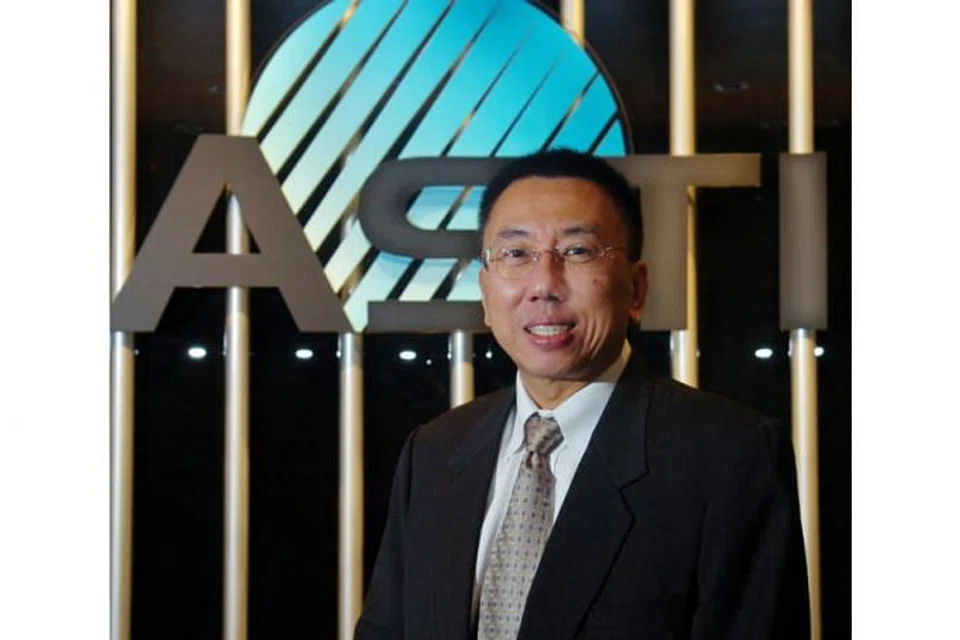
ASTI Holdings' dismissal of its chief executive officer (CEO) Michael Loh Soon Gnee with a S$1.4 million termination entitlement has at least one corporate governance expert questioning the appropriateness of such a move.
In a blog post on Thursday (Dec 23), Mak Yuen Teen, professor of accounting at the NUS Business School, noted Asti's annual report for 2020 declared there are no termination, retirement or post-employment benefits provided for in employment contracts with its directors, CEO or top five key management personnel.
Yet, in a bourse filing on Loh's retrenchment on Wednesday, Asti said Loh is "contractually entitled" to an aggregate of S$2 million as part of his termination, and that the board has decided to pay him some S$1.4 million instead.
Pointing out the discrepancy, Mak said: "Why does the board now say he is contractually entitled to a termination payment?"
Mak also noted issues with Asti's claim that no shareholder approval was required for the payout as the amount of S$1.4 million does not exceed a threshold stipulated under the Companies Act.
Section 168(1A) of the Act states that shareholder approval is not required "if the amount of the payment does not exceed the total emoluments of the director for the year immediately preceding his termination of employment", among other things.
But Mak pointed out that the company's annual report for the year ended Dec 31, 2020 mentioned that the total amount of remuneration paid to Loh was close to S$1.3 million.
"Did the total remuneration disclosed exclude certain emoluments? Or does the termination payment actually exceed his total emoluments for last year and therefore shareholder approval is required?" he asked.
In response to questions from The Business Times, Mak highlighted that the Code of Corporate Governance for listed companies says the remuneration committee should ensure that service contracts contain "fair and reasonable termination clauses which are not overly generous".
The S$2 million contractual termination payment in Asti's case is "not fair and not reasonable", he stated. "It is more than a year's remuneration. For such senior positions, I would say 3 to 6 months would be more the norm."
Asti, which provides semiconductor manufacturing services, is one of the many companies here that are owned and controlled by individual entrepreneurs and their families, and that's where one of the issues lie, Mak said.
He pointed out that companies that are not family or founder controlled would have held the CEO accountable for prolonged poor performance and replaced the CEO, but this often does not happen for family or founder controlled companies.
This is because the founder or family in such situations would essentially be appointing the directors, including the independent directors, who in turn appoint the CEO. "The board is often not independent and would not act to remove a poorly performing CEO," Mak added.
Mak, meanwhile, pointed out that Asti did not state if Loh, who was also executive chairman of the company, will stay on at the post or be redesignated to non-executive chairman.
Asti, in its announcement, only generally stated that he will continue to act as chairman.
Asti also said that Loh was dismissed as part of an "ongoing retrenchment exercise".
BT has sent Asti queries to find out more about the exercise, such as the number of employees it is expected to retrench and their related entitlements. The company had not responded as of the time of this article's publication.
Shares of Asti were trading at S$0.028, down 3.5 per cent or 0.1 Singapore cent as at 4.13pm on Thursday.






