Clifford Capital to embrace more new economy, green projects
The Temasek-backed company's core mandate of helping Singapore-based firms plug financing gaps remains unaffected by the pandemic.

INFRASTRUCTURE spending in Asia has picked up in recent months, with the strongest deal flow in new economy projects as well as green and renewable energy due to changes in demand, supply chains, environment, social and governance (ESG) priorities and technologies.
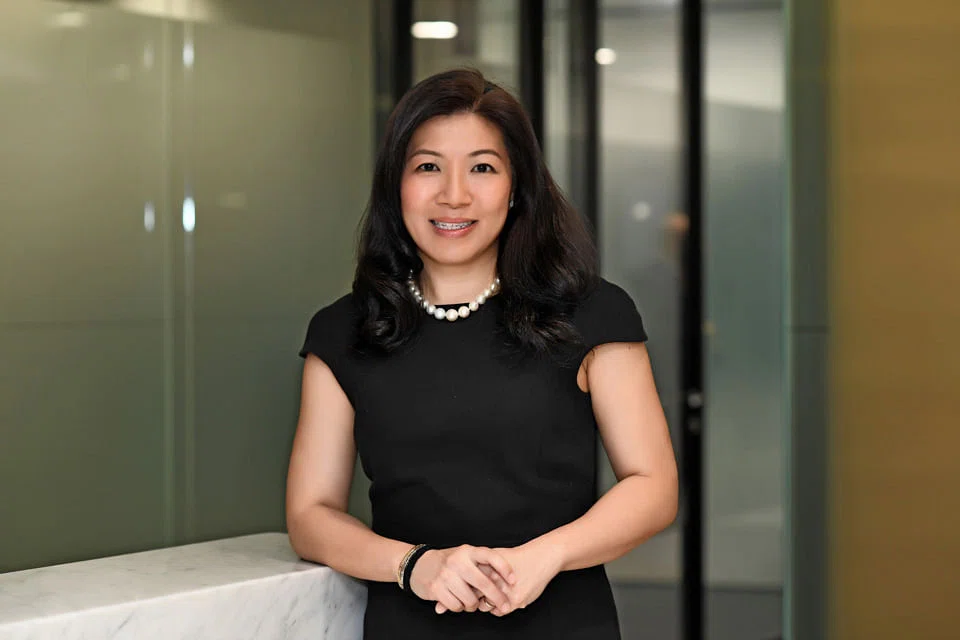
In an interview with The Business Times, Audra Low, the CEO of Temasek-backed Clifford Capital, said the company's core mandate of helping Singapore-based companies pursue infrastructure, shipping and offshore marine projects across the globe remains unaffected by Covid-19.
"We remain focused on plugging the financing gaps for these companies where they arise. Activities have picked up in the last few months and we are seeing more deals coming to the market," she said.
"Judging from the kind of pipeline that we are looking at, we do think there's a lot of growth momentum within the infrastructure sector, particularly in renewable energy and core infrastructure projects such as data centres."
Since the start of the outbreak, the company has broadened its coverage to include more new economy infrastructure projects, such as data centres and the related subsea cables and digital interconnectivity types of projects, logistics, healthcare and other social infrastructure as the need for such infrastructure comes to the fore.
In line with the Singapore government's push towards a greener future, Clifford Capital - a specialist provider of debt financing solutions - is seeing an increased focus on green and renewable energy projects by Singapore-based developers in the region.
"We are also looking to support companies that are seeking to transition away from traditional oil and gas projects into new energy storage concepts and technologies that can help curb emissions such as CCUS (carbon capture, utilisation and storage) and hydrogen," Ms Low said.
New financing products can be developed to support Singapore's maritime sector as the nation moves in the direction of more sustainable development.
"Things are still evolving in the industry with new technologies emerging, such as hydrogen and ammonia. We are watching this space closely to see how we can support Singapore-based shipping companies in taking concrete steps towards decarbonisation and greener shipping, aligned with the aspirations of the Maritime and Port Authority of Singapore," she said.
Still, there are many financing gaps to be filled. These include financing for greenfield projects in new places and frontier markets such as Myanmar, and certain countries like Bangladesh where financing appetite from international commercial banks remains nascent.
Bridging financing gaps
There is also financing support for Singapore companies in distant markets such as Africa and the Americas where relationship banks may not be as active, or for new technologies or concepts like the Gimi floating liquefied natural gas project in West Africa.
Other gaps include long-dated financing, as Clifford Capital is less constrained compared to banks, and smaller infrastructure projects with debt below US$20-30 million. The latter is typical in the renewable sector and SME space, where the appetite from commercial banks is more limited.
The company is in discussions with ADB - which came on board as a shareholder of Clifford Capital's parent company, Clifford Capital Holdings, last year - on various projects in Asia, notably, renewables in developing countries such as Vietnam and Cambodia.
Clifford Capital is not new to bridging financing gaps. It was conceived in 2012 following the global financial crisis in 2008, when credit lines for long-term infrastructure dried up as global banks pulled back.
In 2016, it expanded its sector coverage to include shipping, after some European banks retreated due to the sector's volatility, cyclical nature and losses incurred.
According to its website, Clifford Capital has helped catalyse US$11.7 billion in overseas investments and US$8.2 billion in exports for Singapore-based companies.
Its portfolio has remained stable over the years, with half in infrastructure, a third in offshore and the rest in shipping. But cross-border financing and frontier markets are not for the weak hearted, as political unrest in Myanmar has shown.
To mitigate such risks, Clifford Capital focuses on projects with strong sponsors, secured through fair and transparent manner and have robust structural features that mitigate country risks.
These include having project cash flows ring-fenced in offshore accounts and/or cash reserves held in offshore accounts secured to lenders.
It also makes a difference to co-fund with other multilateral development banks and have political risk insurance coverage, said Ms Low.
Away from work, Ms Low, the mother of a 10-year-old girl, was recently awarded the 2021 Multilateral Investment Guarantee Agency (MIGA) Gender Leadership Award.
The award recognises senior managers with a track record of furthering the cause of women's advancement and gender equality in business while contributing to the World Bank's twin goals of reducing poverty and boosting shared prosperity.
MIGA executive vice president Hiroshi Matano said: "Ms Low's efforts set an example for women in the finance sector, who have been significantly under-represented in executive positions, representing less than 2 per cent of bank CEOs and holding less than 20 per cent of board seats of banks worldwide."
Hands on and energetic
Women represent half of all staff across the Clifford Capital Holdings Group, while 36 per cent of functional leadership positions within the group are held by women. These include key roles in origination and structuring, portfolio management, treasury, legal, compliance and HR functions.
"Importantly, we have been able to achieve this without the need to prioritise gender selection over experience and capabilities," said Ms Low, who describes her management style as hands on and energetic, and she likes to see the same from team members.
Ms Low sees herself as both a market fixer - bridging gaps in cross border financing - and a shaper - helping shape the future of infrastructure development in Asia.
"There are exciting prospects ahead in South-east Asia. Projects are being conceived and developed that will help foster greater interconnectivity in terms of transport links, power supply, improved supply chain and logistics that are now more focused on ensuring resilience especially for essential goods like food and medicine," she said.
"As a specialist structured financier, we can help develop innovative and competitive financing solutions to get these projects off the ground,'' Ms Low said.