

Covid-19 a litmus test for leadership of political and business captains
Today's leaders need an agile mindset, unlike the 'top-down' style of past leaders.
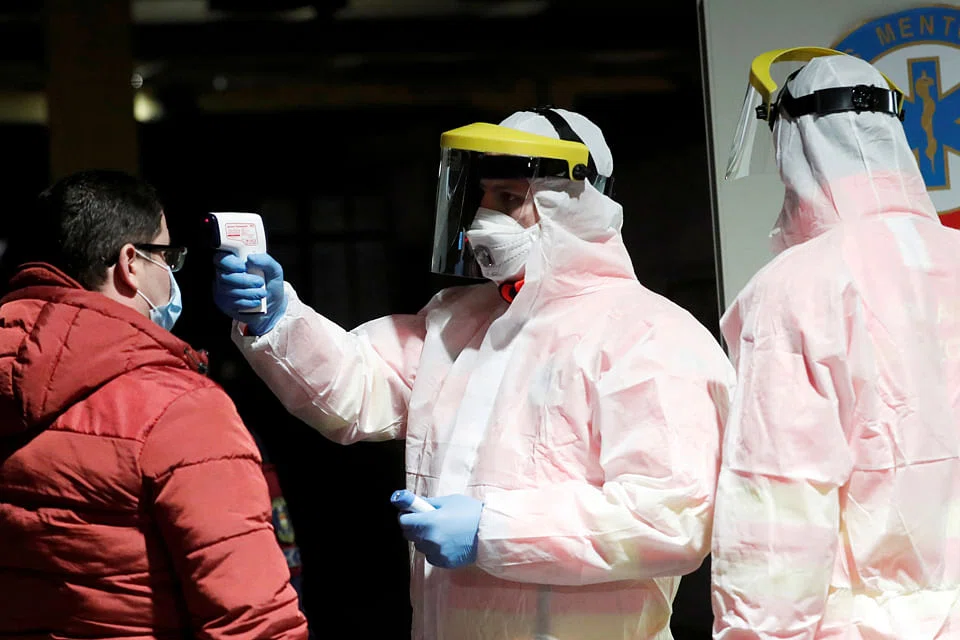
THERE are undoubtedly a few in recent history whom most would agree had great leadership qualities. Winston Churchill, Nelson Mandela, Mahatma Gandhi and Singapore's own Lee Kuan Yew are some who spring to mind, most of them forging their reputation in the midst of great battles or political and social upheaval.
In the world of business too, there have been chief executives who have shaped not only their organisations but the business landscapes of their time - think Lee Iacocca, Jack Welsh, Akio Morita, Bill Gates and Jack Ma.
The ongoing Covid-19 pandemic has provided the perfect stage onto which world, business and community leaders have been thrust to play their roles - either to overwhelming plaudits or to damning criticisms. The perennial conundrum of what makes a good leader and the corollary - are great leaders made or is leadership an innate attribute - once again do not seem to have a universal answer.
Crisis of confidence
Odgers Berndtson's recently launched Leadership Confidence Index, using methodology developed in conjunction with the Harvard Business Review Analytics Services, highlights the pressing need to answer these questions.
Among 2,000 senior executives, managers and company board members of companies from varying sizes across the globe, it transpired that the confidence level in the current leadership of corporations was very low. Only 15 per cent of business executives worldwide have confidence in the current leadership to successfully manage disruption.
Facing us right now is a disruption like no other. When the index was commissioned, the "disruption" most people would have directed their minds to was technological. In fact, in the book Leadership Disrupted by Mark Braithwaite, the exponential acceleration of pace driven by new technologies was thought by the CEOs interviewed to be the biggest disruptor of all.
That was before Covid-19 hit us like a meteor from out of space!
At a time when the quality of leadership is so imperative, the discernible lack of faith is disturbing. But it is not surprising - given the changing worldview which many have with emphasis on mindfulness, care for the environment and sustainability - that people's expectations of leaders have also evolved.
Furthermore, a growing proportion of the workforce, particularly here in Asia, are millennials. According to one CEO, while globally, the millennials make up 30 per cent of the organisation's workforce, in Asia, it is 70 per cent. Statistics from leading companies also point to millennials forming more than 75 per cent of the global workforce by 2025.
The Deloitte Global Millennial Survey 2019 found that millennials were sceptical of business motives viewing businesses as focusing only on their own agendas with scant regard for society. Added to this is the pace of change, mainly brought about by technology, which has left some leaders unable to catch up and meet changing expectations of their staff.
The Index has found that the traits most sought after in business leaders today are humility, adaptability, resilience, curiosity, courage and emotional intelligence.
Notably, traits such as analytical skills, digital acumen and operational transformation abilities ranked lower down.
Said Mr Braithwaite, managing director of Odgers Berndtson Asia-Pacific: "These are the characteristics required now. An uncomfortable truth for some CEOs is that a strong track record does not equate to having the capability to deal with future disruptions."
Leaders need to accept that they may no longer have all the answers. The crisis has thrown up challenges never before faced or anticipated and that in itself is a business leveller. In speaking to industry leaders recently to find out just how they are coping, one of the observations made was that those who were coping better were doing so because of collaborative and consultative team efforts. Ultimately, collective intelligence - whatever the industry or country or size of operations - is better than just a solitary viewpoint.
The pace of change is such that leaders are unable to understand and take in everything that is coming at them. Hence the leadership qualities that are desired - humility, curiosity, an adaptive mindset - are replacing the "command and control" type traits. A new level of humility is emerging which allows and encourages people to challenge the status quo and enables leaders to really listen and to accept that there are experts who know better than them.
It is a time of compassionate leadership. As one industry leader, who is putting into practice decentralising control, said: "Strengthen regional leaderships and create sub-region clusters that coordinate the crisis with a 'war room' planning and communication structure that addresses the specific challenges of each country."
Nevertheless, consultative leadership does not equate to weak or ambivalent leadership. At the end of the day, it is still the leaders who have to make and be accountable for decisions and to inspire others to follow the lead, engaging their people through emotional and cognitive intelligence.
Developing leadership
Prescribing the new leadership is one thing, but cultivating these desired leadership traits is another. It becomes critical to develop people who think and innovate differently, the kind of people who run towards change rather than away from it.
For a start, leaders need to understand themselves. People are in part driven by nature - whether introvert or extrovert, risk-taking or cautious. People who are not self-aware will find it difficult to improve in those areas which are desired in leaders. There are a myriad of recognised psychometric tests available that can reveal personality traits fairly accurately, one of them being our personalised WAVE assessment tool owned by Saville, to identify leadership competencies and culture fit.
Leaders in the modern day are collaborators - they foster communication, act as influencers and bring together the skill-sets and talents of the entire human capital at their disposal to achieve organisational goals. Necessary for this role is a high degree of engagement, trust and respect of others' views and the willingness to delegate without micro-management or second-guessing.
Every textbook on leadership tells us that communication is key. We have seen this truism come to life in this pandemic. People need leaders to communicate to them authentically and transparently. More people, particularly younger ones, want a direct line of communication. As one leader said: "Today the comms is less formal and in smaller chunks."
Perhaps at the heart of leadership traits is the mindset for change and adaptation, an agile mindset. The key to any change is not skills but having the right mindset at the outset. This will become increasingly important as leaders navigate the unchartered waters of change. Cultivating such a mindset requires patience and perseverance as neuroscientists will attest to. Massive leaps may not be possible, but smaller and significant incremental change is possible.
There are many parallels from businesses that can be drawn to explain the low confidence level that some people have in their political leaders. Might it be that the countries which are handling the pandemic more effectively are those which have a higher degree of trust and confidence in the leadership?
Could it also be that those leaders who are gaining the trust and confidence of their people are also the ones who are seeming to rely on experts in different fields to guide them through, instead of making unilateral decisions, and exhibiting the desired qualities of the modern day leader?
Whatever the case, the crisis is accelerating change that was inevitable. As one business leader put it: "Never waste a crisis."
Decoding Asia newsletter: your guide to navigating Asia in a new global order. Sign up here to get Decoding Asia newsletter. Delivered to your inbox. Free.
Share with us your feedback on BT's products and services
TRENDING NOW
Knight Frank’s Tan Tee Khoon leaves firm, Nicholas Keong takes over auction business
Keppel Energy, Sembcorp Utilities and Tuas Power to supply biomethane in pilot project
GovTech retrenches another 38 staff in second round of layoffs
Take-up of new private homes dives 45% in Q3 as prices accelerate with 1.4% rise

